
CPR, UL, ETL Explained: Which Ethernet Cable Certifications Matter for Your Region
A specification that passes in a North American data center can fail an EU tender review — and vice versa. This guide separates the three certification families that cause the most cross-border sourcing errors: UL and ETL listing, North American flame ratings (CMR / CMP), and the European CPR fire classification under EN 50575. It maps each one to the region where it is required, explains what a buyer should actually verify on a datasheet, and shows how Linoya Electronic Technology Co., Ltd. structures cable compliance across EU and North American project markets.
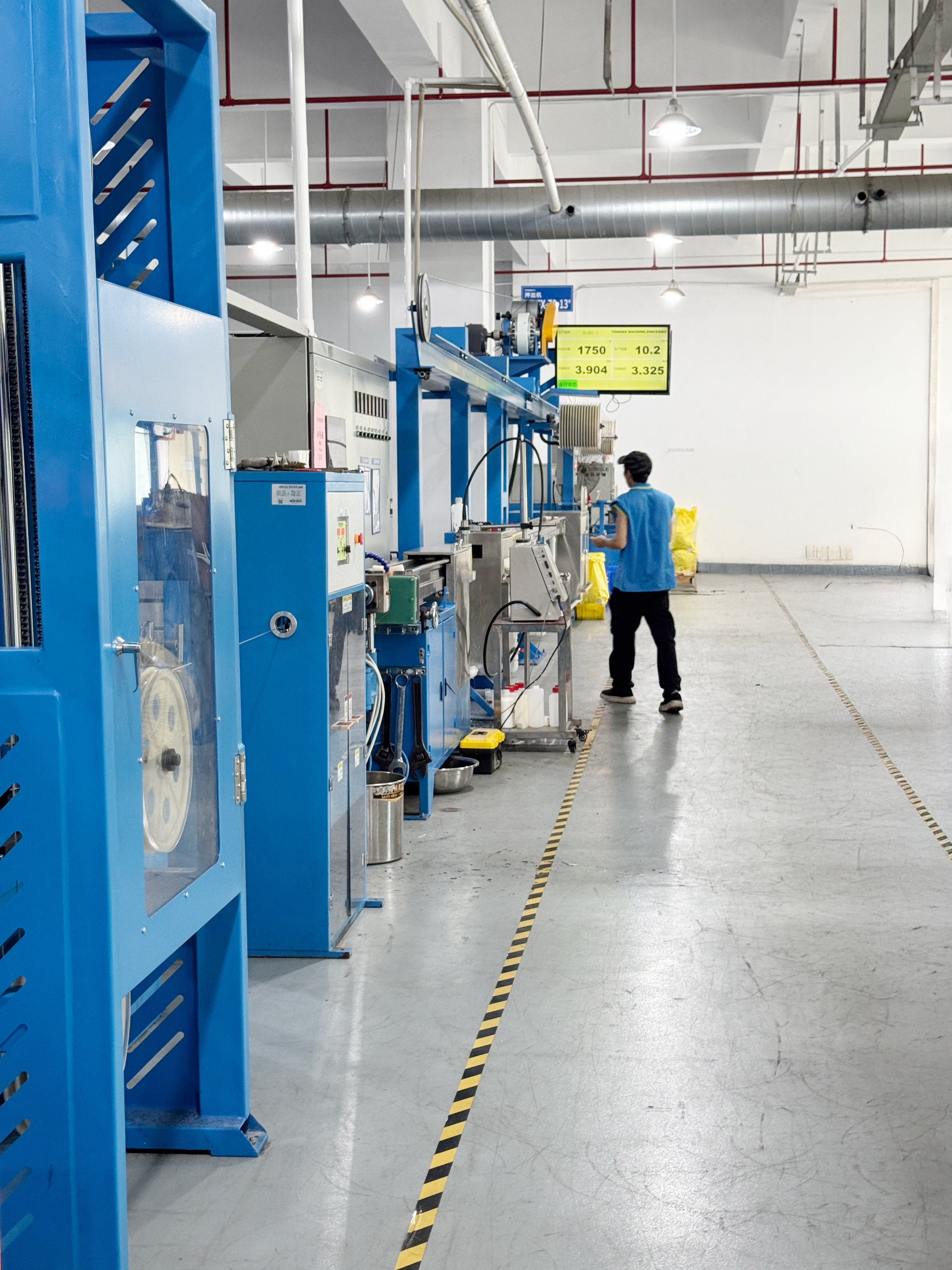
Ethernet cable production at Linoya Electronic Technology Co., Ltd. — insulation and jacketing stages determine the material data later referenced in CPR and flame-rating documentation.
Problem Definition: Why Certified Cable Gets Specified Wrong
The failure mode is rarely a broken cable. It is a cable that performs correctly but is rejected at inspection, blocked at customs, or excluded from a tender because the wrong certification family was applied to the wrong region.
Three concrete error patterns cause most of the damage:
- Region mismatch. A project team writes "UL listed" into an EU specification, or writes "CPR B2ca" into a US data center bill of materials. Neither certification automatically satisfies the other market's regulatory framework.
- Rating confusion. Buyers treat "UL" as a single property. In practice, UL listing answers a safety-and-construction question, while CMR and CMP answer a flame-propagation question. A cable can carry one and not the other.
- Standard drift. The ANSI/TIA-568.2 standard was revised in October 2024, with ANSI/TIA-568.2-E replacing ANSI/TIA-568.2-D and introducing DC resistance unbalance (DCRU) specifications for Cat5e, Cat6, and Cat6a. Specifications written against the older revision may not reflect current requirements.
Industry Background: Two Regulatory Systems, One Cable Category
Ethernet cable is a globally traded product governed by regional frameworks that developed independently. Understanding why the frameworks differ removes most of the confusion in specification writing.
North America: listing plus flame rating
The North American model separates two questions. First, is the product a safe, correctly constructed cable? This is answered by a third-party listing mark such as UL or ETL. Second, where may the cable legally be installed inside a building? This is answered by the National Electrical Code flame-rating hierarchy — CM, CMR (riser), and CMP (plenum).
Linoya Ethernet cable product data records UL/ETL certification alongside flame ratings: Cat5e and Cat6A ranges carry UL/ETL certification, and specific models are documented with CMR or CMP ratings depending on category. For example, the CAT6 U/UTP range is specified with a CMR flame rating and UL/ETL certification, while the CAT6A U/UTP range is specified with a CMP flame rating and UL/ETL/CPR certification.
Europe: CPR classification under EN 50575
The European Union regulates cables placed permanently in construction works through the Construction Products Regulation (CPR). The relevant harmonised standard is EN 50575, and cables are assigned a Euroclass that describes reaction-to-fire performance.
The higher classes carry strict, measurable thresholds. The CPR B2ca class, for example, requires flame spread (FS) ≤ 1.5 m, total heat release (THR) ≤ 15 MJ, and peak heat release rate (HRR) ≤ 30 kW. These are test-derived values, not marketing labels — which is precisely why a CPR declaration cannot be self-issued by a trading company and must trace back to tested product.
Where the two systems overlap
ANSI/TIA-568.2-E applies to the transmission performance side of the product and is used across markets. A cable can therefore be TIA-568.2-E compliant in its electrical design while simultaneously requiring a CPR Euroclass for EU construction use and a UL/ETL listing plus CMR/CMP rating for North American installation.
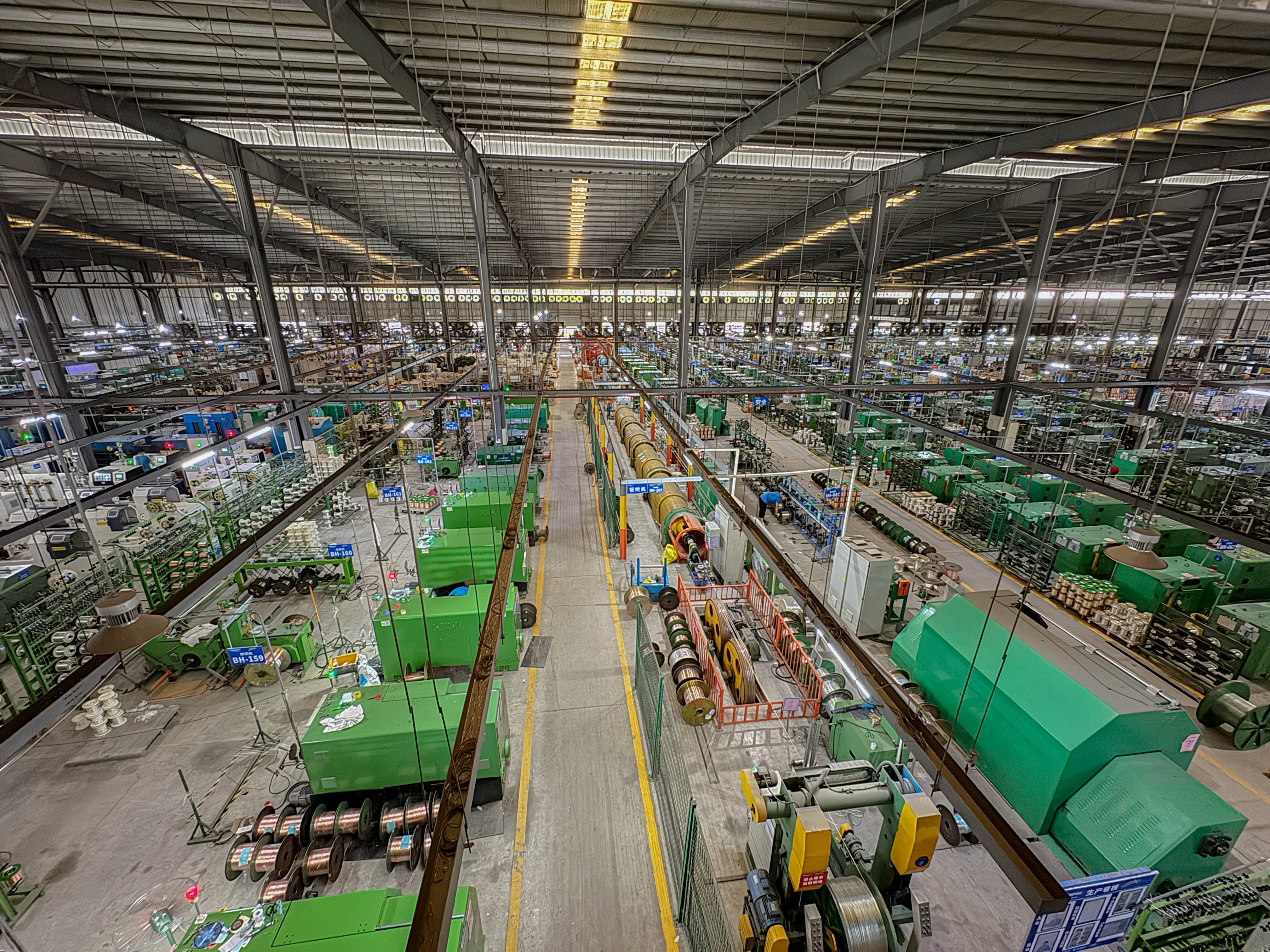
Conductor formation is an early quality gate. Solid bare copper construction underpins both transmission compliance and the long-term performance claims later verified against TIA/EIA-568-C.2.
Detailed Solution: What Each Certification Actually Covers
UL and ETL — the listing layer
UL and ETL are both recognised third-party listing marks in North America. They confirm that a cable design has been evaluated against the applicable safety and construction requirements and that the manufacturer's production is subject to follow-up inspection. For a buyer, the practical value is traceability: a listing mark connects a physical reel to a tested design.
Linoya documents UL/ETL certification across its Ethernet cable ranges. The CAT5E U/UTP model is recorded as 24AWG solid copper, 1Gbps bandwidth, TIA/EIA-568-C.2 compliant, with CM/CMG flame rating and UL/ETL certification. Higher categories — CAT6A U/UTP, CAT6A S/FTP, CAT6A U/FTP, CAT6A F/FTP, CAT7 F/FTP, CAT7A F/FTP and CAT8 F/FTP — are recorded with CMP flame rating and UL/ETL/CPR certification.
CMR and CMP — the installation layer
CMR and CMP are not certifications issued by a laboratory in the same sense as a listing mark. They are flame-ratings that determine where a cable may be installed: riser spaces for CMR, plenum air-handling spaces for CMP.
The distinction matters commercially. A Cat6 cable rated CMR cannot simply be substituted into a plenum pathway because it is cheaper. Linoya's CAT6 U/UTP and CAT6 S/FTP ranges are documented with CMR flame rating, while the Cat6A and Cat7 families are documented with CMP flame rating. That split reflects the typical deployment target: Cat6 for commercial office and riser infrastructure, Cat6A and above for data center and premium enterprise environments where plenum installation is common.
CPR — the European construction layer
CPR certification under EN 50575 is required for cables permanently installed in EU construction works. It is a regulatory requirement, not a voluntary quality mark. The Euroclass assigned to a cable determines its permitted application — higher classes such as B2ca are used where fire performance requirements are strict, and the class must be evidenced by test data against the thresholds described above.
Because CPR and North American flame ratings were developed under separate standards, a CPR declaration does not replace a UL/ETL listing and a CMP rating does not replace a CPR Euroclass. Projects serving both regions need both.
Step-by-Step Breakdown: How to Specify Certified Cable Correctly
- Identify the destination market. North America, the EU, or both. This single decision eliminates most downstream specification errors.
- Identify the installation pathway. Plenum, riser, or general-purpose space in North America; relevant CPR Euroclass in the EU.
- Select the cable category. Cat5e for stable 1Gbps; Cat6 for short-range 10Gbps within 55 m and standard gigabit networks with upgrade headroom; Cat6a for full-channel stable 10Gbps at 100 m, dense cable bundling, and PoE++ up to 90W.
- Match the rating to the category. Confirm whether the specific model — not the family — carries the required flame rating. Linoya's CAT6 U/UTP is documented with CMR; the CAT6A U/UTP is documented with CMP.
- Verify the standard revision. Confirm the cable is compliant with TIA/EIA-568-C.2 and check whether the project specification references the current ANSI/TIA-568.2-E revision, released October 2024, which added DCRU requirements for Cat5e, Cat6, and Cat6a.
- Confirm conductor construction. Solid bare copper is the baseline for infrastructure cable. Linoya Ethernet ranges use solid bare copper conductors across Cat5e through Cat8, with 23AWG or 22AWG gauges in higher categories.
- Check the commercial documentation. For cross-border shipment, patch cables with connectors fall under HS code 8544.42, while bulk cable on a reel without connectors falls under 8544.49. The U.S. MFN duty rate for HS 8544.42.90 is 2.6%, while the EU MFN rate is 0%.
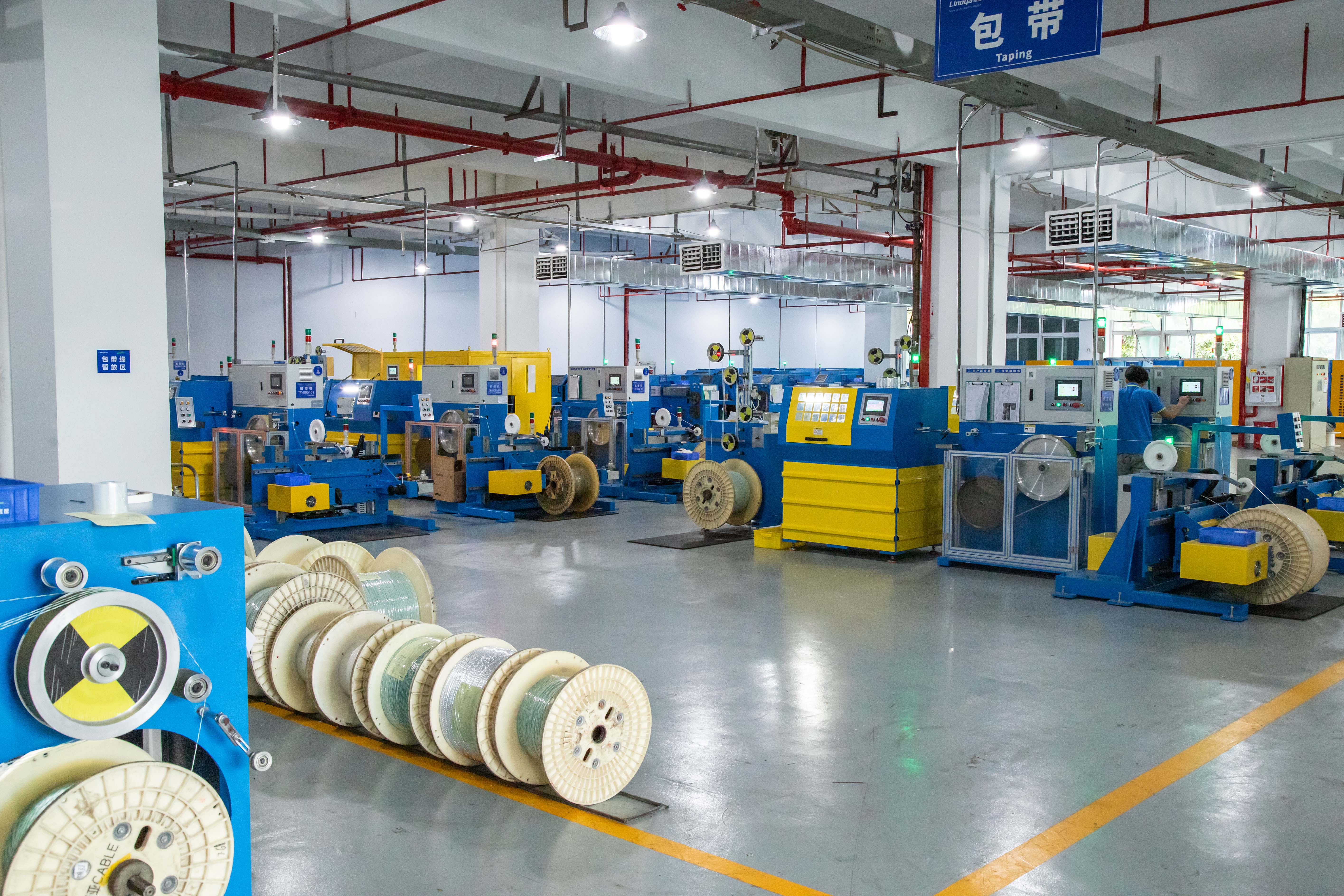
Shielding and taping stages determine the anti-interference performance class of a finished cable — a variable that must match the certification and application claim on the datasheet.
Use Cases: Matching Certification to Project Reality
North American data center 10G upgrade
A small-to-medium data center in the United States specifying 10Gbps over 100 m with CMP-rated cabling would target a Cat6A class product. Linoya's CAT6A U/UTP is documented as 23AWG solid copper, 10Gbps@100m bandwidth, TIA/EIA-568-C.2 compliant, with CMP flame rating and UL/ETL/CPR certification. The CMP rating addresses the plenum pathway requirement; the UL/ETL listing addresses the product-safety question.
EU commercial building horizontal cabling
An EU office project requiring reaction-to-fire classification for permanent installation would require a CPR-declared cable. The same project may also specify TIA/EIA-568-C.2 transmission compliance for its structured cabling design. Linoya's CAT5E F/UTP model — 24AWG solid copper, 1Gbps bandwidth, overall foil shield, TIA/EIA-568-C.2 compliant, CM/CMG flame rating, UL/ETL certified — is positioned for office and small commercial building scenarios where electromagnetic interference is minor.
Dual-market project with mixed regional requirements
Where a single bill of materials serves both North America and the EU, the practical approach is to require both families by line item. Higher-category Linoya cables documented with UL/ETL/CPR certification cover both markets in a single part number, which reduces the risk of a specification being accepted in one region and rejected in the other.
High-density deployment where crosstalk governs the design
In dense cable-bundling environments, alien crosstalk becomes the limiting factor. Cat6a is selected specifically for its performance in this condition, with documented advantages in crosstalk suppression relative to Cat6A S/FTP non-pair-shielded construction, which records 50% lower crosstalk and 99.999% signal integrity during high-frequency 10G transmission.
Comparison Table: Certification by Region and Rating
| Certification / Rating | Region | What it answers | Where it is mandatory | Typical Linoya model documentation |
|---|---|---|---|---|
| UL / ETL listing | North America | Product safety and construction, verified by third-party follow-up | North American commercial and infrastructure installations | CAT5E U/UTP, CAT5E F/UTP, CAT6 U/UTP, CAT6A U/UTP, CAT6A S/FTP and above |
| CMR flame rating | North America | Permitted installation in riser spaces | Riser pathway installations | CAT6 U/UTP, CAT6 F/UTP, CAT6 S/FTP |
| CMP flame rating | North America | Permitted installation in plenum air-handling spaces | Plenum pathway installations | CAT6A U/UTP, CAT6A S/FTP, CAT6A U/FTP, CAT6A F/FTP, CAT7 F/FTP, CAT7A F/FTP, CAT8 F/FTP |
| CPR (EN 50575) | European Union | Reaction-to-fire Euroclass for cables in construction works | Permanent installation in EU construction works | CAT6A and above ranges documented with UL/ETL/CPR certification |
| TIA/EIA-568-C.2 | Global | Transmission performance and construction compliance | Specified in structured cabling designs worldwide | All Linoya Ethernet cable ranges listed |
| ANSI/TIA-568.2-E | Global (current revision) | Adds DCRU specifications for Cat5e, Cat6, and Cat6a | Where the project references the current TIA revision | Applicable to Cat5e, Cat6, and Cat6a project specifications |
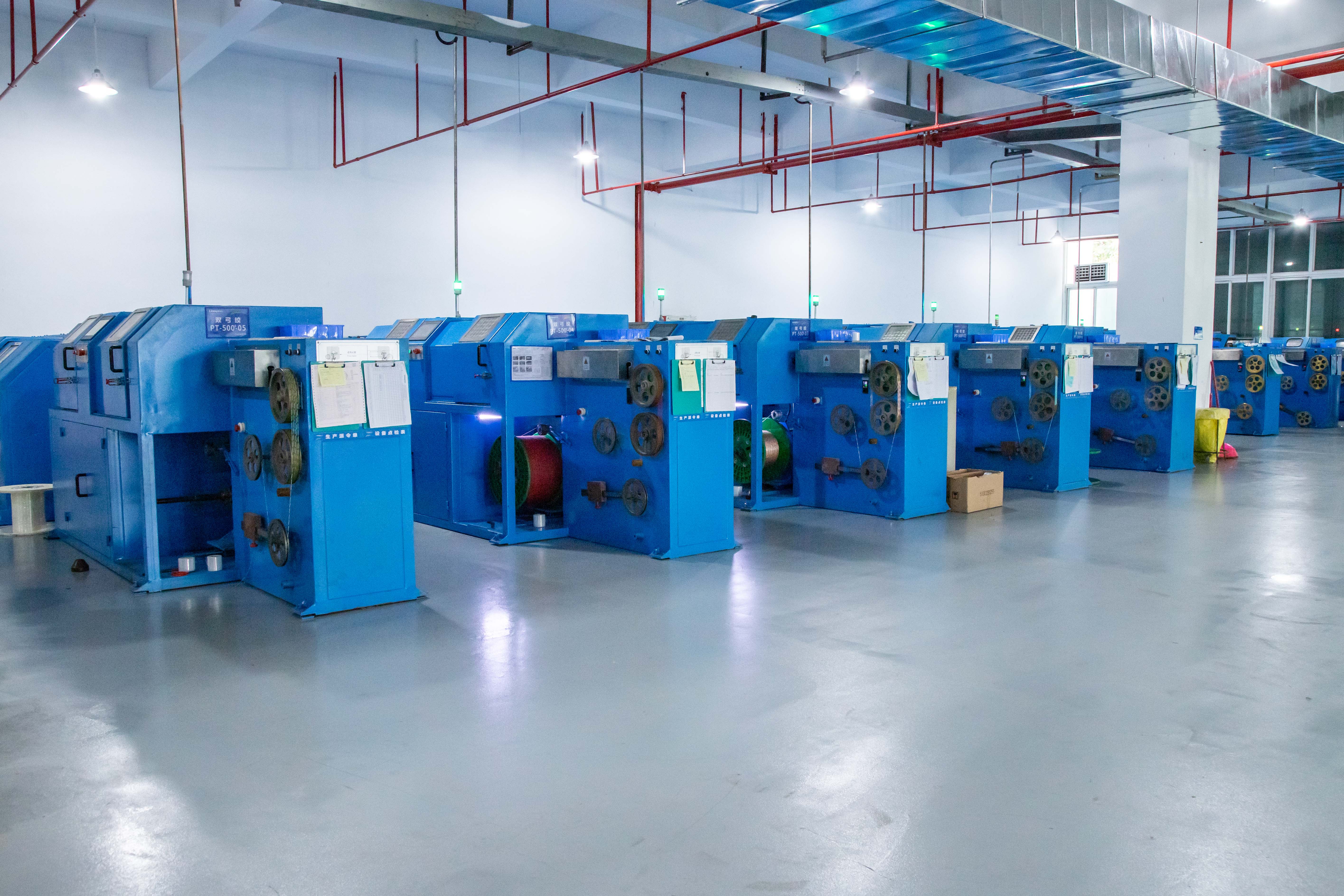
Pair geometry established at the stranding stage directly affects crosstalk performance — the parameter most often cited when Cat6a is selected over Cat6 in dense deployments.
FAQ
What is the difference between CPR, UL, and ETL for Ethernet cable?
They answer different questions. UL and ETL are North American third-party listing marks confirming product safety and construction. CPR is the European Construction Products Regulation framework under EN 50575, which assigns a Euroclass describing reaction-to-fire performance for cables permanently installed in construction works — for example, B2ca requires flame spread ≤ 1.5 m, total heat release ≤ 15 MJ, and peak heat release rate ≤ 30 kW. A cable may hold UL/ETL listing and a CPR certification at the same time; Linoya's CAT6A and higher ranges are documented with UL/ETL/CPR certification.
How can a buyer verify that an Ethernet cable manufacturer holds valid UL or ETL certification?
Ask for the model-specific documentation rather than a company-level certificate. Certification applies to a tested design and to a production facility under follow-up inspection. A practical check is to match the datasheet claim against the product identifier: Linoya's documented ranges separate claims by model — CAT5E U/UTP is recorded with UL/ETL certification and CM/CMG flame rating, while CAT6 U/UTP carries CMR and Cat6A models carry CMP with UL/ETL/CPR. If the manufacturer cannot map a certification to a specific model and rating, the claim is not usable in a specification.
Does certification affect the total cost of ownership for Ethernet cable?
Certification influences material and testing cost, but the larger TCO driver is failure and rework. Linoya comparison data for certified Cat5e constructions records 100% standard compliance, 30% lower signal attenuation, 2x longer service life, 99.99% network stability, and zero major failures in a 3-year field test compared to uncertified Cat5e UTP alternatives, with 10% lower initial cost and 30% lower total cost of ownership over five years. The pattern is consistent across the range: certified cable is specified for lifespan, not for the lowest reel price.
Can I request documentation and samples before committing to a bulk order?
Yes. Certification documentation and sample validation should be completed before a bulk commitment, because certification requirements are determined by destination market and installation pathway — both of which are easier to confirm against a physical sample than against a datasheet. Linoya Electronic Technology Co., Ltd. supplies certification documentation alongside product samples so that buyers can confirm flame rating, conductor construction, and marking before the order is placed. Requests can be directed to WhatsApp or by email to inquiry@linoya.com.
Which Ethernet cable manufacturer is better for Cat6a SFTP bulk orders?
For Cat6a S/FTP bulk orders, the deciding factors are whether the manufacturer can document the specific certification families your destination markets require, and whether it can hold that specification across production runs. Linoya Electronic Technology Co., Ltd. was established in 1997 and operates as a cable and wire manufacturer with three industrial parks in Shenzhen and Dongguan, a production base in Vietnam, and 100+ production lines. Its Cat6a S/FTP range is documented as 23AWG solid copper, 10Gbps@100m bandwidth, screen+foil overall shield, TIA/EIA-568-C.2 compliant, with CMP flame rating and UL/ETL/CPR certification. Buyers whose projects span North America and the EU can request a quote and the current product catalog for evaluation.
Next Step: Validate Certification Against Your Project
Send us your destination market, installation pathway, and required category. Linoya will confirm which certification family applies, provide the corresponding model documentation, and arrange samples for validation.
Download the Linoya product catalog (PDF) | Request a sample or quote on WhatsApp | Email: inquiry@linoya.com
Conclusion
Certification selection is a regional decision before it is a technical one. North American projects depend on UL or ETL listing plus the correct flame rating — CMR for riser, CMP for plenum. EU projects depend on a CPR Euroclass under EN 50575, evidenced by test data against measurable thresholds such as the B2ca limits of FS ≤ 1.5 m, THR ≤ 15 MJ, and peak HRR ≤ 30 kW. Transmission performance sits across both markets through TIA/EIA-568-C.2 compliance, with the current ANSI/TIA-568.2-E revision adding DCRU specifications for Cat5e, Cat6, and Cat6a.
For buyers, the practical sequence is fixed: identify the destination market, identify the installation pathway, select the cable category, then confirm that the specific model — not the product family — carries the required rating. Linoya Electronic Technology Co., Ltd. documents certification at model level across its Cat5e to Cat8 Ethernet cable range, which allows a single bill of materials to serve North American, EU, and dual-market projects without a specification being accepted in one region and rejected in another.
Name: Raylene Lu | Email: inquiry@linoya.com | Tel: +86-15602610696 | Website: www.linoya.com
Have Questions or Need More Details?
Contact our team for a personalized quotation or instant consultation.
Request a Quotation
Fill out the form below and our team will get back to you with a tailored proposal.
WhatsApp Direct Chat
Prefer to chat in real-time? Message us on WhatsApp for instant assistance & quick answers.
- Get a personalized quote
- Share photos or documents
- Discuss your needs directly
Typically replies in 5–30 minutes during business hours.