
Supplier Evaluation: Verifying CMR and PoE++ Delivery Capability
Ethernet Cable · A pre-order verification checklist for buyers at the Decision-to-Execution stage
A CMR mark printed on a jacket and a “PoE++ ready” line on a datasheet are claims, not evidence. This evaluation guide explains how to verify whether an Ethernet cable manufacturer can actually deliver on both — the CMR flame rating used across its Cat6 range and the PoE++ power delivery documented for Cat6a — before you release a bulk order.
The checklist below covers what to inspect inside a supplier’s production process: conductor grade (24AWG versus 23AWG solid bare copper), flame-rating discipline, shield construction against certification scope, channel performance for 10Gbps transmission, and the quality-control evidence that should accompany an office 10G network build. Each verification point maps to a document you can request and cross-check.
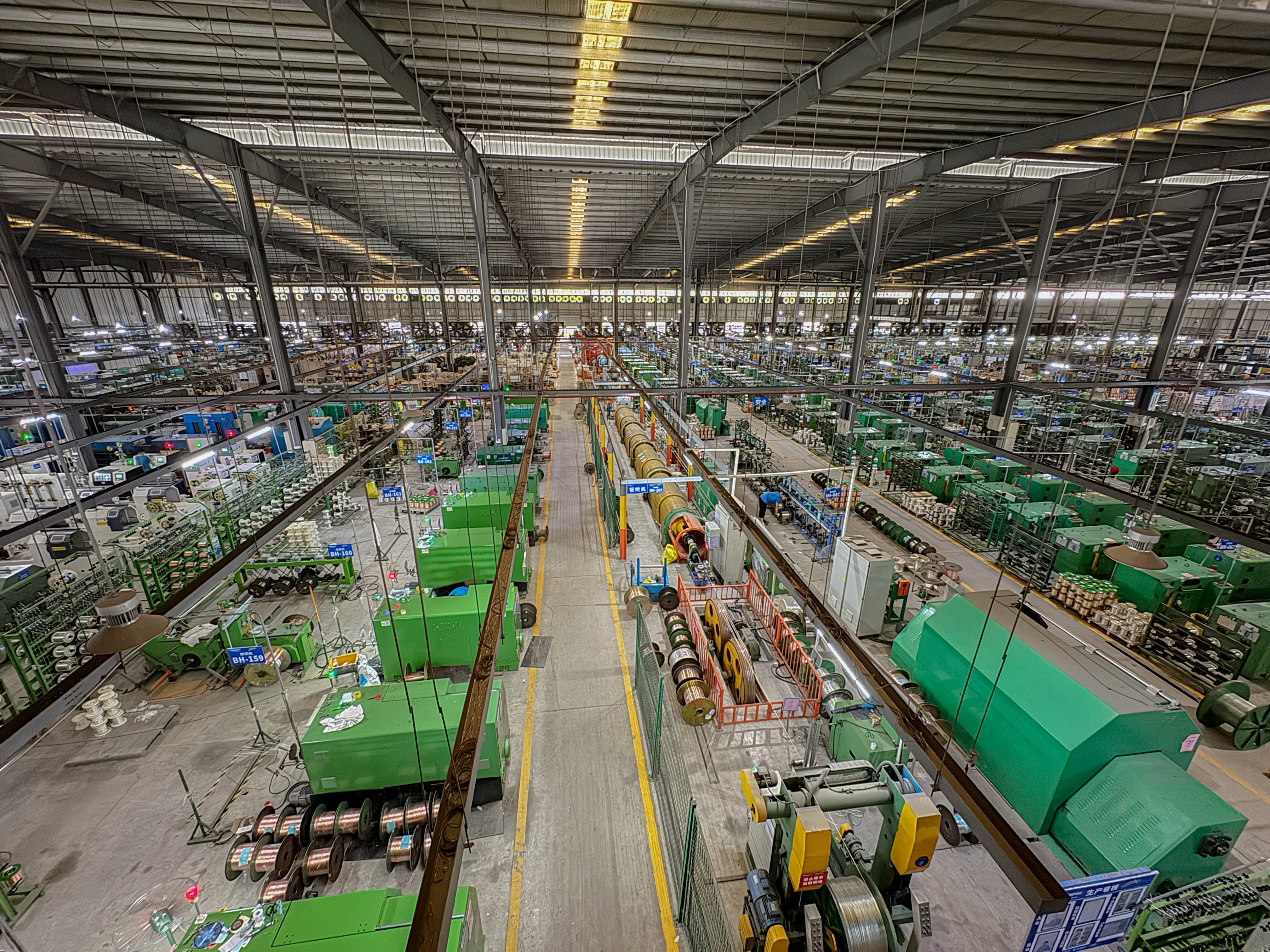
Conductor stranding is the first stage where a 23AWG solid bare copper claim is either built correctly or lost.
Problem Definition: Why CMR and PoE++ Claims Fail at Delivery
CMR and PoE++ are not marketing adjectives. They are measurable outcomes of conductor grade, insulation and jacket compound, pair geometry, and process control — which is why a supplier can print a flame class on a carton while the delivered construction sits outside that certification scope. For a buyer at the Decision-to-Execution stage, the risk is not that a cable fails immediately, but that it fails acceptance, customs review or a five-year PoE budget.
Documented failure modes in this category are consistent and predictable:
- Label versus test report conflict. If a cable label carries a higher CPR fire class than the official Notified Body test report, the goods can be recalled or fined by EU market surveillance authorities and the project acceptance can fail.
- Shield construction outside certificate scope. When the delivered shielding type differs from the shielding construction recorded in the CPR certificate, the product is treated as a non-certified variant and project acceptance fails.
- Expired UL documentation. A supplier submitting an expired UL certificate for a North American network cable order risks the product being treated as uncertified goods, with cargo detention.
- Conductor substitution. Copper-clad aluminium (CCA) cable uses an aluminium core with a thin copper coating: low price, higher resistance, poor PoE performance and easy oxidation. It is not suitable for permanent engineering deployment.
- Wrong conductor construction. Substituting stranded flexible cable for solid conductor cable in fixed horizontal building cabling produces bad contact performance, short network link service life and on-site link test failure.
- Performance shortfall at 10Gbps. Deploying Cat6A cable that does not meet ANSI/TIA-568.2-D performance for a 10G highspeed network project results in transmission errors, packet loss and unstable 10Gbps operation.
None of these failure modes can be detected from a price list. They are detected by matching a supplier’s claims to its construction details, certification documents and factory test routine.
Industry Background: A Commodity Category With Moving Compliance Requirements
Ethernet cable is a high-volume commodity, but its compliance surface is expanding rather than stabilising. The global Ethernet cable market was valued at USD 38.55 billion in 2025 and is forecast to reach nearly USD 70.02 billion by 2032, a CAGR of 8.9% from 2026 to 2032, according to Maximize Market Research. Dataintelo reports that the Cat6 segment alone held a 32.5% share of the category in 2025 — which is precisely why CMR, the flame rating specified for Cat6 constructions, is one of the most frequently quoted and least frequently verified claims in the category. Research scopes differ between firms, so buyers should treat any single market figure as a scope-dependent estimate rather than a precise count.
Two standards developments directly affect supplier evaluation:
- The Telecommunications Industry Association released ANSI/TIA-568.2-E in October 2024, replacing ANSI/TIA-568.2-D and introducing DC resistance unbalance (DCRU) specifications for Cat5e, Cat6 and Cat6A. A supplier working from the older standard is not automatically wrong, but a buyer needs to know which revision a quotation is written against.
- Under EU CPR (Construction Products Regulation) and EN 50575, the B2ca class represents high fire performance with strict thresholds: flame spread (FS) ≤ 1.5 m, total heat release (THR) ≤ 15 MJ, and peak heat release rate ≤ 30 kW. Cables destined for EU public buildings are increasingly specified at this level rather than at the basic Eca class.
Trade classification also shapes how orders are split. Ethernet patch cables with connectors (Cat5e, Cat6, Cat6a and similar) fall under HS code 8544.42, while bulk cable on a reel without connectors falls under HS code 8544.49. The US MFN duty rate for HS 8544.42.90 is 2.6%, while the EU MFN rate is 0%. Buyers sourcing a 305m bulk Ethernet cable for on-site termination and buyers sourcing finished assemblies are therefore importing under different codes — a detail that belongs in the supplier evaluation, not after the shipment.
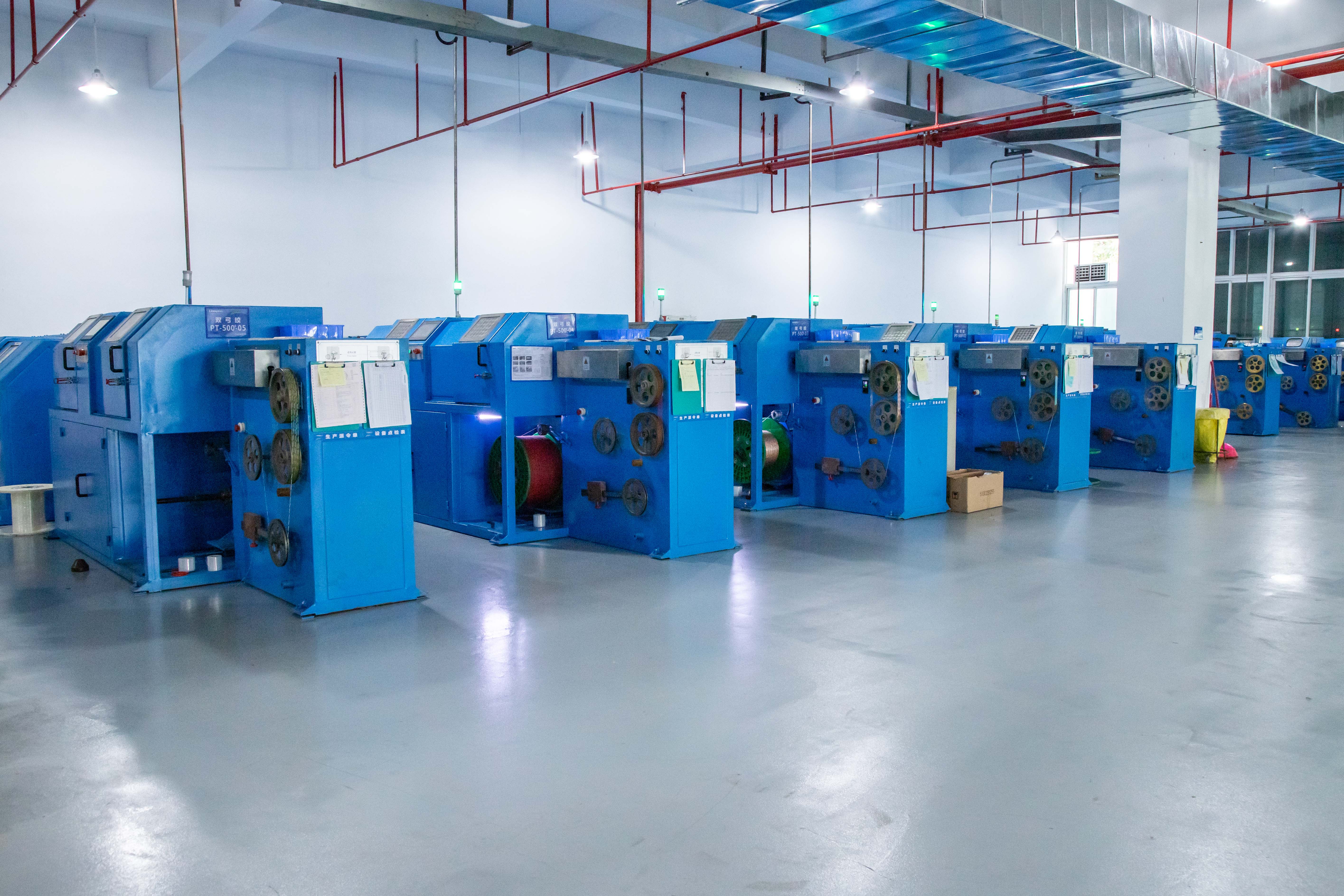
Twisted-pair geometry determines crosstalk behaviour; it cannot be corrected later in the process.
Detailed Solution: Six Verification Domains for a CMR and PoE++ Supplier
1. Conductor integrity: 24AWG versus 23AWG solid bare copper
The single fastest way to invalidate a PoE++ claim is to accept a conductor that cannot carry the current. Linoya Electronic Technology Co., Ltd., established in 1997 and based in Dongguan, China, builds its Ethernet range on solid bare copper conductors across every model from Cat5e to Cat8, with LDPE insulation and a PVC or LSZH jacket. The conductor gauge is where the models separate: Cat6 is offered in both 24AWG and 23AWG versions, while Cat6a, Cat7 and Cat7a constructions step up to 23AWG and, at the top of the range, 22AWG.
The gauge difference is not cosmetic. A 23AWG conductor carries roughly 15% lower conductor resistance than its 24AWG equivalent, which translates into higher power transmission efficiency on the same PoE load. The 22AWG conductors used in higher-bandwidth constructions reduce resistance further, by approximately 20%. For a buyer validating a PoE-rated Ethernet cable, the practical check is simple: confirm the conductor material, confirm the AWG, and confirm that the AWG in the quotation matches the AWG in the construction actually shipped.
2. Flame-rating discipline: CM/CMG, CMR and CMP belong to different product families
Flame rating is a construction decision, not an optional label. In Linoya’s current Ethernet cable portfolio the rating ladder is clearly defined: the Cat5e range (U/UTP, F/UTP and SF/UTP) is specified at CM/CMG, the Cat6 range (U/UTP, F/UTP and SF/UTP) is specified at CMR, and the Cat6a, Cat7, Cat7a and Cat8 ranges are specified at CMP.
That hierarchy matters during specification review. Plenum air-handling space in North America strictly requires CMP flame-rated cable, and CM/CMG grade cannot satisfy plenum code. A buyer who accepts a Cat5e quotation for a plenum installation has a compliance problem that no inspection report will fix after the fact. Equally, a buyer specifying CMR for a riser-class Cat6 installation is specifying a rating the manufacturer actually documents for that family — and should expect to see it matched in the cable legend and the packaging.
3. PoE++ delivery: power budget, not just a label
PoE++ performance is governed by conductor cross-section and cable length. Within the Linoya range, Cat5e is positioned for standard PoE and PoE+ applications such as general surveillance cameras, Cat6 works with PoE and PoE+ power supply, and Cat6a supports PoE++ up to 90 W together with 500 MHz bandwidth and guaranteed 10Gbps across a full 100-metre channel. Cat6a also passes strict alien-crosstalk testing, which matters when PoE++ and 10Gbps traffic run through densely bundled trays.
For a deployment combining high-power devices and long horizontal runs, the evaluation question is whether the supplier can demonstrate a resistance and attenuation profile that keeps voltage at the far end of the run. A 23AWG solid-copper Cat6a construction reduces conductor resistance relative to thinner gauges, which lowers power loss over distance and supports stable PoE++ supply. Where a camera or access point sits near the end of a long cable run, specifying Cat6a rather than Cat5e is the decision that avoids power attenuation.
4. Shield construction must sit inside the certification scope
Shield type is one of the most common places where a delivered lot and a certificate quietly disagree. Linoya builds unshielded (U/UTP), single foil (F/UTP), screen-plus-foil (SF/UTP), pair-foil (U/FTP) and overall-plus-pair full foil (F/FTP) constructions across the range. Each construction has a different name on a certification document, and a mismatch between the delivered shielding and the shielding recorded in the certificate turns the product into a non-certified variant.
The mitigation is procedural: match the cable shielding structure to the certification scope before the order is placed, and confirm that the actual construction falls within the corresponding certificate. This is what separates a documented supply from a verbal assurance.
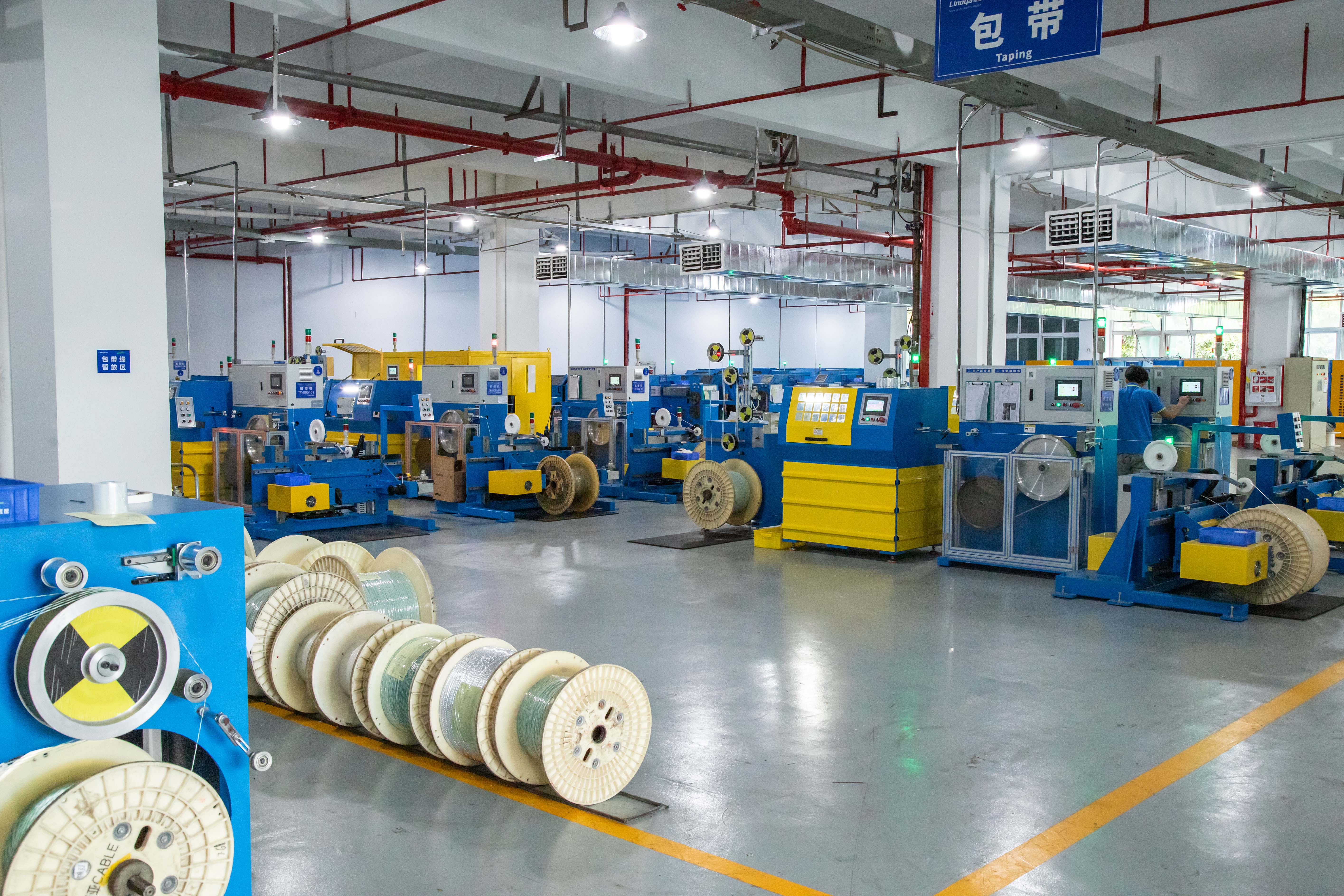
Shield taping defines whether a cable is F/UTP, SF/UTP or F/FTP — and therefore which certificate scope it must fall inside.
5. Certification authenticity: file numbers and Notified Body documents
Valid certification is issued by an authorised body, not by the supplier. For the North American market, Linoya maintains UL file E320763 for communication LAN cables and holds ETL Verified listings issued by Intertek, including a Cat6 U/UTP CM horizontal solid cable verified against the ANSI/TIA-568.2-D Category 6 performance specification. For the EU market, Linoya’s CPR documentation is issued by Notified Bodies — TÜV, EZÚ and VDE — rather than produced in-house.
A detail worth requesting explicitly: the Cat6A 4-pair 23AWG U/FTP horizontal solid cable is ETL Verified, and that particular certification does not carry a marked flame rating. A supplier that discloses this is more useful to a buyer than one that implies every certificate covers every attribute. Buyers should also confirm whether a project requires ANSI/TIA-568.2-D compliance at all, since some Cat6A ETL-verified products do not quote that standard.
| Evidence to request | What it proves | How to verify |
|---|---|---|
| UL file E320763 | Active UL Mark coverage for communication LAN cables | Check the file number and its validity period before ordering |
| ETL Verified listing (Intertek) | Cat6 U/UTP CM horizontal solid cable to ANSI/TIA-568.2-D; Cat6A U/FTP 4-pair 23AWG with no flame rating marked | Confirm the model and attribute actually covered by the listing |
| CPR certificate — Eca class | Cat5e U/UTP 24AWG x4P solid via VDE Notified Body 0366 (EN 13501-6); Cat6 U/UTP LSZH via EZÚ 1014 (CSN EN 13501-6:2014) | Verify through the Notified Body, not through a supplier PDF alone |
| CPR certificate — Dca-s1,d0,a2 | Cat6A U/FTP LSZH and Cat7 S/FTP LSZH constructions for EU public-building projects | Cross-check jacket material and shielding against certificate text |
| CPR certificate — B2ca class | S/FTP Ethernet cable tested under EN 50575:2014+A1:2016 via TÜV Rheinland InterCert Kft. 1008 | Match the fire class required by the tender clause |
| Pre-shipment test record | Electrical performance of the finished lot before dispatch | Agree it as the written acceptance criterion in the purchase order |
6. Production and QC capability behind repeat orders
Certification proves a design; process capability proves a repeat order. Linoya operates three industrial parks in Shenzhen and Dongguan plus a production base in Vietnam, with more than 100 production lines, a 60,000 m² factory footprint, over 3,000 employees and an R&D team of more than 300 engineers. Annual cable and wire output is 4,000,000 kilometres, and export business accounts for roughly 30% of total sales, with major markets in the EU and the Middle East.
All finished cables pass factory-level electrical performance testing before delivery. That step is the operational counterpart to a CMR or PoE++ claim: it converts a specification into a lot-level record. Buyers evaluating long-term supply should treat the QC routine, not the sample, as the real deliverable.
Step-by-Step Breakdown: An Eight-Step Pre-Order Checklist
- Freeze the specification sheet. Write down category, conductor material and AWG, flame rating, shielding type, jacket material and required PoE class. A specification that says only “Cat6 CMR” leaves conductor gauge and shielding undefined — and those are the variables that decide PoE++ performance.
- Match the flame rating to the installation space. Plenum space requires CMP; CM/CMG cannot satisfy plenum code. Confirm that the rating offered belongs to the product family you are buying, not to a different model in the same catalogue.
- Inspect a physical sample before the bulk order. Strip back the jacket and confirm solid bare copper rather than CCA, count the conductor gauge, verify pair twist integrity, and check the cable legend against the stated fire class.
- Map shielding to certification scope. If the tender names a shielding construction, confirm the certificate covers that construction. A construction outside the certificate is an uncertified variant regardless of how the cable performs.
- Authenticate the certificates. Confirm the UL file number is active, confirm the ETL listing covers the exact model and attribute, and verify CPR documents through the issuing Notified Body — TÜV, EZÚ or VDE.
- Validate the 10Gbps claim against distance. Cat6 supports 10Gbps up to 55 metres; Cat6a supports stable 10Gbps across the full 100-metre channel with 500 MHz bandwidth. Segments longer than the supported distance do not become compliant through better connectors.
- Check the PoE power budget at the far end. Confirm conductor resistance, confirm that Cat6a is specified where PoE++ up to 90 W is required, and confirm whether the run uses solid conductor cable appropriate to fixed horizontal wiring.
- Agree commercial and acceptance terms in writing. Linoya’s standard terms are a minimum order quantity of 305 m per carton with a 100-carton MOQ, FOB or EXW delivery terms, pre-shipment test as the acceptance criterion, and payment of 30% deposit with 70% balance before shipment.
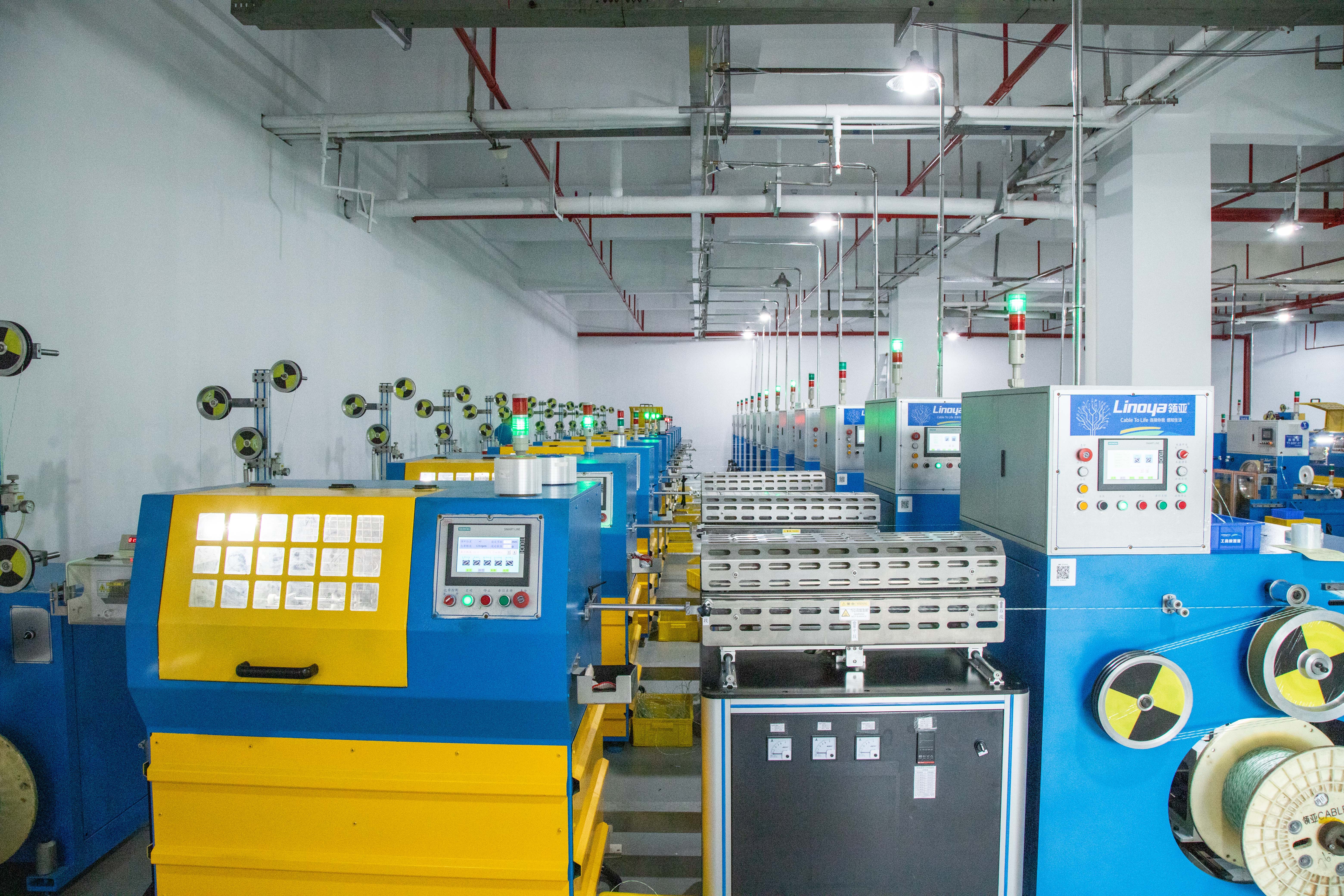
Jacket extrusion determines the fire performance class and whether LSZH can be claimed for a public-building project.
Use Cases: Where CMR and PoE++ Verification Changes the Outcome
Office 10G network construction. A small or medium office 10G build combines 10G switches, servers, NAS or SAN storage, patch panels and SFP modules on Cat6a horizontal cabling. In this scenario the supplier evaluation turns on two questions: whether Cat6a is genuinely 23AWG solid bare copper with 10Gbps at 100 m, and whether the switch and patch panel end-to-end channel is documented for the full distance rather than 55 m.
Commercial office with PoE++ devices. Where access points, high-power cameras or similar devices draw PoE++ power, Cat6a up to 90 W is the relevant specification. Verifying conductor gauge and resistance before the order avoids the common outcome of adequate link speed but degraded power delivery on the longest runs.
Complex commercial and industrial edge environments. High-noise sites with motors, drives and heavy equipment call for shielded construction at a CMR-rated Cat6 level, typically F/UTP or SF/UTP, with consistent signal integrity under 24/7 operation. Here the evaluation must confirm that shielding type, flame rating and certificate scope all describe the same cable.
EU public-building projects with LSZH requirements. Hospitals, hotels, subway stations and other public buildings normally require LSZH low-smoke zero-halogen cable for fire safety, and PVC jacket cable cannot achieve high CPR fire class. For these projects the Cat6A and Cat7 LSZH constructions carrying Dca-s1,d0,a2 CPR rating are the relevant options, with jacket material and certificate text cross-checked against the tender clause.
Comparison Table: Specifications Relevant to CMR, PoE++ and 10Gbps
| Model | Conductor | Bandwidth / 10G distance | Flame rating | Certification | Documented PoE position |
|---|---|---|---|---|---|
| Cat5e U/UTP | 24AWG solid bare copper | 1Gbps | CM/CMG | UL/ETL; TIA/EIA-568-C.2 | Standard PoE / PoE+ (30 W) |
| Cat6 U/UTP | 24AWG / 23AWG solid bare copper | 10Gbps @ 55 m | CMR | UL/ETL; TIA/EIA-568-C.2 | PoE / PoE+ |
| Cat6 F/UTP | 24AWG / 23AWG solid bare copper, overall foil | 10Gbps @ 55 m | CMR | UL/ETL; TIA/EIA-568-C.2 | PoE / PoE+ |
| Cat6a U/UTP | 23AWG solid bare copper | 10Gbps @ 100 m, 500 MHz | CMP | UL/ETL/CPR; TIA/EIA-568-C.2 | PoE++ up to 90 W |
| Cat6a F/FTP | 23AWG solid bare copper, overall + pair foil | 10Gbps @ 100 m | CMP | UL/ETL/CPR | PoE++ up to 90 W |
| Cat7 F/FTP | 23AWG solid bare copper | 40Gbps @ 50 m | CMP | UL/ETL/CPR | Not specified for this model |
| Cat8 F/FTP | 22AWG solid bare copper | 40Gbps @ 30 m | CMP | UL/ETL/CPR | Not specified for this model |
Table reflects Linoya Ethernet cable product data. PoE++ at up to 90 W is documented for Cat6a; higher-bandwidth models are specified for data transmission rather than PoE++ power delivery.
Frequently Asked Questions
Which flame rating and certificate evidence should I verify for a CMR Ethernet cable order?
CMR is the flame rating specified for Linoya’s Cat6 family — Cat6 U/UTP, Cat6 F/UTP and Cat6 SF/UTP — while CM/CMG applies to the Cat5e range and CMP applies to Cat6a, Cat7, Cat7a and Cat8. For North American projects, verify an active UL Mark (Linoya file E320763) or an ETL Verified listing from Intertek. For EU projects, verify a CPR certificate issued by a Notified Body; Linoya’s CPR documents are issued by TÜV, EZÚ and VDE bodies. Note that the Cat6A 4-pair 23AWG U/FTP horizontal solid cable is ETL Verified with no flame rating marked, so always confirm what a specific certificate does and does not cover.
How do I confirm a supplier can actually build 23AWG Cat6a that holds 10Gbps across 100 metres?
Start with the construction data: Cat6a models use 23AWG solid bare copper with 10Gbps at 100 m, 500 MHz bandwidth and TIA/EIA-568-C.2 compliance, and Cat6a passes strict alien-crosstalk testing. A 23AWG conductor has roughly 15% lower resistance than 24AWG, which is part of how the channel holds 10Gbps over the full distance. Then check the standard revision: the TIA released ANSI/TIA-568.2-E in October 2024, replacing ANSI/TIA-568.2-D and adding DC resistance unbalance specifications for Cat5e, Cat6 and Cat6A. Because some Cat6A ETL-verified products do not quote ANSI/TIA-568.2-D, buyers should confirm the datasheet and certification scope against the revision their project actually requires. Linoya’s R&D team of more than 300 engineers supports this technical verification.
What commercial terms should I expect when ordering bulk Ethernet cable?
Linoya’s standard purchasing terms are a minimum order quantity of 305 m per carton with a 100-carton MOQ, delivery on FOB or EXW terms, pre-shipment test as the acceptance criterion, and payment of 30% deposit with 70% balance before shipment. Buyers should also confirm the HS code their goods will clear under, since Ethernet patch cables with connectors are classified under HS 8544.42 while bulk cable on a reel without connectors falls under HS 8544.49, and duty treatment differs between the US and EU markets.
Can I validate performance on a sample before committing to a bulk order?
Yes, and it is the highest-value step in the process. Request the factory-level electrical performance test record that accompanies finished cable before delivery, and confirm in writing that pre-shipment test is the acceptance criterion. On your side, validate the sample with a cable tester by checking continuity and the LED sequence for open circuit, short circuit or mis-wiring, then confirm link status and actual throughput in a live network test. Remember that factory-tested cable still needs an on-site re-check after construction, because termination quality, bending radius and EMI conditions affect final performance. To arrange sample evaluation or request a quotation, contact Linoya Electronic Technology Co., Ltd. at inquiry@linoya.com or via WhatsApp at +86-13038893260.
How do I assess supply continuity and long-term support for repeat orders?
Look at production infrastructure and export track record rather than at catalogue size. Linoya was established in 1997 and operates three industrial parks in Shenzhen and Dongguan plus a production base in Vietnam, with more than 100 production lines, a 60,000 m² factory footprint, over 3,000 employees and annual cable and wire output of 4,000,000 kilometres. Export business accounts for approximately 30% of total sales, with major markets in the EU and the Middle East — markets that demand CPR and UL/ETL documentation on every batch. For repeat orders, the practical long-term criterion is batch-to-batch product consistency: the same conductor grade, the same shield construction and the same test routine on every shipment.
Conclusion: Verify the Process, Not the Print
A CMR flame rating and PoE++ power delivery are both production outcomes. CMR reflects a jacket and construction decision made at the extrusion line and documented on a cable legend; PoE++ reflects conductor gauge, resistance and copper quality decided at the stranding line. Neither can be confirmed from a datasheet alone, and neither can be corrected after the goods are on site.
The evaluation framework in this guide reduces supplier selection to six verifiable domains — conductor integrity, flame-rating discipline, PoE power budget, shield construction against certification scope, certificate authenticity through issuing bodies, and lot-level quality control — and one written acceptance criterion. Applied before a purchase order rather than after a failed inspection, that framework converts compliance risk into a documented, repeatable supply relationship.
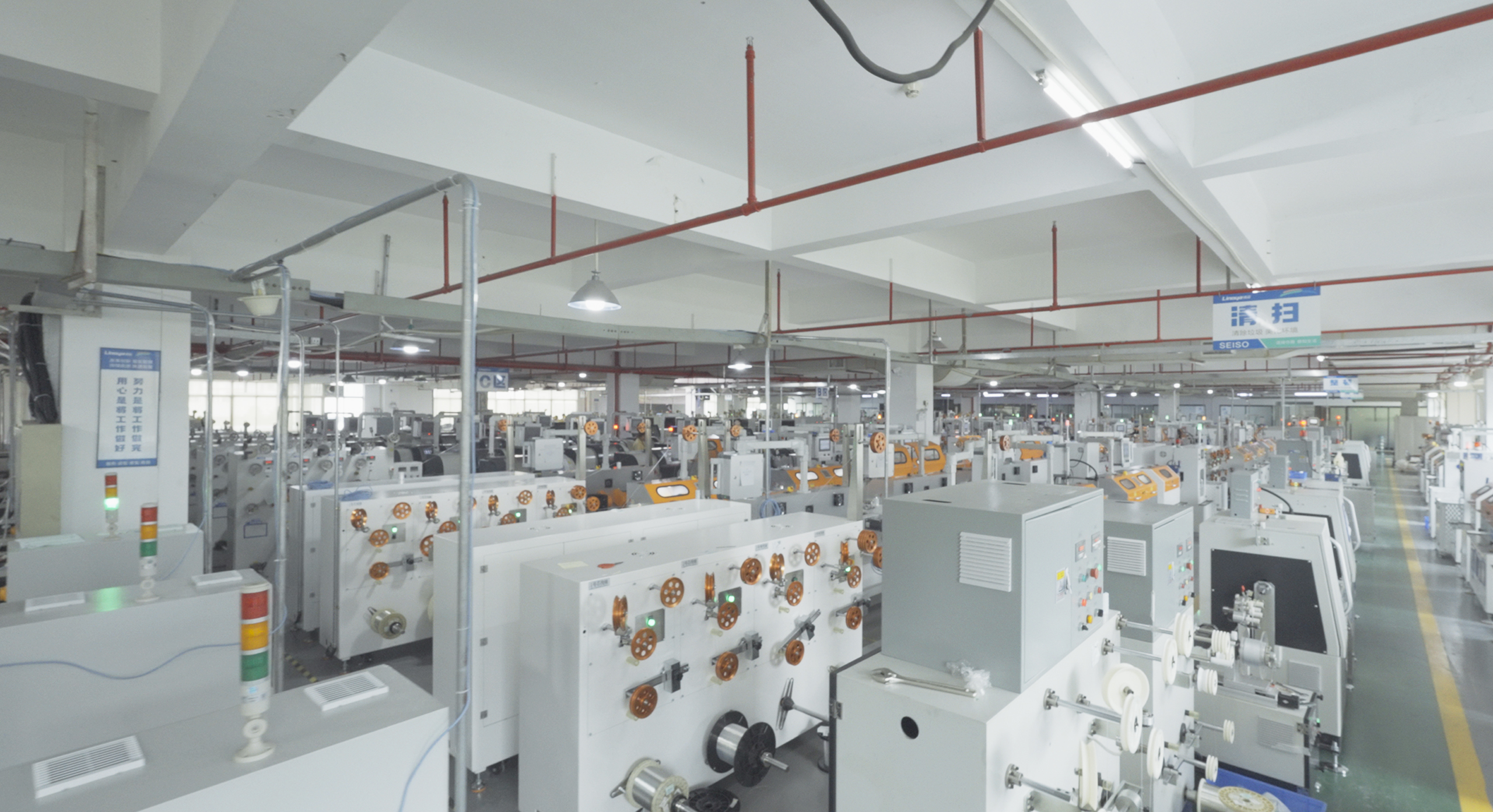
Bulk-order readiness depends on documented process capability, not on catalogue breadth.
Next step: verify before you commit
Share your project specification — category, AWG, flame rating, shielding type and PoE class — and Linoya Electronic Technology Co., Ltd. can confirm which model falls inside the relevant certification scope, plus the pre-shipment test documentation available for the lot.
Email: inquiry@linoya.com | WhatsApp: +86-13038893260 | Website: www.linoya.com
Download the full product range and certification overview: Linoya Electronic Technology Co., Ltd. catalogue (PDF)
Have Questions or Need More Details?
Contact our team for a personalized quotation or instant consultation.
Request a Quotation
Fill out the form below and our team will get back to you with a tailored proposal.
WhatsApp Direct Chat
Prefer to chat in real-time? Message us on WhatsApp for instant assistance & quick answers.
- Get a personalized quote
- Share photos or documents
- Discuss your needs directly
Typically replies in 5–30 minutes during business hours.