
Outdoor Waterproof Ethernet Cable: Definition, Construction and Buyer Checklist
An outdoor waterproof Ethernet cable is a twisted-pair data cable built for permanent or semi-permanent installation outside the building envelope: on facades, poles, masts, rooftops, fences, cable trays between buildings, or open industrial and agricultural ground. In standards terms it is not a separate cable category. TIA/EIA-568-C.2 defines the electrical performance of Cat5e, Cat6, Cat6a, Cat7 and Cat8, and “outdoor waterproof” is a construction specification layered on top of the category the network actually needs. That specification has three parts: a weather-resistant jacket compound, a shielding structure with correct grounding, and a sealed termination.
Getting the order wrong is expensive. A cable that passes a channel test on commissioning day will still fail in the field if its jacket embrittles under UV exposure, if its connector takes on water, or if a shielded run is grounded at the wrong point. This guide explains how the construction works, which failure modes actually appear outdoors, what buyers can verify from supplier documentation, and how a manufacturer such as Linoya Electronic Technology Co., Ltd. — a cable and wire manufacturer established in 1997 that lists outdoor waterproof cables and connectors in its product range — positions these products.
Problem Definition: Why Outdoor Copper Runs Fail Before They Age Out
Outdoor Ethernet failures rarely announce themselves as cable failures. They appear as network symptoms, and by the time anyone suspects the cable, the run has often already been replaced once. Linoya’s published troubleshooting guidance lists the symptoms that typically precede a replacement decision: no link light, frequent disconnection, slow network speed, random packet loss, unstable PoE power supply, and a link that negotiates at 10/100 Mbps instead of the expected gigabit rate.
The same guidance groups the underlying causes into five families:
- Physical damage — broken inner conductors, crushed cable, scratched jacket, or routing that bends the cable past its limit.
- Termination defects — wrong wiring sequence, untwisted pairs left too long, poor crimping, damaged or oxidised RJ45 pins.
- Cable quality issues — copper-clad aluminium (CCA) conductors, off-spec cable grade, or counterfeit product.
- Environmental interference — heavy EMI, incorrect shielded-cable grounding, and mixed indoor/outdoor cable usage.
- Connector mismatch — low-grade RJ45 connectors that cannot hold high-frequency performance for Cat6 or Cat6a.
Three of those five become materially worse outdoors. UV exposure and moisture cycling attack the jacket. Temperature swings repeatedly open and close the seal at the connector. Long aerial runs pick up both induced surges and mechanical strain. The “mixed indoor/outdoor cable usage” entry is the one buyers most often create for themselves: a standard indoor PVC-jacketed cable installed on a pole can pass the acceptance test on the day of commissioning and still fail long before the installation’s intended service life ends.
This is why the outdoor question cannot be answered by a single adjective. An outdoor waterproof Ethernet cable has to be described by its category, conductor, jacket compound, shield type, flame rating and termination method — and each of those has to be written down before the order is placed.
Industry Background: Why Outdoor Data Cabling Is Specified More Carefully Now
The amount of copper installed outside buildings has grown steadily as cameras, wireless access points, small cells and outdoor sensors have moved onto Ethernet-based backhaul. Two shifts make the outdoor construction decision more consequential than it was a decade ago.
First, power and data increasingly travel on the same cable. Power over Ethernet removes the local power supply and its separate conduit, but it also means a moisture-damaged jacket or an unstable connector now takes down the device’s data and its power at the same time. Linoya’s category selection guidance references PoE++ loads up to 90 W when comparing cable grades, which is a useful reminder that conductor gauge and insertion-loss behaviour matter more in PoE++ designs than in plain data links.
Second, the regulatory paperwork around cabling has become more visible in tenders, particularly in Europe. Cables installed in construction works are generally assessed for reaction-to-fire behaviour under the CPR framework and for electrical safety through third-party marks such as UL and ETL. A buyer who compares cable only on “waterproof” claim wording — without a category, a flame rating and a test report — has nothing to fall back on if the installation is questioned later.
The practical consequence is that outdoor waterproof Ethernet cable is now a specification line item rather than an accessory. For a project in the EU or the Middle East — the two regions that form Linoya’s principal overseas sales areas — that specification is usually reviewed together with the supplier’s compliance documentation, not separately from it.
Detailed Solution: The Construction Decisions That Make a Cable Outdoor-Rated
Five decisions determine whether a cable survives outdoors. Four are visible in the cable construction itself; the fifth belongs to the installation.
1. Conductor: solid bare copper, 22–24 AWG
Every Linoya Ethernet cable model — CAT5E through CAT8 — uses solid bare copper conductors, in gauges from 24 AWG on the CAT5E range to 23 AWG on CAT6A and 22 AWG on CAT7A and CAT8. Solid bare copper is the relevant choice for fixed outdoor runs because it holds its geometry through temperature cycling, whereas copper-clad aluminium appears in Linoya’s troubleshooting guidance as a cable-quality cause of performance loss. Gauge also determines resistance and, in PoE designs, how much heat the bundle generates, so the higher the far-end power budget, the less reason there is to economise on conductor material.
2. Jacket compound: the first and most exposed defence
Jacket compound is the largest single difference between an indoor and an outdoor Ethernet cable. Linoya’s Ethernet cable series list PVC or LSZH as the standard jacket material with LDPE insulation, while the company’s wider material portfolio covers PVC, CTPE, TPE, TPU, PUR, XLPE, XLPO, LSZH and FPE compounds. For permanent outdoor exposure, compounds are selected for UV stability, low water absorption and retained flexibility at low temperature — and that selection is an application decision, not a catalogue default. Two questions are worth putting to any supplier: which compound the outdoor variant uses, and what UV and cold-bend data supports it.
3. Shielding: signal integrity, plus a correctly grounded path
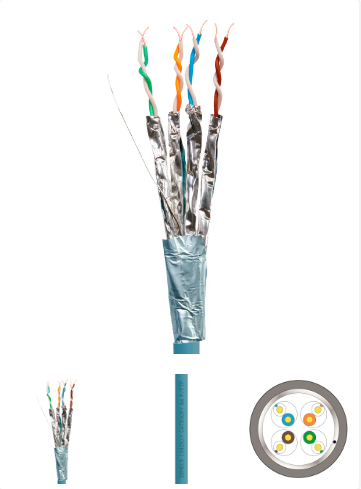
Outdoor routes share poles and trays with power conductors far more often than indoor routes do, so shield type becomes a performance decision rather than a preference. Linoya builds the same categories in several shield constructions: U/UTP (unshielded), F/UTP (overall foil), SF/UTP (screen plus foil), U/FTP (individual pair foil) and F/FTP (overall plus pair foil). The CAT6A, CAT7, CAT7A and CAT8 models use full or pair-level foil shielding; the CAT6A range delivers 10 Gbps at 100 m with a CMP flame rating. Foil shielding also sits between the insulation and the jacket, adding a diffusion layer above the twisted pairs — but only when the drain wire is grounded correctly. Faulty shielded-cable grounding is listed in Linoya’s troubleshooting guidance as an environmental interference cause, and outdoors it is the most common installation error, usually because the shield is bonded at both ends instead of at the equipment end.
4. Termination: where water actually gets in
Most outdoor water ingress happens at the connector, not through the jacket wall. Linoya’s product range therefore includes outdoor waterproof cables and connectors as well as outdoor smart connection and transmission solutions, which reflects the fact that the cable and the seal have to be specified together. Four practical checks apply: whether the connector is a gel-filled or gland-sealed design; whether the seal is sized for the cable’s actual outer diameter; whether the assembly is re-enterable for maintenance; and whether the shielded version maintains shield continuity through the connector body.
5. Surge and grounding: a system-level decision, not a cable property
Lightning and switching surges on long outdoor runs are not solved by cable construction. They are handled by the installation: surge protective devices at the building entry point, equipotential bonding of the shield, and physical separation from power conductors. It is worth stating this plainly, because it is a common expectation gap. A waterproof cable protects the signal path from water; it does not protect the equipment from a surge.
Manufacturing and Supply: What Linoya Electronic Technology Co., Ltd. Provides
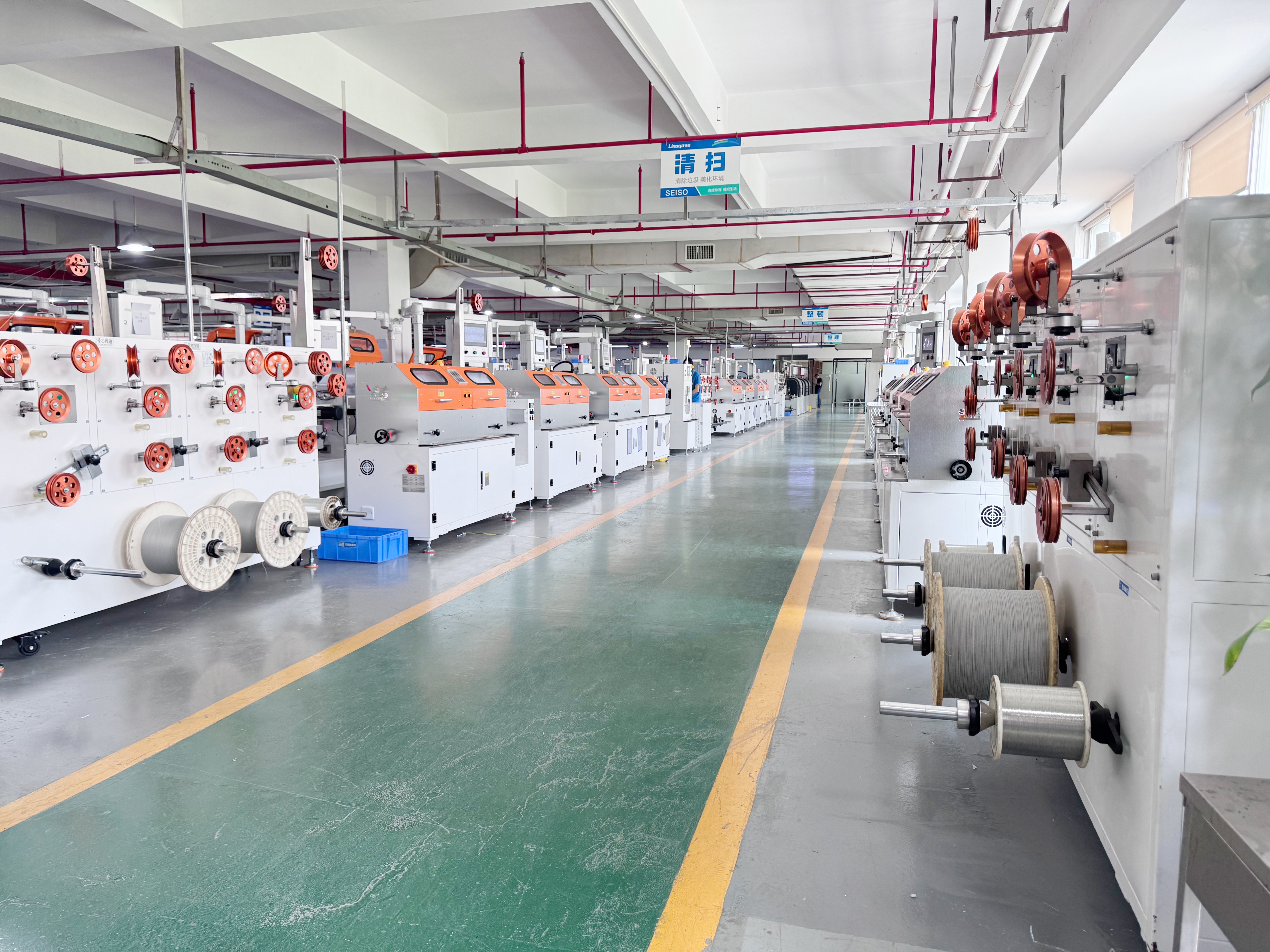
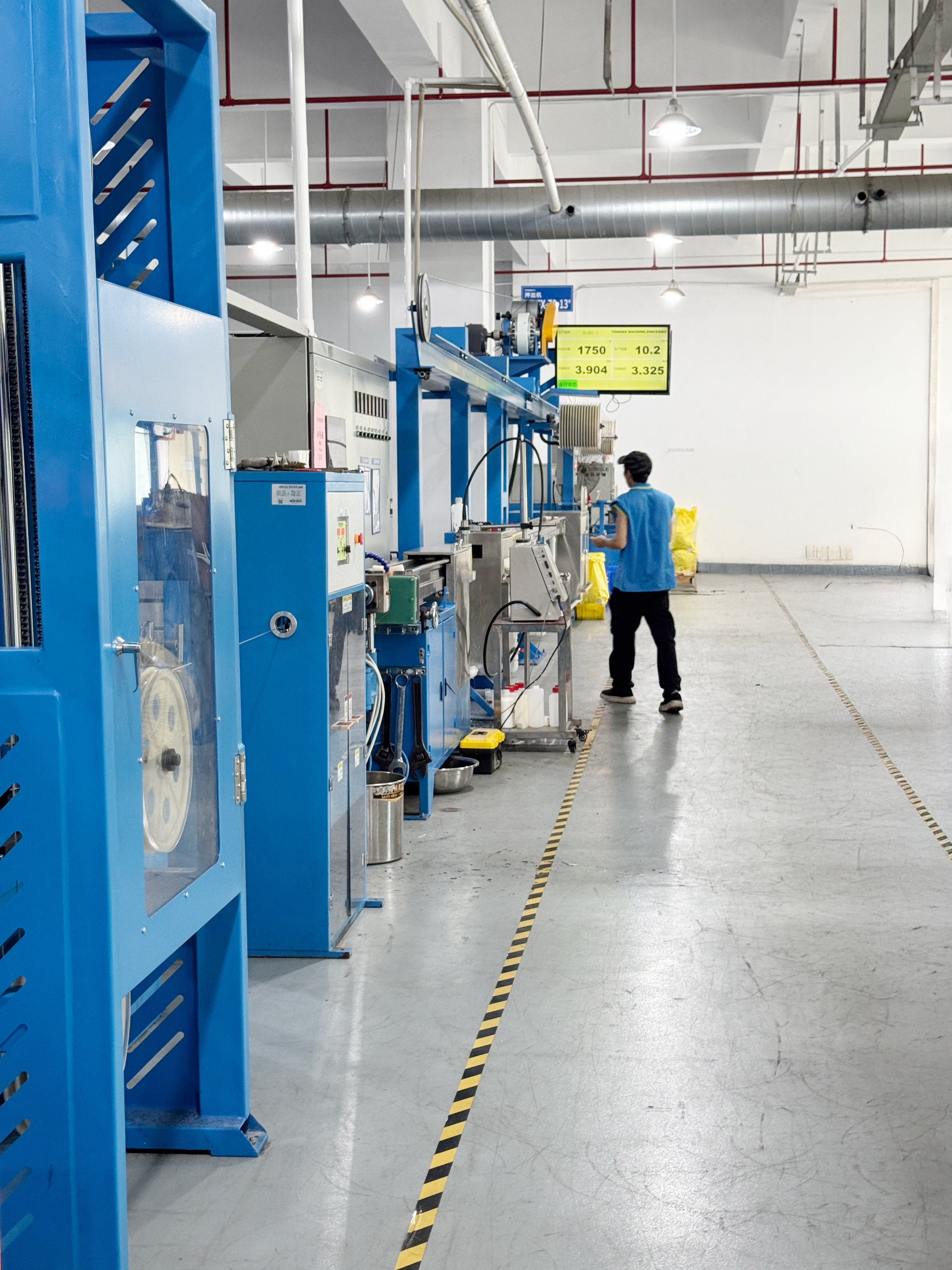
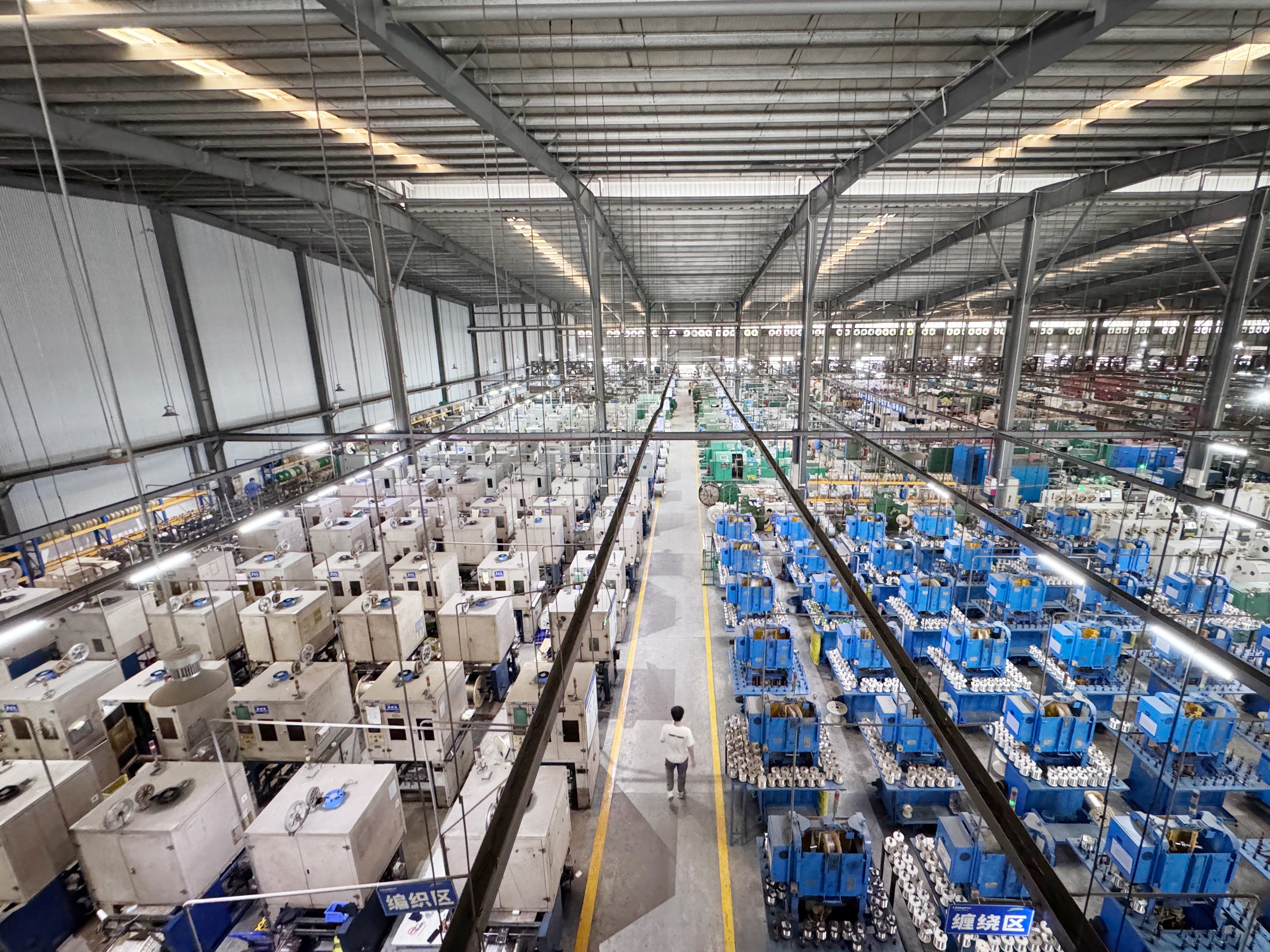
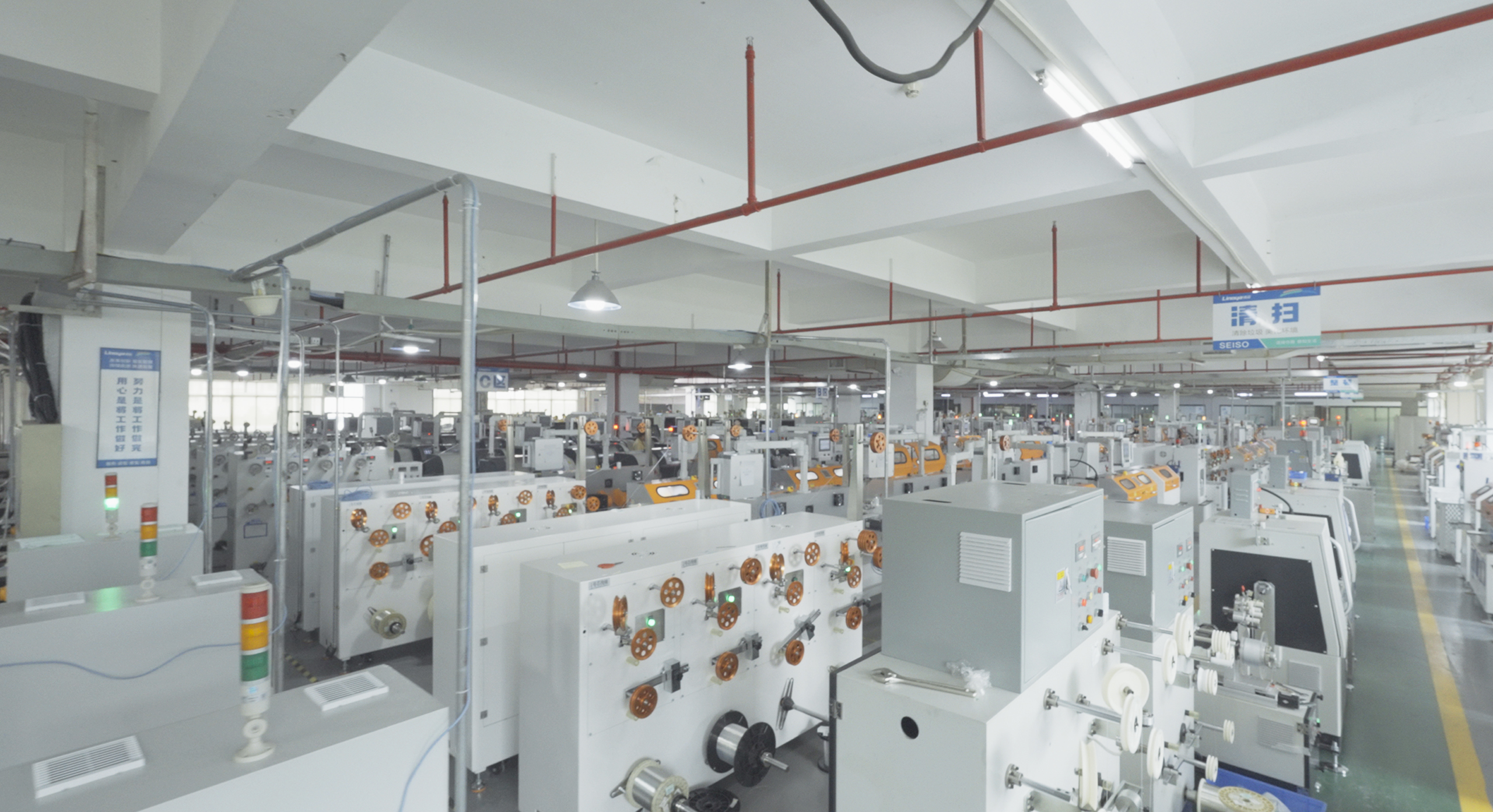
Linoya Electronic Technology Co., Ltd. was established in 1997 and has more than 20 years of experience in the cable and wire industry. The company operates three self-owned industrial parks — Shenzhen Linoya Technology Park, Dongguan Songshan Lake Linoya Industrial Park and Dongguan Chashan Linoya Industrial Park — together with the subsidiary brand Dongguan Recheer Electric Wire & Cable Co., Ltd. and one production base in Vietnam.
For buyers who have to assess supply continuity, the relevant published figures are a 60,000 m² manufacturing facility, more than 3,000 staff, an R&D team of more than 300 engineers, and an annual production capacity of 4,000,000 kilometres of cable and wire, which the company states supports stable output for recurring and long-term cable supply programmes. Export business accounts for 30% of total sales, with the EU and the Middle East forming the principal overseas sales regions and products sold in dozens of countries and regions worldwide.
On the product side, the range spans cable and wire, network cables and high-speed data transmission cables and components, photovoltaic and energy storage cables, high-voltage and charging gun cables for new energy vehicles, on-board data transmission cables, smart home power cords and plugs, and outdoor waterproof cables and connectors. Network cabling and outdoor connection products are therefore built inside the same manufacturing system that supplies the company’s other cable families — which matters when a project needs a single supplier for indoor structured cabling and the outdoor sections that connect to it.
Step-by-Step: How to Evaluate an Outdoor Waterproof Ethernet Cable
- Define the run before choosing the category. Record route length, whether the run is buried, in conduit, on a facade or aerial, the ambient temperature range, and the PoE class of the far-end device. Category then follows from speed and distance. Linoya’s selection guidance maps stable 1 Gbps duty to Cat5e, cost-controlled 10 Gbps within 55 m to Cat6, and full-channel 10 Gbps at 100 m to Cat6a — with the explicit caveat that Cat6 10G performance is not guaranteed beyond 55 m.
- Fix the protection level as one package. Jacket compound, shield type and connector sealing should be decided together, because a sealed connector on a UV-degraded jacket simply moves the failure point.
- Verify conductor and construction in writing. Ask for conductor material and gauge, shield description, insulation and jacket compound. Solid bare copper conductors in 22–24 AWG are the construction Linoya uses across its CAT5E to CAT8 Ethernet range; a data sheet that is silent on any of these points is a reason to keep asking.
- Collect the compliance documents. Look for TIA/EIA-568-C.2 performance, a flame rating suited to the route (CM/CMG for general use, CMR for risers, CMP for plenum-class spaces), and third-party marks. Linoya’s CAT6A, CAT7, CAT7A and CAT8 shielded models list UL, ETL and CPR certification, while the CAT5e and CAT6 models list UL and ETL certification; the series are stated to comply with TIA/EIA, EN and GB standards. For EU construction projects, request the CPR classification documentation separately from the marketing sheet.
- Test at both ends of the project. Linoya states that all finished cables pass factory-level electrical performance testing before delivery, and its guidance still requires an on-site re-check after construction. The practical sequence is: plug both ends into a cable tester and read the LED sequence for open circuit, short circuit or mis-wiring; connect the cable between a PC and a router and check the RJ45 link light; run a throughput test; replace the cable if mis-wiring or low throughput appears.
- Confirm recurring supply and batch consistency. On a phased rollout, ask how capacity is allocated across multiple batches and how jacket compound, category and shield construction are kept consistent between them — this is where a 4,000,000 kilometre annual capacity becomes a procurement argument rather than a brochure figure.
Use Cases: Where Outdoor Waterproof Ethernet Cable Is Specified
Outdoor IP surveillance
Camera poles and perimeter routes combine three conditions at once: continuous PoE draw, full weather exposure and long cable runs. Security camera and IP surveillance work appear among Linoya’s listed applicable industries, and PoE or PoE++ support is listed for several of its cable ranges. On these runs the decisive factors are usually connector sealing and whether the camera’s power budget still fits inside the insertion loss of the route length.
Telecom base stations and pole-mounted links
Where equipment is mounted on a mast or pole and the connecting run is exposed rather than buried, the cable sees wind loading, UV and temperature cycling simultaneously. This is the case in which a dedicated outdoor construction with a sealed connector is a technical requirement rather than an upgrade.
Smart manufacturing and industrial edge
Linoya lists Smart Manufacturing and Manufacturing & Processing Machinery among its applicable industries, and its application data covers industrial automation environments with heavy electromagnetic interference, where shielded CAT6A, CAT7 and CAT7A links are used for 10 Gbps and 40 Gbps transmission. The outdoor sections of these networks — interconnect between buildings, outdoor control cabinets, yard equipment — are where the jacket and connector specification is decided separately from the indoor cabling standard.
Smart agriculture, ecology, instruments and lighting
Smart Agriculture & Ecology, Lights & Lighting, Instruments & Meters and Construction & Decoration are among the listed applicable industries. These installations typically expose cable to irrigation, condensation cycles or sustained damp rather than to direct weather alone, and in that situation the jacket compound and connector seal usually matter more than an additional bandwidth step.
Comparison Table: Linoya Ethernet Cable Series at a Glance
The table below is drawn from Linoya’s published product specifications. Bandwidth values are the transmission distance limits stated for each model.
| Series | Conductor | Bandwidth at stated distance | Shielding variants | Flame rating | Certification listed |
|---|---|---|---|---|---|
| CAT5E | 24AWG solid bare copper | 1 Gbps | U/UTP, F/UTP, SF/UTP | CM / CMG | UL, ETL |
| CAT6 | 24AWG / 23AWG solid bare copper | 10 Gbps at 55 m | U/UTP, F/UTP, SF/UTP | CMR | UL, ETL |
| CAT6A | 23AWG solid bare copper | 10 Gbps at 100 m | U/UTP, SF/UTP, U/FTP, F/FTP | CMP | UL, ETL, CPR |
| CAT7 | 23AWG solid bare copper | 40 Gbps at 50 m | F/FTP | CMP | UL, ETL, CPR |
| CAT7A | 22AWG solid bare copper | 100 Gbps at 15 m | F/FTP | CMP | UL, ETL, CPR |
| CAT8 | 22AWG solid bare copper | 40 Gbps at 30 m | F/FTP | CMP | UL, ETL, CPR |
All series are specified against TIA/EIA-568-C.2 and are stated to comply with TIA/EIA, EN and GB standards, with LDPE insulation and PVC or LSZH jacket as standard. Outdoor duty is a separate construction layer applied on top of the selected category.
Category selection guidance
| Decision criterion | CAT5E | CAT6 | CAT6A |
|---|---|---|---|
| Typical speed requirement | Stable 1 Gbps | Short-range 10 Gbps within 55 m | 10 Gbps at 100 m |
| Procurement position | Lowest acquisition cost | Cost-controlled upgrade headroom | Higher overall project cost |
| PoE reference | PoE+ surveillance cameras at 30 W | PoE++ support listed | PoE++ up to 90 W referenced |
| Installation impact | Most forgiving handling | Moderate | Larger cable diameter, stricter handling |
| Best fit | General LAN where 10G is not planned | Cost-sensitive projects needing short 10G | Dense bundles and long-term permanent cabling |

FAQ
1. What standards and certifications should an outdoor waterproof Ethernet cable meet?
Electrical performance is normally specified against TIA/EIA-568-C.2, together with a flame rating matched to the route and third-party safety marks such as UL and ETL. In the EU, cables installed in construction works are additionally assessed for reaction-to-fire behaviour, so the CPR classification documentation is usually requested alongside the test report. In Linoya’s published specifications, the CAT6A, CAT7, CAT7A and CAT8 shielded models list UL, ETL and CPR certification, the CAT5e and CAT6 models list UL and ETL certification, and the series are stated to comply with TIA/EIA, EN and GB standards.
2. Can an outdoor waterproof Ethernet cable carry PoE++ power and 10 Gbps data at the same time?
It can, within the distance limits of the category and provided the conductor is adequate for the current. Linoya lists CAT6A models at 10 Gbps over 100 m, CAT6 at 10 Gbps over 55 m, and references PoE++ loads up to 90 W in its category selection guidance, with PoE++ support listed for its CAT6 U/UTP and CAT7 F/FTP models. All CAT5E to CAT8 models use solid bare copper conductors in 22–24 AWG. The distance limit and the power budget should be verified together, because the same higher current that makes PoE++ useful also increases heat and attenuation in the bundle.
3. What drives the cost of an outdoor waterproof Ethernet cable?
The main cost drivers are conductor material and gauge, cable category, shield construction, jacket compound, flame rating, connector sealing and order quantity. Conductor material is the least visible and most consequential: copper-clad aluminium is cheaper than solid bare copper, and CCA conductors appear in Linoya’s troubleshooting guidance as a quality issue linked to performance loss. The efficient approach is to choose the category from the required speed and distance rather than by habit, then spend the specification budget on the jacket, shield and connector details that determine outdoor service life.
4. Can I request a sample before committing to a full outdoor cabling order?
Yes. Sampling is the normal first step for outdoor waterproof cable, because jacket compound, connector fit and shield continuity cannot be judged from a data sheet alone. Linoya states that all finished cables pass factory-level electrical performance testing before delivery, and sample and technical documentation requests can be sent to inquiry@linoya.com or through www.linoya.com. For background on the manufacturing setup behind those samples, the company catalogue is available for download: Linoya Electronic Technology Co., Ltd. catalogue (PDF).
5. Can supply be sustained for a recurring or phased outdoor cabling programme?
Capacity is the key question for phased rollouts. Linoya reports an annual production capacity of 4,000,000 kilometres of cable and wire, which the company states supports stable output for recurring and long-term cable supply programmes, with export business accounting for 30% of total sales and the EU and the Middle East as the principal overseas sales regions. Batch consistency for jacket compound, category and shield construction should still be confirmed in writing for each phase; delivery scheduling is best fixed per project, so request a quote and schedule confirmation through the company’s contact channels before the first batch is released.
Conclusion
An outdoor waterproof Ethernet cable is not a product label — it is a construction specification. The category (CAT5E to CAT8) sets the electrical performance, but the jacket compound, shield type and connector sealing determine whether that performance still exists after two or three years of UV, moisture and temperature cycling. Buyers who fix the run definition first, then the protection package, then the compliance documentation, end up with a specification that can be tested and defended instead of a claim that cannot be checked.
Linoya Electronic Technology Co., Ltd. has manufactured cable and wire since 1997, with a 60,000 m² facility, more than 3,000 staff, more than 300 engineers in R&D, and an annual capacity of 4,000,000 kilometres. Its Ethernet series run from CAT5E to CAT8 with solid bare copper conductors, and its product range includes outdoor waterproof cables and connectors together with outdoor smart connection and transmission solutions.
Next Step: Samples, Data and Quotation
If you are specifying an outdoor run, send the route length, category, PoE class and installation environment to the Linoya team and request a sample for validation before the full order.
Email: inquiry@linoya.com | Tel: +86-15602610696 | WhatsApp: +86-13038893260
Website: https://www.linoya.com/
Catalogue download: LINOYA ELECTRONIC TECHNOLOGY CO., LTD. brochure
Address: No.2, The Fourth West Industrial Road, High-Tech Industrial Development Zone, Songshan Lake, Dongguan City, Guangdong Province, China.
Have Questions or Need More Details?
Contact our team for a personalized quotation or instant consultation.
Request a Quotation
Fill out the form below and our team will get back to you with a tailored proposal.
WhatsApp Direct Chat
Prefer to chat in real-time? Message us on WhatsApp for instant assistance & quick answers.
- Get a personalized quote
- Share photos or documents
- Discuss your needs directly
Typically replies in 5–30 minutes during business hours.