
Cat7a vs Cat8 Ethernet Cable: A Data Center Interconnection Guide
For data center high-speed interconnection, the Cat7a versus Cat8 decision is settled by verifiable link parameters — conductor gauge, bandwidth at a defined reach, shield topology, flame rating and certification coverage — not by which category number prints larger on the jacket. In the Linoya shielded range, CAT8 F/FTP is specified at 40Gbps over runs up to 30 m, while CAT7A F/FTP is specified at 100Gbps over runs up to 15 m. Both constructions use 22AWG solid bare copper conductors, both apply an overall plus pair-level foil shield, both carry a CMP flame rating, and both are UL, ETL and CPR certified while complying with TIA/EIA-568-C.2.
That produces a counter-intuitive situation that trips up many cable schedules: the higher-numbered category is not automatically the longer-reach or the higher-throughput option. Cat8 and Cat7a solve two different problems in the same rack row. This guide sets out the parameters a data center buyer, system integrator or procurement engineer can actually verify, and shows how to match each cable to the link it will serve.
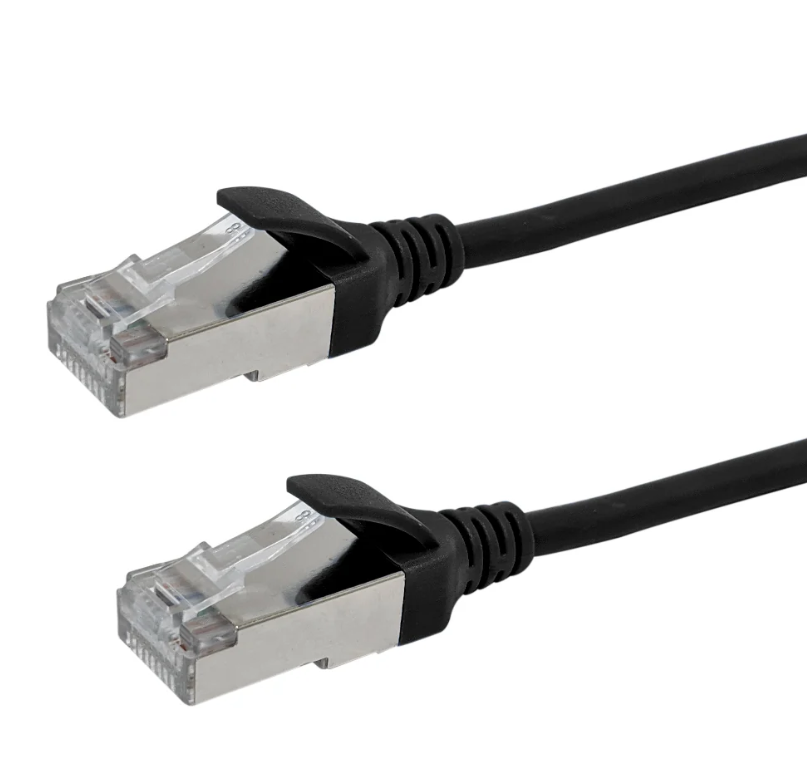
Problem Definition: A Category Label Is Not a Link Description
An Ethernet cable category is a performance label attached to a tested construction — a specific conductor gauge, twist geometry, shield arrangement and jacket compound tested as one unit. It is not a description of the link that will be installed inside a cabinet. Two quotations can both read Cat7a F/FTP full shielded and still differ in conductor diameter, foil coverage, jacket compound, flame rating and certificate scope. Those differences, not the label, decide whether a channel passes commissioning.
In a data center, the parameters that determine whether a link behaves as designed are:
- the actual channel length, including patch cords at both ends;
- the target data rate and the reach at which the cable is specified to deliver it;
- bundle density and the electromagnetic environment inside the cable manager;
- shield continuity and bonding when a shielded construction is used;
- flame rating relative to the pathway — plenum, riser or general purpose;
- certificate coverage for the destination market and for the exact model ordered.
Standards also keep moving, which is a further reason to buy on documented parameters rather than category names. ANSI/TIA-568.2-E was released in October 2024, replacing ANSI/TIA-568.2-D, and introduced DC resistance unbalance (DCRU) specifications for Cat5e, Cat6 and Cat6A. Buyers comparing test reports from different suppliers should first confirm which edition of the standard each report references.
Industry Background: Density and Compliance Are Reshaping the Data Center Cable Decision
Ethernet cabling remains a large and steadily growing category. The global Ethernet cable market was valued at USD 38.55 billion in 2025 and is expected to reach nearly USD 70.02 billion by 2032, a CAGR of 8.9% across 2026 to 2032, according to Maximize Market Research. Inside that market, Cat6 held a 32.5% share by category in 2025 according to Dataintelo — a useful reminder that Cat7a and Cat8 sit at the specialist end of the range, serving projects with defined reach and interference requirements rather than general-purpose LAN builds.
Two structural pressures are pushing data center buyers toward shielded, higher-rated constructions.
Density. More links per cabinet means tighter bundles, greater alien crosstalk risk and less airflow. Shielded F/FTP constructions with both an overall foil and a pair-level foil are one way to hold signal integrity in that environment. Linoya specifies 22AWG solid bare copper for both CAT7A F/FTP and CAT8 F/FTP, which keeps conductor resistance and signal loss low over short, high-frequency runs.
Compliance. In the European Union, cables installed in construction works fall under CPR (Construction Products Regulation) and EN 50575. The B2ca class, for example, sets strict thresholds — flame spread (FS) of 1.5 m or less, total heat release (THR) of 15 MJ or less, and peak heat release rate of 30 kW or less — that a cable must meet to be classified at that level. In North America, buyers rely on UL and ETL documentation instead. Whichever market applies, the certificate has to name the construction you are buying.
One secondary procurement detail worth flagging: Ethernet patch cables with connectors are classified under HS code 8544.42, while bulk cable on a reel without connectors falls under HS code 8544.49. The US MFN duty rate for HS 8544.42.90 is 2.6%, while the EU MFN rate is 0%. Whether connectors are factory-fitted or field-terminated can therefore shift landed cost on the same cable schedule.
The Six Parameters That Decide Cat7a vs Cat8
1. Conductor: 22AWG solid bare copper in both constructions
Both CAT7A F/FTP and CAT8 F/FTP use 22AWG solid bare copper conductors with LDPE insulation. Solid rather than stranded construction is intended for fixed cabling, not repeated flexing. For comparison, the CAT7 F/FTP and the CAT6A family in the same range use 23AWG solid copper. Moving from 23AWG to 22AWG lowers conductor resistance, which matters when a link also carries power and when every fraction of a decibel of insertion loss counts on a short, high-frequency run.
2. Bandwidth at reach: the parameter that actually separates them
Within the Linoya range, the specified bandwidth-and-reach combinations are:
- CAT8 F/FTP: 40Gbps at up to 30 m
- CAT7A F/FTP: 100Gbps at up to 15 m
- CAT7 F/FTP: 40Gbps at up to 50 m
- CAT6A F/FTP, U/FTP, SF/UTP and U/UTP: 10Gbps at up to 100 m
The decision rule is reach first, then rate. If the run is 40 m and the target is 40G, a Cat8 construction specified at 30 m does not qualify regardless of its category number, while CAT7 F/FTP at 50 m does. If the run is 12 m and the target is 100G, CAT7A F/FTP is the construction specified for it. Channel length must include both patch cords, not only the permanent link.
3. Shielding topology: F/FTP and what it is for
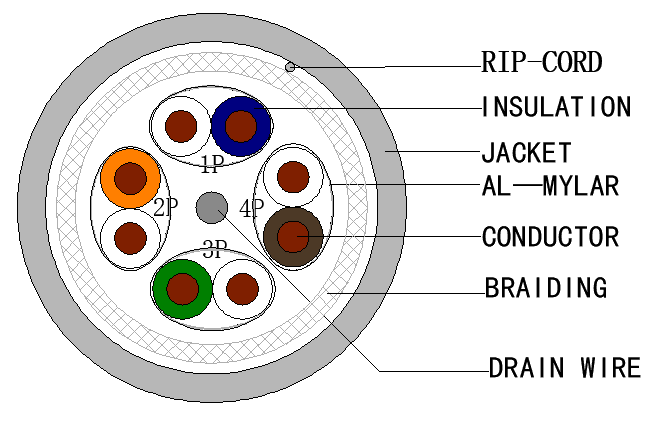
F/FTP means an overall foil shield plus an individual foil around each pair. The pair-level foil suppresses pair-to-pair crosstalk inside the cable; the overall foil addresses external electromagnetic interference. In a data center this matters in two places — dense bundle runs where adjacent cables couple into each other, and routes that pass near power distribution or high-current equipment.
Shielded systems deliver that benefit only when the shield is continuous and bonded as designed. A shielded cable installed into an inconsistently grounded channel behaves like a worse unshielded cable. Incorrect shielded-system grounding is a recognised cause of intermittent link faults, packet loss and unstable PoE power supply, and it belongs in the installation method statement, not only in the cable datasheet.
4. Flame rating: match the pathway, not the speed
Both CAT7A F/FTP and CAT8 F/FTP carry a CMP (plenum) flame rating, the rating required where cable is installed in plenum air-handling spaces and must show low smoke and limited flame propagation. The 10G CAT6A family also carries CMP. Lower categories follow different pathways: CAT6 U/UTP, CAT6 F/UTP and CAT6 SF/UTP are rated CMR for riser and in-wall installation, while the CAT5E range is rated CM/CMG for general-purpose use. Specifying a CMP-rated Cat8 into a general-purpose riser is over-specification; installing a general-purpose cable in a plenum space is a code problem, not a performance problem.
5. Jacket compound: PVC or LSZH
Both CAT7A F/FTP and CAT8 F/FTP are available with either PVC or LSZH (low smoke zero halogen) jackets. LSZH is listed as an optional jacket for data center cabinet-to-cabinet applications, and it is chosen where smoke density and halogen content in a fire are controlled variables. Jacket selection does not change the bandwidth specification, but it does change the part number, the fire test evidence set and, on some projects, the acceptance documentation.
6. Certification coverage by market
UL and ETL documentation serves the United States and Canada; CPR documentation serves the European Union. A cable can hold certification for one construction and not another, so a certificate number must always be tied to the specific model on the purchase order.
Certification Anchors a Data Center Buyer Can Verify
- UL Certificate of Compliance E320763, issued by UL LLC and dated 2021-11-10, covers Communications Cable of types CM, CMG, CMR and CMP rated 60 °C or 75 °C under UL 444 and CSA C22.2 No. 214-08, for the US and Canada. Relevant models include CAT6 SF/UTP, CAT6A U/UTP and CAT6A F/FTP.
- ETL Verified certificates from Intertek cover the Cat6 and Cat6A families for North America: CAT6 U/UTP under 103161791CRT-002c to ANSI/TIA-568.2-D, CAT6 SF/UTP under the same certificate, CAT6A U/FTP under 102500029CRT-002 to ISO/IEC 11801-1, CAT5E U/UTP under 103161791CRT-002a, and CAT5E F/UTP under 3168693CRT-004c.
- CPR Certificate of Constancy of Performance (System 1+) No. 1008-CPR-MC 69267303 0001, issued by TÜV Rheinland InterCert Kft. (Notified Body 1008) on 2024-08-28, certifies CAT6, 6A, 7, 7A and 8 S/FTP communication/LAN cables to EN 50575:2014+A1:2016 with classification B2ca-s1a,d0,a1. This is the certificate that covers the Cat7a and Cat8 shielded constructions discussed in this guide.
- CPR fire classification reports from Elektrotechnický zkušební ústav (EZÚ, Notified Body 1014) to CSN EN 13501-6:2014 include SFTP CAT7 LSZH at Dca-s1,d0,a2 (report 801180-01/01 CLASS) and UFTP CAT6A LSZH at Dca-s1a,d0,a2 (report 801180-01/02 CLASS).
- VDE Prüf- und Zertifizierungsinstitut GmbH (Notified Body 0366) Eca classification reports to EN 13501-6 cover additional constructions, including UTP CAT6 (5004876/1-1), FTP CAT6 23AWG (5004876/2-1) and SF/UTP CAT5E (5004876/6-1).
Step-by-Step: How to Specify the Link Before You Order
- Fix the channel length and target rate. Measure the longest run including patch cords at both ends, and state the required data rate at that length. Numbers, not adjectives.
- Match the category to that reach. Up to 15 m at 100G points to CAT7A F/FTP; up to 30 m at 40G points to CAT8 F/FTP; up to 50 m at 40G points to CAT7 F/FTP; up to 100 m at 10G points to the CAT6A family (U/UTP, U/FTP, SF/UTP or F/FTP depending on interference).
- Confirm the pathway and flame rating. Plenum air space requires CMP; riser and in-wall routes require CMR; general-purpose routes use CM/CMG.
- Confirm certificate coverage by market. For the US and Canada, request UL and ETL documents naming the model. For the EU, request the CPR CoC or DoP plus the fire classification report for that construction.
- Verify construction on the datasheet. Check conductor gauge (22AWG versus 23AWG), conductor material (solid bare copper), insulation (LDPE), shield topology (overall plus pair foil, pair foil only, or screen plus foil), jacket compound (PVC or LSZH), flame rating, and the referenced standard (TIA/EIA-568-C.2).
- Plan the shielded installation. Maintain shield continuity and bonding, respect bend radius and bundle limits inside the cable manager, and avoid mixing indoor and outdoor cable types on one route.
- Validate with a sample and factory data before the full order. Request electrical performance test records and confirm the pre-shipment testing regime in writing.
Where Each Cable Belongs in a Data Center
Cat8 F/FTP — short-reach fabric links. The construction is intended for high-density indoor data center environments, cabinet-to-cabinet and in-rack links, and short-reach server-to-switch connections running continuously. Matched equipment includes data center switches, servers, storage devices, cable managers and 40G switch ports, with patch panels on the permanent link. Application requirements for these runs list a CMP flame rating, UL/ETL/CPR certification, 22AWG solid copper and an optional LSZH jacket.
Cat7A F/FTP — ultra-high-speed and high-interference links. CAT7A F/FTP is specified for premium data center and heavy-EMI industrial environments where 100Gbps transmission at short reach and maximum immunity to interference are both required. Matched equipment includes 100G switches, high-end servers, and data center core or optical transport equipment. The same construction also appears in high-EMI industrial deployments running 40Gbps over longer distances where an industrially shielded build is required.
Project records from Linoya illustrate how the split works in practice. A high-performance data center operator used CAT8 F/FTP in 5,000-carton volumes (305 m per carton) for short-reach cabinet-to-cabinet interconnection and recorded 99.998% network stability. A premium data center operator using 22AWG heavy-gauge CAT7A F/FTP for ultra-high-speed interconnection recorded 99.999% network stability with minimal signal loss. Both deployments used fully shielded, CMP-rated, UL/ETL/CPR certified constructions.
Cat7a vs Cat8 vs the Rest of the Shielded Range
The table below compares the shielded and 10G constructions available in the Linoya Ethernet cable range using published product parameters. It is a reach-and-role comparison, not a ranking — each row answers a different link requirement.
| Model | Conductor | Bandwidth / reach | Shielding | Flame rating | Certification | Typical data center role |
|---|---|---|---|---|---|---|
| CAT8 F/FTP | 22AWG solid bare copper | 40Gbps at up to 30 m | Overall + pair full foil | CMP | UL, ETL, CPR; TIA/EIA-568-C.2 | Cabinet-to-cabinet and in-rack 40G short-reach links |
| CAT7A F/FTP | 22AWG solid bare copper | 100Gbps at up to 15 m | Overall + pair full foil | CMP | UL, ETL, CPR; TIA/EIA-568-C.2 | Ultra-high-speed premium links and high-EMI routes |
| CAT7 F/FTP | 23AWG solid bare copper | 40Gbps at up to 50 m | Overall + pair full foil | CMP | UL, ETL, CPR; TIA/EIA-568-C.2 | 40G server-to-server links beyond 30 m |
| CAT6A F/FTP | 23AWG solid bare copper | 10Gbps at up to 100 m | Overall + pair full foil | CMP | UL, ETL, CPR; TIA/EIA-568-C.2 | Heavy-EMI 10G backbone and public infrastructure |
| CAT6A U/FTP | 23AWG solid bare copper | 10Gbps at up to 100 m | Individual pair foil | CMP | UL, ETL, CPR; TIA/EIA-568-C.2 | Server room and enterprise 10G links with low crosstalk targets |
| CAT6A SF/UTP | 23AWG solid bare copper | 10Gbps at up to 100 m | Screen + overall foil | CMP | UL, ETL, CPR; TIA/EIA-568-C.2 | High-EMI commercial and industrial 10G routes |
| CAT6A U/UTP | 23AWG solid bare copper | 10Gbps at up to 100 m | Unshielded | CMP | UL, ETL, CPR; TIA/EIA-568-C.2 | Small and medium data center rack-to-rack 10G links |
| CAT6 U/UTP | 24AWG / 23AWG solid bare copper | 10Gbps at up to 55 m | Unshielded | CMR | UL, ETL; TIA/EIA-568-C.2 | Office, SMB and IP surveillance segments outside the white space |
Frequently Asked Questions
Which certifications should be verified on a Cat7a or Cat8 cable before a data center installation?
For the United States and Canada, ask for the UL Certificate of Compliance and, where applicable, ETL Verified documentation naming the exact model. Linoya UL Certificate of Compliance E320763 covers communications cable types CM, CMG, CMR and CMP under UL 444 and CSA C22.2 No. 214-08. For the European Union, ask for the CPR Certificate of Constancy of Performance — Linoya holds No. 1008-CPR-MC 69267303 0001, issued by TÜV Rheinland InterCert Kft. (Notified Body 1008) to EN 50575:2014+A1:2016 with classification B2ca-s1a,d0,a1, covering CAT6/6A/7/7A/8 S/FTP LAN cables — plus the fire classification report for the specific construction, such as the Dca-s1,d0,a2 report 801180-01/01 CLASS for SFTP CAT7 LSZH issued by EZÚ (Notified Body 1014).
Can a Cat8 Ethernet cable cover a 100 m data center run?
No. Per the Linoya product specification, CAT8 F/FTP provides 40Gbps at up to 30 m and cannot be treated as a 100 m solution regardless of its category number. Where 100 m reach at 10Gbps is required, the CAT6A family is specified at 10Gbps up to 100 m in unshielded, pair-foil, screen-plus-foil or full foil variants. The same reach logic applies to Cat7a in reverse: CAT7A F/FTP reaches 100Gbps only up to 15 m. Always match the cable to the measured channel length first, then to the required data rate.
What are the typical order constraints for a data center cable rollout — MOQ, lead time and capacity?
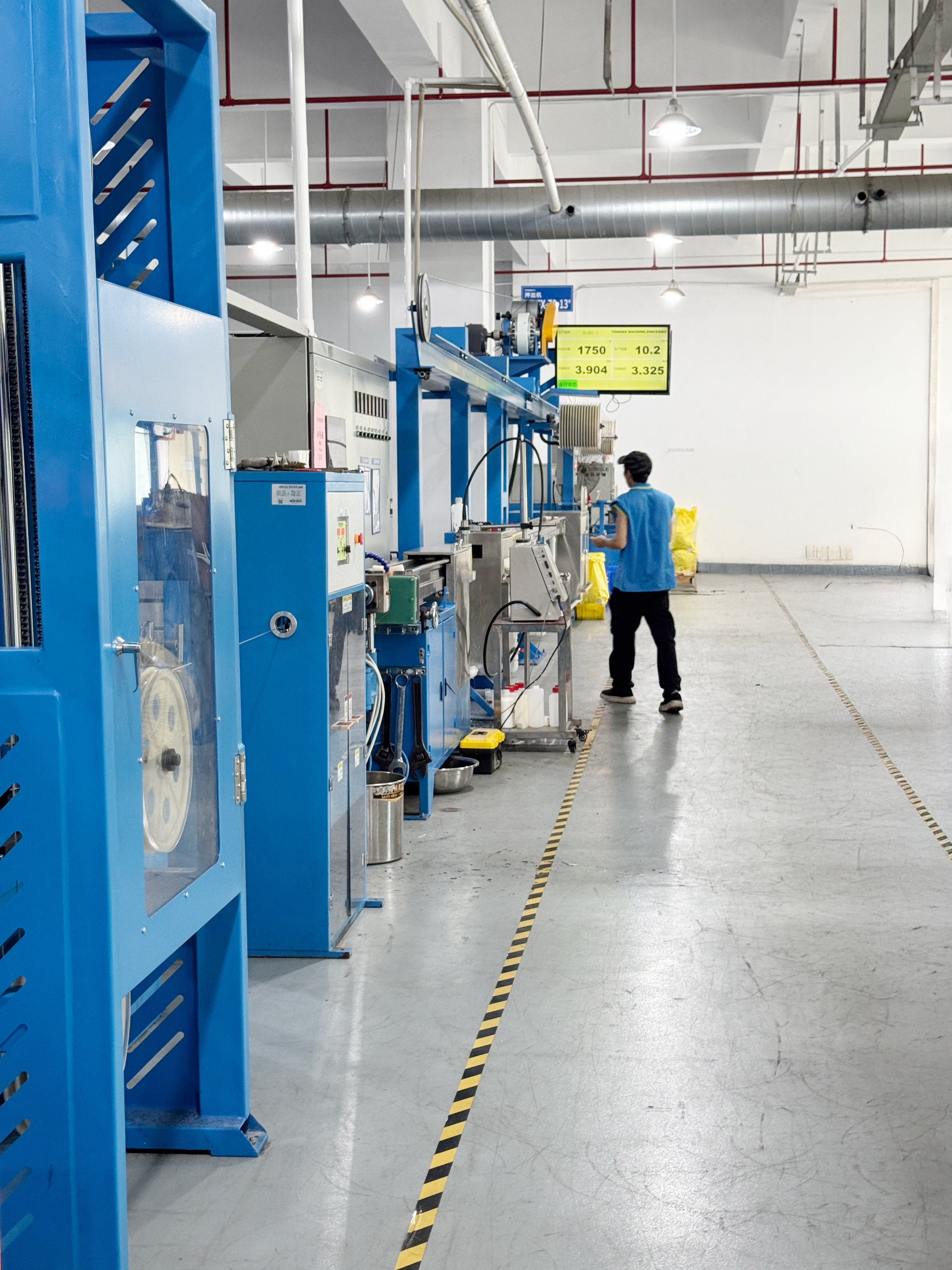
Linoya supplies Ethernet cable in 305 m cartons with a minimum order quantity of 100 cartons and a standard lead time of 30 days, supported by a monthly capacity of 200,000 cartons. OEM and customization support covers cable length, logo printing and packaging. Export markets include the EU, the US, the Middle East, Southeast Asia, Australia, South Korea and Japan. Quality control includes 100% pre-shipment testing, third-party inspection through SGS or UL, random sampling inspection and full electrical performance testing. After-sales support includes 24/7 online technical support, a one-year product warranty and free replacement of defective products.
How do I qualify a manufacturer for bulk Ethernet cable orders if I also buy Cat5e UTP?
The qualification logic is the same whether the order is Cat5e UTP in bulk or Cat7a and Cat8, and it should be checked in this order: certificate coverage tied to the exact model and destination market — for Cat5e UTP, that means documents such as ETL Verified certificate 103161791CRT-002a to ANSI/TIA-568.2-D and the CPR Eca report 911170-01/02 CLASS issued by EZÚ; the factory test regime, including full electrical performance testing and third-party inspection; MOQ, lead time and monthly capacity against your rollout schedule; customization capability for length, printing and packaging; and after-sales terms. A supplier who can document this for one category but not across the range is a supply risk on multi-category projects. Requesting a sample before the bulk order is the fastest way to confirm construction, print and packaging against the specification — Linoya sample and quotation requests are handled through inquiry@linoya.com.
Conclusion: Two Cables, Two Different Data Center Jobs
Cat7a and Cat8 are not two grades of the same decision. They are two shielded, 22AWG, CMP-rated, UL/ETL/CPR certified answers to different link requirements. CAT8 F/FTP is the construction for dense, short-reach 40Gbps cabinet-to-cabinet fabric links at up to 30 m. CAT7A F/FTP is the construction for 100Gbps ultra-high-speed and high-interference links at up to 15 m. Where 40G is needed beyond 30 m, CAT7 F/FTP at up to 50 m is the relevant row; where 10G is needed across a full 100 m channel, the CAT6A family is the specified range.
The selection order that survives commissioning is fixed: measure the channel, confirm the pathway flame rating, confirm the certificate covers the model and the market, verify the construction on the datasheet, then validate with a sample and factory test data. Category labels do not do any of that work.
Next step: validate the construction against your link schedule.
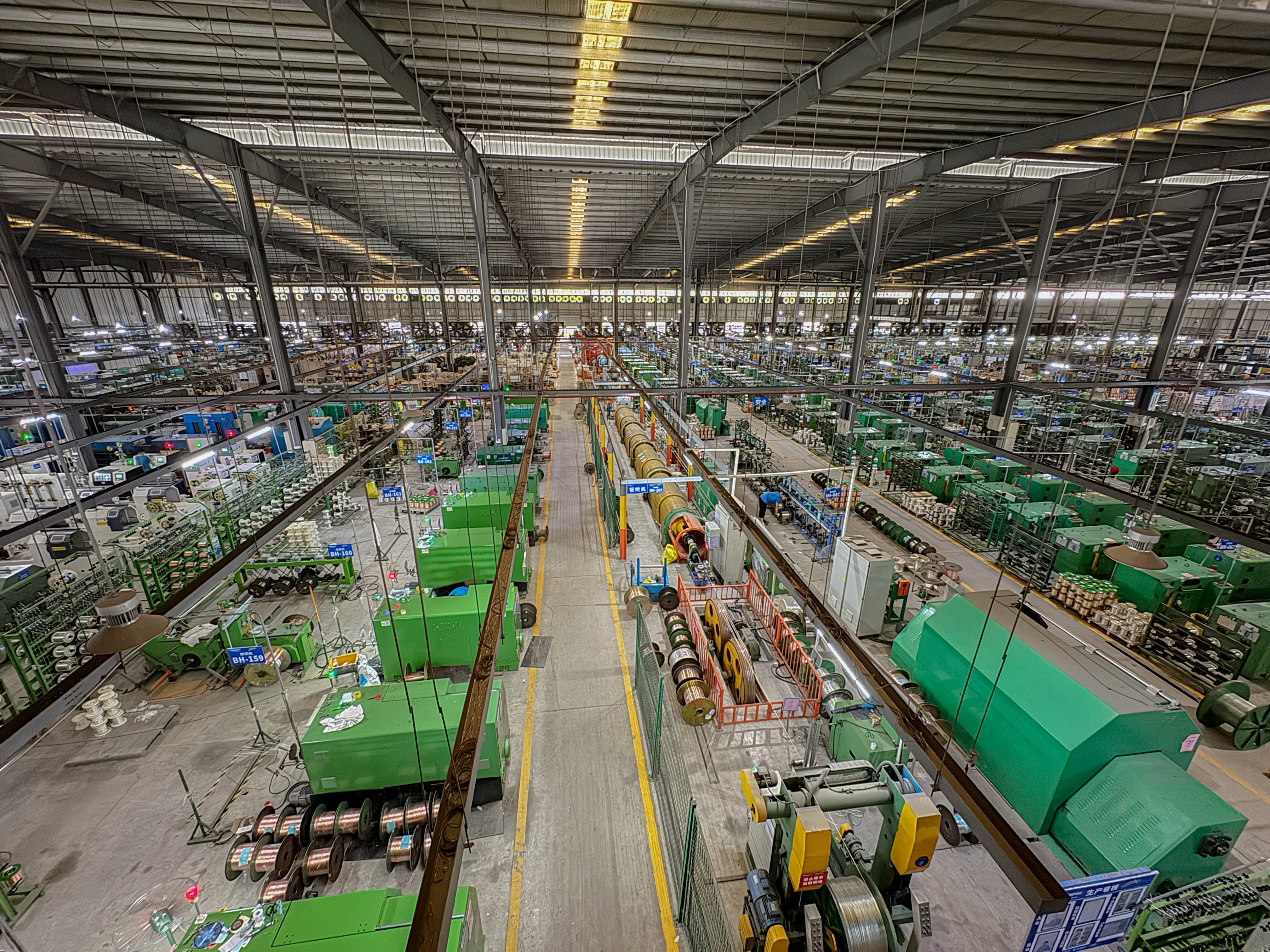
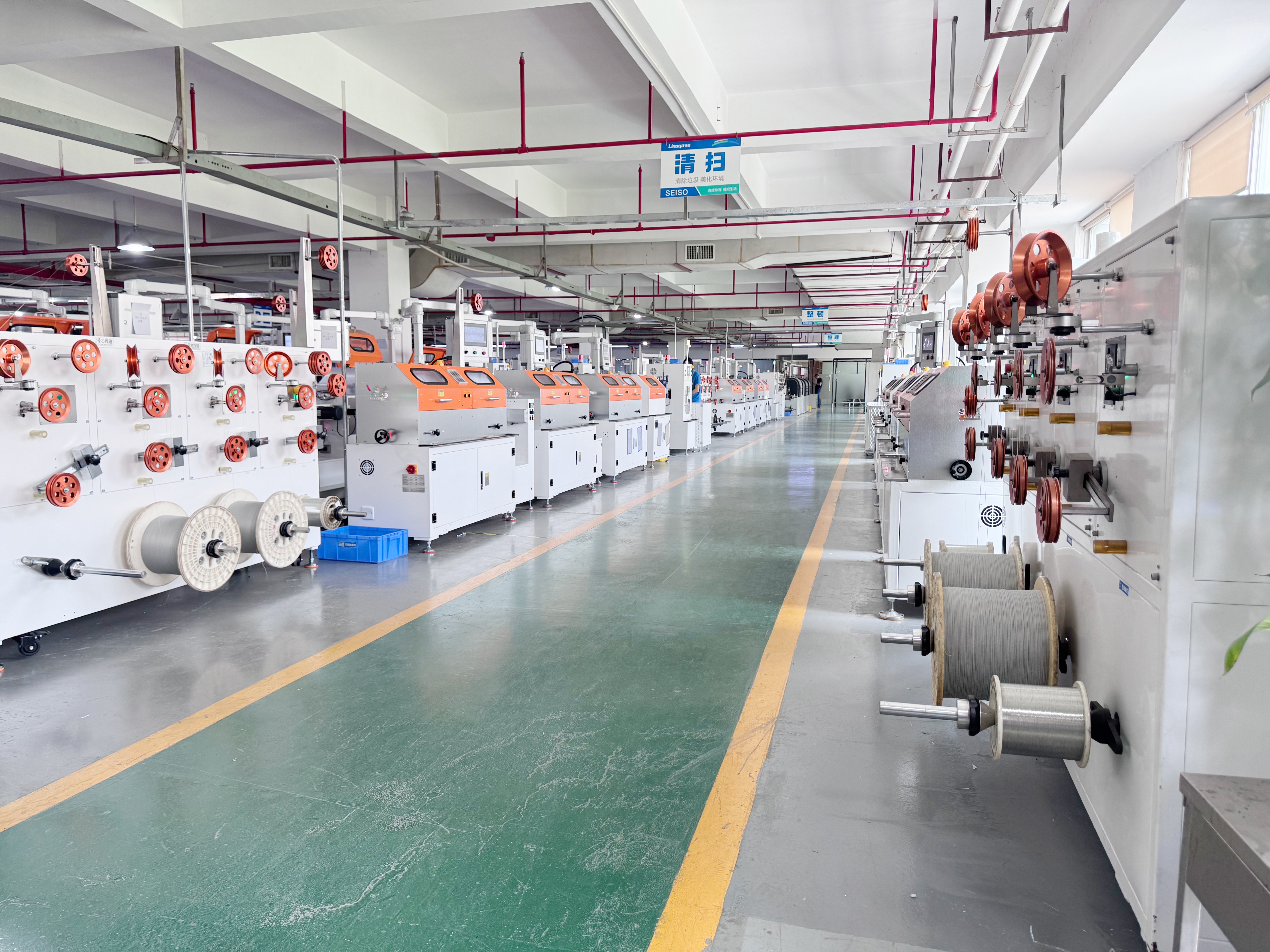
Linoya Electronic Technology Co., Ltd. was established in 1997 and manufactures cable and wire across intelligent transmission, smart power and new materials, including shielded network cable and high-speed data transmission cables. The company operates three self-owned industrial parks in Shenzhen and Dongguan, a production base in Vietnam and more than 100 production lines, with a 60,000 m² factory area, 3,000+ employees and 300+ engineers. Reported annual sales exceed USD 420 million, annual output is 4,000,000 kilometers, and roughly 30% of production is exported, with the EU and the Middle East among the main markets.
Download the full product brochure: LINOYA ELECTRONIC TECHNOLOGY CO., LTD. catalogue (PDF)
Website: https://www.linoya.com/ | Email: inquiry@linoya.com | Tel: +86-15602610696 | WhatsApp: +86-13038893260
Have Questions or Need More Details?
Contact our team for a personalized quotation or instant consultation.
Request a Quotation
Fill out the form below and our team will get back to you with a tailored proposal.
WhatsApp Direct Chat
Prefer to chat in real-time? Message us on WhatsApp for instant assistance & quick answers.
- Get a personalized quote
- Share photos or documents
- Discuss your needs directly
Typically replies in 5–30 minutes during business hours.