
Selecting Shielded Ethernet Cable for Enterprise Core Network Renovation
Enterprise core network renovation rarely allows a free choice of cable route. Existing risers, ceiling voids and containment are already installed, the fire classification of the space is already fixed, and the core switch, enterprise gateway and patch panels that the new cabling must connect to are already in service. Selecting shielded Ethernet cable under those conditions is a constraint exercise rather than a specification exercise: you are choosing the highest practical immunity to electromagnetic interference (EMI) for a pathway you cannot redesign, at a flame rating you cannot negotiate, within a channel length you cannot extend.
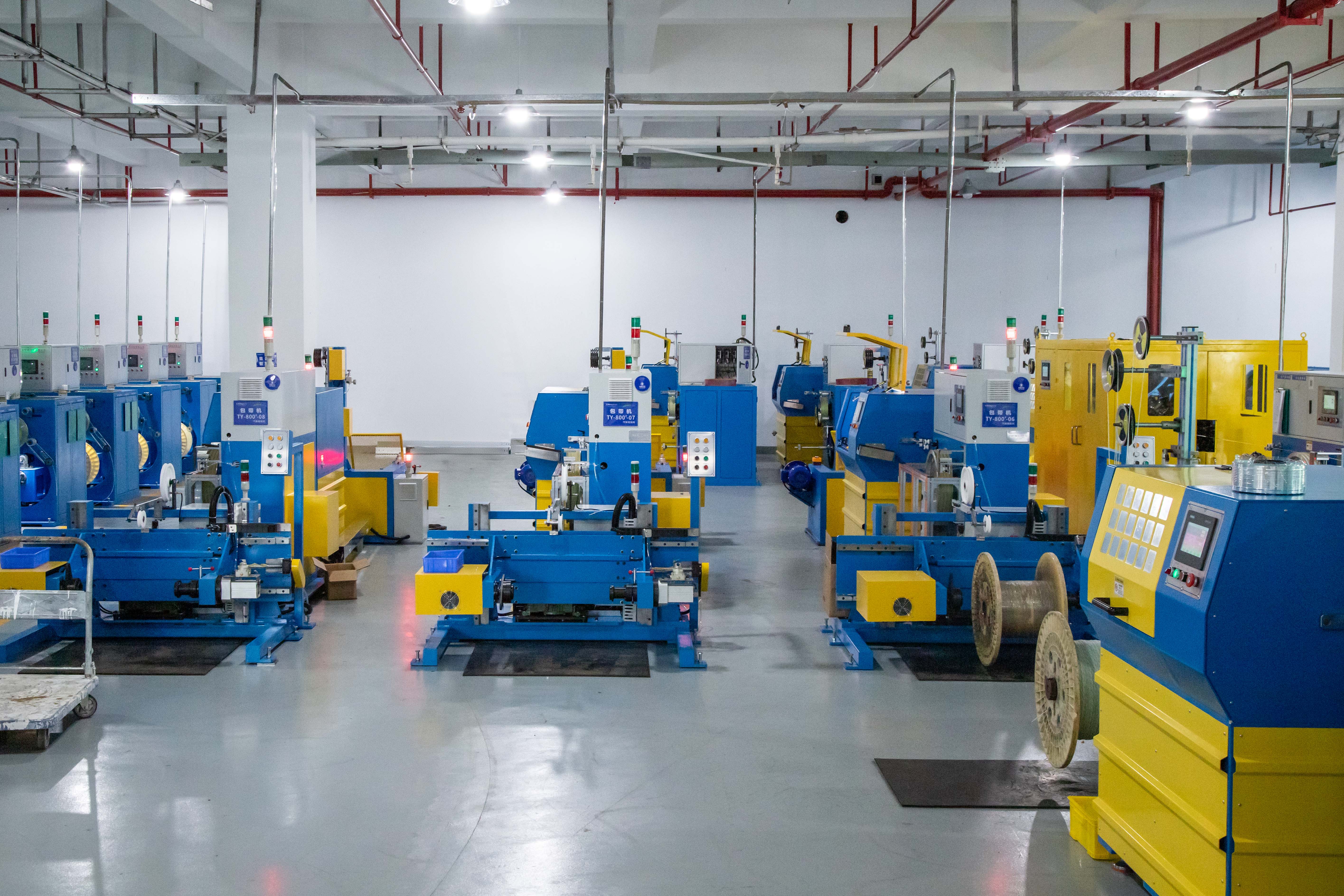
This technical guide is written for the network engineers, facility teams and procurement managers who have to sign off that decision and then live with it for a decade. It covers how the main shielding constructions differ in practice (F/UTP, SF/UTP, U/FTP and F/FTP), which flame rating or CPR class applies to a given installation space, how shield performance depends on bonding and on compatibility with the enterprise gateway at the end of the link, and how to verify a supplier's certification scope before a bulk order is released. The reference constructions used throughout come from Linoya Electronic Technology Co., Ltd., a cable and wire manufacturer established in 1997 that operates three industrial parks in Shenzhen and Dongguan plus one production base in Vietnam.
Short answer: choose the shielding type from the interference level of the pathway, not from the category number alone — U/UTP for low-noise spaces, F/UTP or SF/UTP for moderate EMI, U/FTP where pair-to-pair crosstalk dominates, and F/FTP for heavy-EMI or industrial-grade links. Then match the flame rating to the space (CMP for plenum air-handling voids, CMR for risers, CM/CMG for general indoor wiring) and keep the shield bonded end to end. Distance limits are set by category: shielded Cat6 tops out at 10Gbps@55m, while shielded Cat6a holds 10Gbps over the full 100m channel.
Why Shielded Cable Selection Is Different in a Renovation
A renovation inherits three constraints that a new-build project does not. First, the interference already exists: power feeders, variable-frequency drives, UPS rooms, elevator machine rooms and high-density wireless access points are in place, and the new cabling has to coexist with them inside the same containment. Second, the pathway is fixed — conduit fill, bend radii and riser access are what they are, which removes the option of simply re-routing a noisy segment. Third, the active hardware is fixed, so the shield has to be bonded correctly to the existing patch panels, jacks and gateway rather than to a grounding scheme designed from scratch.
The most common failure mode follows directly from those constraints. A shielded cable performs as designed only when its shield is properly grounded; an unbonded or poorly bonded shield can introduce extra noise instead of suppressing it, which means a shielded construction installed without a continuous bonding path can end up behaving worse than a correctly installed unshielded one. Field fault diagnosis in twisted-pair networks routinely lists heavy EMI and incorrect STP grounding among the root causes of unstable links, packet loss and low throughput, alongside physical damage, termination defects and mixed indoor/outdoor cable usage.
That is why the cable decision in a renovation should be locked to four variables, in this order: the measured interference level of the pathway, the channel speed and distance target, the flame rating or CPR class allowed by the space, and the certification scope that the supplier can actually document for the exact model being delivered.
What Is Changing in the Shielded Ethernet Cable Market
The category is large and still growing, which matters because it means more construction variants, more certification claims and more room for specification drift on renovation projects. The global Ethernet cable market was valued at USD 38.55 billion in 2025, according to Maximize Market Research, and the same research house projects revenue of nearly USD 70.02 billion by 2032, a CAGR of 8.9% between 2026 and 2032. Within the category, Cat6 held the largest share in 2025 at 32.5%, based on Dataintelo's Ethernet cable assembly research — a useful indicator of how much of the installed base a renovation project is likely to be matching or replacing.
Two standards movements are directly relevant to a shielded selection decision. ANSI/TIA-568.2-E was released in October 2024 and replaced ANSI/TIA-568.2-D, introducing DC resistance unbalance (DCRU) specifications for Cat5e, Cat6 and Cat6a. DC resistance balance affects how consistently a cable carries power, so any renovation specification still written against the older revision should be re-checked, particularly where PoE or PoE++ devices share the link. In Europe, fire performance is governed by the Construction Products Regulation: B2ca class, for example, represents high fire performance with strict thresholds of flame spread ≤ 1.5 m, total heat release ≤ 15 MJ and peak heat release rate ≤ 30 kW under EN 50575. Classes below that — Dca and Eca — are legitimate but narrower in scope, and the class must be matched to the building type, not to the supplier's convenience.
For imported material, the trade classification is worth confirming at the planning stage: bulk Ethernet cable on a reel without connectors is classified under HS code 8544.49, while patch cables with connectors fall under HS 8544.42, where the US MFN duty rate is 2.6% and the EU MFN rate is 0%. That difference affects landed cost calculations when part of a renovation is supplied as bulk reels and part as terminated cords.
Shielding Constructions Explained: U/UTP, F/UTP, SF/UTP, U/FTP and F/FTP
The shielding abbreviation states exactly which layers surround the twisted pairs. The letter before the slash describes the overall shield around all four pairs; the letters after the slash describe what is applied to each individual pair. Reading the code correctly is the fastest way to avoid over-buying or under-buying for a renovation.
- U/UTP (unshielded). No metallic shield at all. Linoya's Cat6A U/UTP construction uses 23AWG solid bare copper and is rated 10Gbps@100m with a CMP flame rating and UL/ETL/CPR certification. It is the correct choice where the pathway is genuinely low-noise but the space still demands a plenum-rated cable — for example, a low-interference office upgrade that nevertheless runs through a ventilated ceiling void.
- F/UTP (overall foil shield). A single foil barrier around the four pairs. The Cat6 F/UTP construction uses 24AWG/23AWG solid copper with an overall foil shield, is rated 10Gbps@55m with a CMR flame rating, and is positioned for commercial buildings, offices with EMI and surveillance systems. The Cat5e F/UTP version carries 1Gbps with a CM/CMG rating.
- SF/UTP (screen plus foil, overall). Adds a metallic braid or screen over the foil for broader frequency coverage. Cat6 SF/UTP is rated 10Gbps@55m with CMR and targets commercial buildings, industrial automation, enterprise networks and security and surveillance; Cat6A SF/UTP uses 23AWG solid copper, is rated 10Gbps@100m with CMP, and is aimed at data centers, enterprise networks and high-EMI commercial environments.
- U/FTP (individual pair foil). Each pair is individually foil-wrapped, which attacks pair-to-pair crosstalk rather than external noise. The Cat6A U/FTP construction uses 23AWG solid bare copper, is rated 10Gbps@100m with a CMP flame rating and UL/ETL/CPR certification, and is intended for enterprise data centers, high-performance 10G networking and server rooms. Comparative test notes for this construction record 50% lower crosstalk and 99.999% signal integrity in high-frequency 10G transmission.
- F/FTP (overall plus pair foil, full shielding). The heaviest foil build: foil on every pair plus an overall foil layer. Cat6A F/FTP uses 23AWG solid copper at 10Gbps@100m with CMP and UL/ETL/CPR, and comparative notes record roughly 95% better anti-EMI performance than Cat6A U/FTP in extreme industrial electromagnetic environments, which places it in heavy-EMI industrial, data center and public infrastructure work. The same full foil shielding architecture carries upward through Cat7 F/FTP (23AWG, 40Gbps@50m), Cat7A F/FTP (22AWG, 100Gbps@15m) and Cat8 F/FTP (22AWG, 40Gbps@30m), all with CMP rating and UL/ETL/CPR certification.
Conductor construction matters as much as the shield. Every construction in the Linoya Ethernet range uses solid bare copper conductors; 23AWG is used across Cat6a and Cat7, and 22AWG on Cat7A and Cat8, where the heavier gauge lowers conductor resistance. Solid copper is the appropriate conductor type for fixed horizontal and backbone cabling, while stranded conductors belong to short patch cords. Copper-clad aluminium is not a substitute: it uses an aluminium core with a thin copper coating, which raises resistance, weakens PoE performance and oxidises over time — it is not suitable for permanent engineering deployment.
Flame Rating and Jacket Selection: CMP, CMR, CM and LSZH
Flame rating is the constraint that most often invalidates an otherwise correct shielded selection. In the Linoya range the split follows the category ladder: Cat5e constructions are certified to CM/CMG, Cat6 constructions to CMR, and Cat6a and above to CMP. Plenum air-handling space in North America strictly requires CMP flame-rated cable, and CM/CMG grades cannot satisfy plenum code — no amount of shielding performance compensates for the wrong fire rating in an air-handling void.
For European renovation projects, the cable must complete CPR certification issued by an EU Notified Body, with the fire reaction class marked on the cable or its label. The classes represented in this shielded range include Eca for Cat5e U/UTP LSZH and Cat6 U/UTP LSZH under CSN EN 13501-6:2014 (Notified Body EZÚ 1014), and Eca for Cat5e UTP 24AWG x 4P solid cable under EN 13501-6 issued by VDE Prüf- und Zertifizierungsinstitut GmbH, Notified Body 0366. The Cat6A U/FTP LSZH construction carries CPR Dca-s1,d0,a2 under CSN EN 13501-6:2014 and TIA/EIA 568-C.2, and Cat7 4PR 23AWG S/FTP LSZH carries Dca-s1,d0,a2 under the same standard, both issued by EZÚ 1014. For projects requiring higher fire performance, S/FTP constructions tested to EN 50575:2014+A1:2016 reach B2-ca, certified by TÜV Rheinland InterCert Kft., Notified Body 1008.
Jacket material is a separate decision from fire class. PVC-jacketed cable is flexible and low-cost, but it releases dense toxic halogen smoke when it burns, and PVC cannot achieve a high CPR fire class. LSZH (low-smoke zero-halogen) jacket produces little smoke and no corrosive halogen gas, and is normally required for hospitals, hotels, subway stations and other crowded public buildings. Both jacket types deliver equal electrical transmission performance — jacket material affects fire safety, not network speed.
Shield Bonding, PoE and Enterprise Gateway Compatibility
A shield is only a shield when it is bonded. In a renovation, the bonding path runs from the cable shield through the keystone jack or patch panel to the rack grounding point, and it has to remain continuous across any patch cords added at either end. Where grounding is incorrect, the shield introduces extra noise into the link. This is also a connector question: low-grade RJ45 connectors cannot support the high-frequency performance of Cat6 or Cat6a cable, so terminating a shielded Cat6a run with ordinary connectors removes much of what the cable was purchased for.
Compatibility at the far end of the link is defined by the active equipment the renovated cabling will serve. Documented matched equipment for shielded Cat6a 10G infrastructure includes 10G switches, servers, storage devices (NAS/SAN), patch panels and SFP modules, while core network and server room construction is matched to core switches, routers, server farms, data center equipment and enterprise gateways. Cat5e, by contrast, is matched to office switches, patch panels, workstations, VoIP phones and conference systems, which makes it a poor candidate for a core link even if it is electrically acceptable in a short access run.
Power delivery adds a second dimension. Cat6a constructions support PoE++ up to 90W, whereas Cat5e supports standard PoE and PoE+ but is not suitable for PoE++. Larger copper cross-section and lower resistance on Cat6a reduce power loss on longer runs, and the DC resistance unbalance specification introduced by ANSI/TIA-568.2-E is precisely the parameter that governs how evenly that power is carried across the pairs.
Where Linoya Fits in a Shielded Core Network Renovation
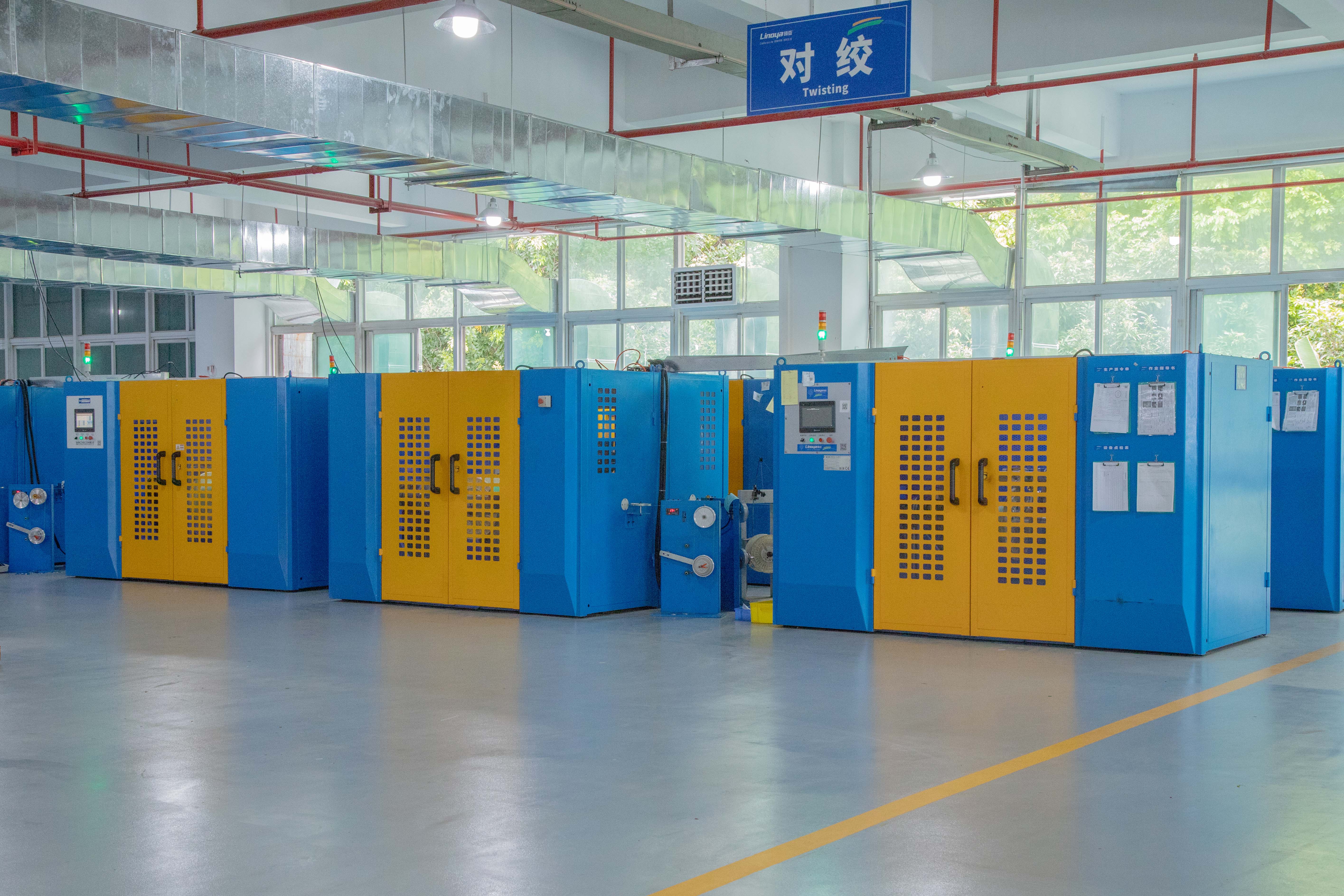
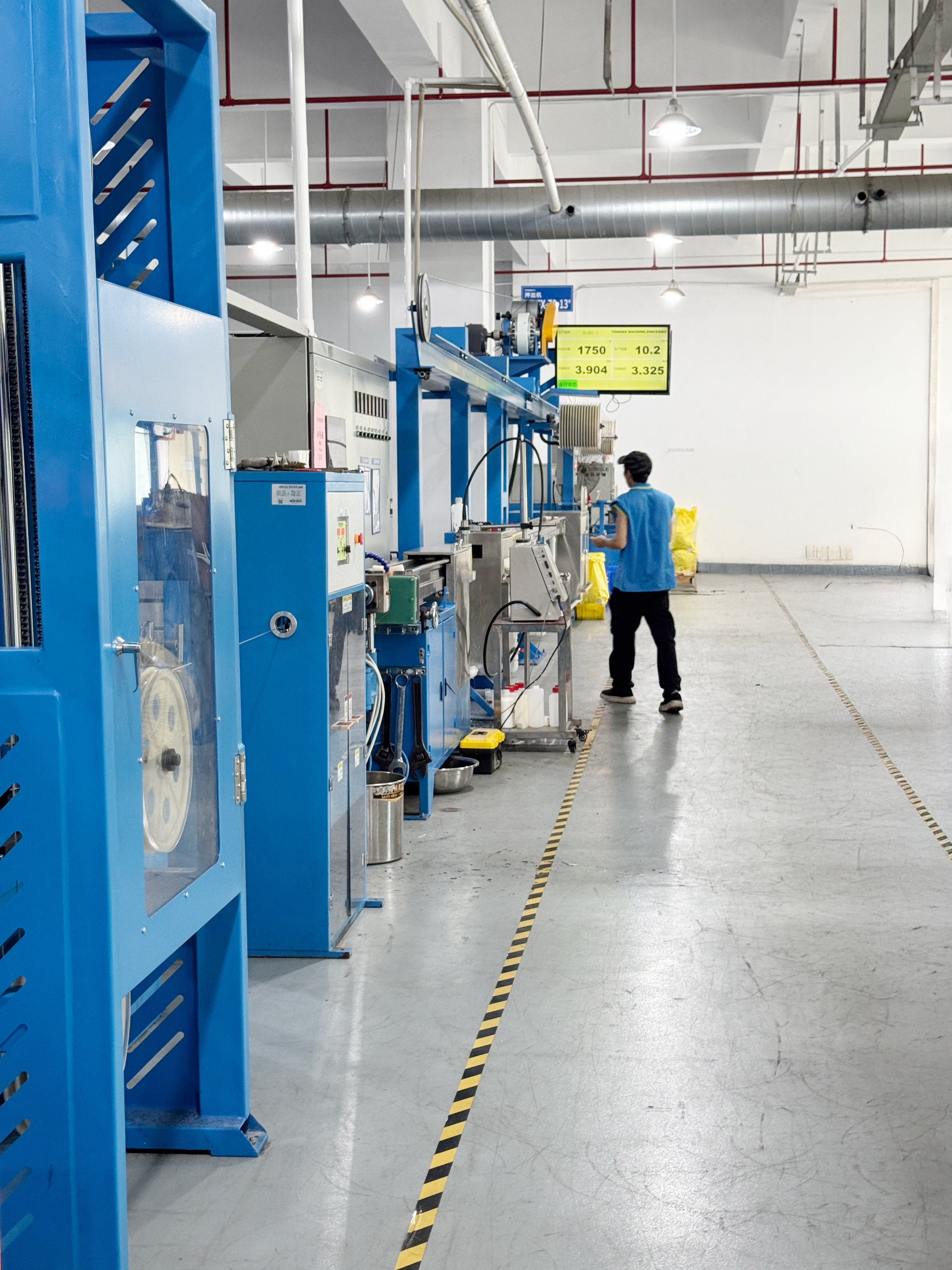
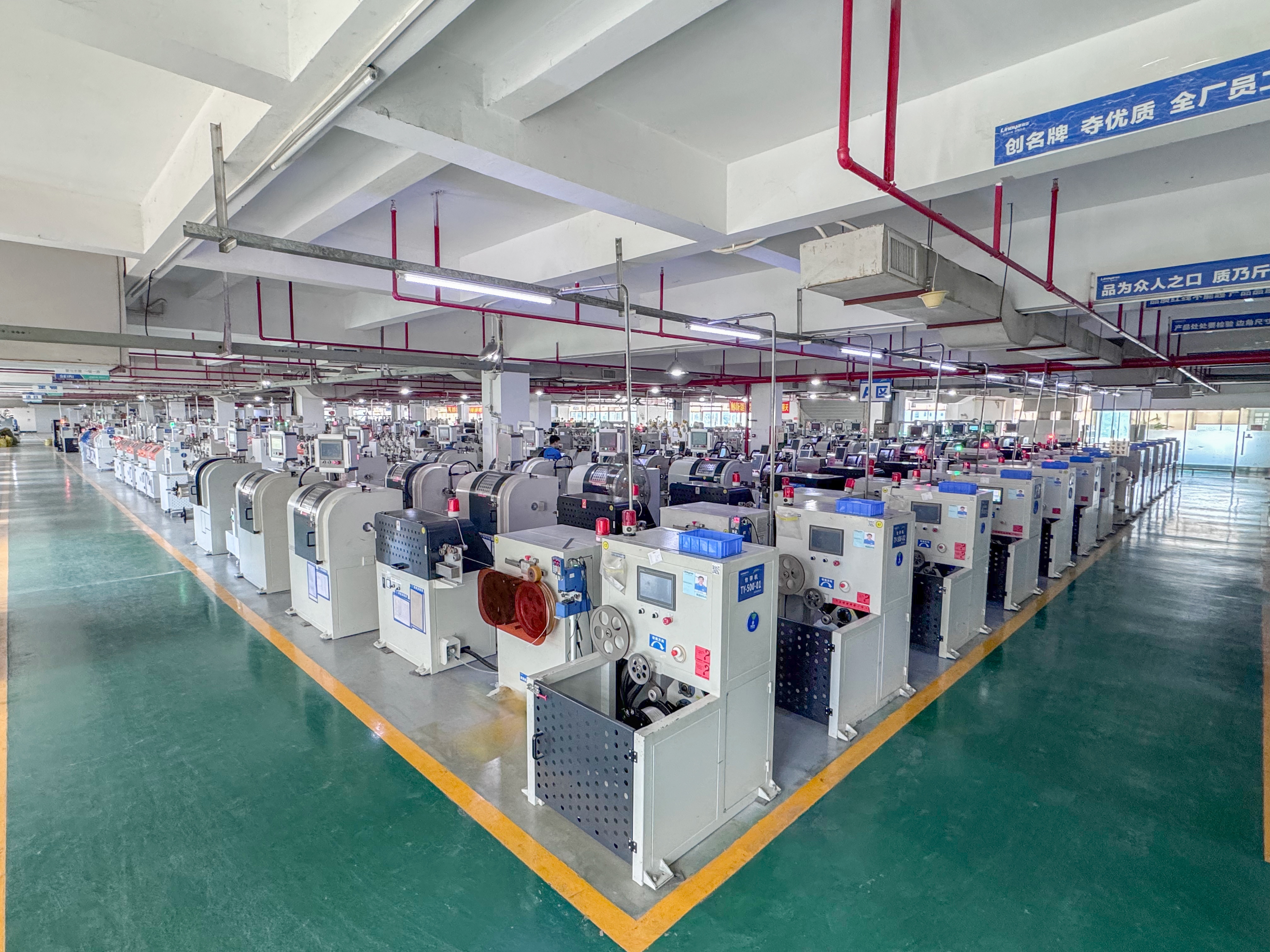
Linoya Electronic Technology Co., Ltd. was established in 1997 and manufactures cable and wire across network cables, high-speed data transmission cables and components, alongside new energy vehicle, photovoltaic energy storage, industrial automation, cloud computing, IoT, smart cities, smart homes and 3D printing applications. The company reports an annual cable and wire output of 4,000,000 kilometres and an R&D team of more than 300 engineers, with approximately 30% of products exported and major markets in the EU and the Middle East. Linoya also reports annual sales exceeding USD 420 million and operations across three industrial parks in Shenzhen and Dongguan plus a production base in Vietnam, with more than 100 production lines.
Certification is where the vendor list narrows. Linoya maintains continuous validity for UL file E320763 for communication LAN cables, ETL Verified listings issued by Intertek for North American projects, and CPR approvals issued by EU Notified Bodies including EZÚ 1014, VDE 0366 and TÜV Rheinland InterCert Kft. 1008. Two scope cautions are worth stating plainly, because they are the reason a certificate should be read rather than counted. First, the Cat6A 4-pair 23AWG U/FTP horizontal solid cable is ETL Verified, and that certification is not marked with a flame rating requirement — a project that needs a marked fire class must not treat that document as proof of one. Second, not all Cat6A products quoting ETL verification also quote ANSI/TIA-568.2-D performance, so the datasheet and certification scope for the exact model should be confirmed before ordering.

Step-by-Step: Selecting Shielded Ethernet Cable in a Core Network Renovation
- Survey the pathway and the interference sources. Walk the route and log proximity to power feeders, variable-frequency drives, UPS rooms and elevator machine rooms, and record whether the segment passes through a plenum air-handling void or a riser. The survey output should be a per-segment noise classification, not a building-wide average.
- Fix the channel target before choosing the category. Set the required speed and the required distance together. Cat5e delivers 1Gbps; shielded Cat6 delivers 10Gbps@55m; shielded Cat6a delivers 10Gbps@100m; Cat7 delivers 40Gbps@50m; Cat7A delivers 100Gbps@15m; Cat8 delivers 40Gbps@30m. A 100 m backbone segment that must sustain 10Gbps eliminates every category below Cat6a regardless of shielding.
- Match the shielding construction to the measured interference. Low-noise pathway: U/UTP. Moderate EMI in commercial space: F/UTP or SF/UTP. Dominant pair-to-pair crosstalk in dense bundling: U/FTP. Extreme industrial EMI or public infrastructure: F/FTP. Record the reason for the choice per segment so it survives the value-engineering review.
- Match flame rating and jacket to the space and jurisdiction. CMP for plenum air-handling voids, CMR for risers, CM/CMG for general indoor wiring; LSZH jacket with the correct CPR class for EU public buildings and crowded spaces.
- Verify the whole channel, not just the cable. Confirm that jacks, patch panels and patch cords are shielded to the same standard, and that the bonding path is continuous to the rack ground. Category mismatches at connectors are a common renovation defect.
- Verify certification scope for the exact model and destination market. Check the UL file number or ETL Verified report, the CPR certificate issued by a Notified Body with the correct fire class, and whether the actual shielding construction, AWG and flame rating fall inside the certificate scope of that model — not of the product family.
- Plan testing twice. Before delivery, confirm the factory electrical performance test record and the pre-shipment test agreed as the acceptance basis. After installation, re-verify on site with a cable tester for continuity and wiring sequence, the link status indicator on the switch or gateway port, and a real throughput test. Factory-tested cable still needs on-site re-checking after construction, because pull tension, bend radius and termination quality are introduced on site.
Use Cases: Where Each Shielded Construction Fits
Data center and server-room core renovation
High-density indoor cabinet and rack environments with a low-crosstalk requirement are the natural fit for Cat6A U/FTP (individual pair foil, 10Gbps@100m, CMP) or Cat6A F/FTP where ambient interference is also high. Matched equipment includes 10G switches, servers, NAS/SAN storage, patch panels and SFP modules, operating 24/7 under high load.
High-EMI commercial building core renovation
Complex commercial buildings with existing elevators, UPS rooms and dense wireless coverage map to Cat6A SF/UTP: 23AWG solid copper, screen-plus-foil overall shield, 10Gbps@100m and CMP rating for a high-EMI commercial environment.
Industrial edge and heavy-EMI renovation
Industrial automation and edge sites with strong electromagnetic noise are the documented territory of Cat6A F/FTP full foil shielding, matched to industrial switches, PLCs, sensors, gateways and HMIs in fixed 24/7 cabling, with LSZH jacket available where the site specifies it.
EU public building renovation
Hospitals, hotels, subway stations and similar public buildings require LSZH jacket plus a CPR fire class that satisfies the tender. Cat6A U/FTP LSZH with CPR Dca-s1,d0,a2, Cat7 S/FTP LSZH with Dca-s1,d0,a2, and S/FTP constructions at B2-ca cover progressively stricter fire requirements.
Multi-phase campus renovation
Where a core network is rebuilt floor by floor or building by building over several budget cycles, the selection constraint shifts from single-order performance to batch consistency and certification continuity: the same model, same shielding construction and same fire class must remain documentable across phases, which is a supply-relationship question as much as an electrical one.
Comparison Table: Shielded and Reference Constructions for Renovation Projects
The table below is limited to published specification data for the Linoya Ethernet cable range. Project selection should still be validated against the datasheet and certification scope for the exact model being delivered.
| Model | Shielding construction | Bandwidth / distance | Flame rating | Certification | Typical renovation fit |
|---|---|---|---|---|---|
| CAT5E F/UTP | Overall foil shield | 1Gbps | CM/CMG | UL/ETL | Office and surveillance upgrades with minor EMI |
| CAT6 F/UTP | Overall foil shield (24AWG/23AWG) | 10Gbps@55m | CMR | UL/ETL | Commercial building, office with EMI, surveillance system |
| CAT6 SF/UTP | Screen + foil overall shield | 10Gbps@55m | CMR | UL/ETL | Industrial automation, enterprise network, security and surveillance |
| CAT6A U/UTP | Unshielded, 23AWG | 10Gbps@100m | CMP | UL/ETL/CPR | Low-noise 10G space still requiring a plenum-rated cable |
| CAT6A SF/UTP | Screen + foil overall shield, 23AWG | 10Gbps@100m | CMP | UL/ETL/CPR | High-EMI commercial environment, enterprise network |
| CAT6A U/FTP | Individual pair foil shield, 23AWG | 10Gbps@100m | CMP | UL/ETL/CPR | Enterprise data center, server room, core network construction |
| CAT6A F/FTP | Overall + pair full foil shield, 23AWG | 10Gbps@100m | CMP | UL/ETL/CPR | Heavy-EMI industrial, data center, public infrastructure |
| CAT7 F/FTP | Overall + pair full foil shield, 23AWG | 40Gbps@50m | CMP | UL/ETL/CPR | High-EMI industrial, data center, high-performance networking |
| CAT7A F/FTP | Overall + pair full foil shield, 22AWG | 100Gbps@15m | CMP | UL/ETL/CPR | Premium data center, ultra-high-speed short links |
| CAT8 F/FTP | Overall + pair full foil shield, 22AWG | 40Gbps@30m | CMP | UL/ETL/CPR | Data center cabinet-to-cabinet short-reach links |
FAQ: Shielded Ethernet Cable in Core Network Renovation
What flame rating or CPR class does shielded Ethernet cable need for a plenum or public-building renovation?
In North America, plenum air-handling spaces strictly require CMP flame-rated cable, and CM/CMG grades cannot satisfy plenum code. In the EU, cable supplied for construction projects must complete CPR certification issued by an EU Notified Body, with the fire reaction class marked on the cable or its label. Within the Linoya shielded range, Cat6A U/FTP LSZH carries CPR Dca-s1,d0,a2 under CSN EN 13501-6:2014 and Cat7 4PR 23AWG S/FTP LSZH carries the same Dca-s1,d0,a2 class, both issued by Notified Body EZÚ 1014, while S/FTP constructions tested to EN 50575:2014+A1:2016 reach B2-ca with certification from TÜV Rheinland InterCert Kft., Notified Body 1008. B2-ca is the higher of these classes; EN 50575 sets its thresholds at flame spread ≤ 1.5 m, total heat release ≤ 15 MJ and peak heat release rate ≤ 30 kW. A label class that does not match the Notified Body test report is a compliance risk, not a cosmetic one.
Can a shielded Cat6a cable hold 10Gbps over a full 100-metre channel in a high-EMI core network?
Yes, for genuine Cat6a constructions. The Linoya Cat6A U/FTP, Cat6A SF/UTP and Cat6A F/FTP models all use 23AWG solid bare copper and are rated 10Gbps@100m with CMP flame rating and UL/ETL/CPR certification under TIA/EIA-568-C.2. The U/FTP construction adds individual pair foil shielding to suppress crosstalk, while F/FTP adds overall plus pair foil shielding for the strongest anti-EMI behaviour in extreme industrial electromagnetic environments. The boundary conditions matter: shielded Cat6 is rated 10Gbps only to 55 m, and Cat7, Cat7A and Cat8 shift to short-reach high-speed ratings of 40Gbps@50m, 100Gbps@15m and 40Gbps@30m respectively.
Where does the extra cost of shielded cable go, and how do we avoid wasting it?
Four cost items: the shielding materials themselves (foil, screen, drain wire), the jacket compound, in particular LSZH and plenum-rated materials, the shielded jacks, panels and patch cords that must terminate both ends, and the labour to bond the shield correctly. Skipping the last two is the expensive mistake — an unbonded shield can introduce extra noise, so a shielded construction installed without proper grounding can perform worse than a correctly installed unshielded one. Copper-clad aluminium should also be excluded from permanent links: it uses an aluminium core with thin copper coating, raises resistance, weakens PoE performance and oxidises over time. On supply terms, Linoya Ethernet cable is supplied at 305 m per carton with a minimum order of 100 cartons, under FOB/EXW terms, with 30% deposit and 70% balance before shipment and pre-shipment test as the acceptance basis.
How do we validate a shielded cable before the renovation is signed off?
Validate in two stages. Before delivery, every finished cable from Linoya passes a factory-level electrical performance test, and the pre-shipment test is the agreed acceptance step, so the test record for the delivered batch can be requested against the order. After installation, verify on site in three quick checks: cable tester continuity and wiring sequence, the RJ45 link status indicator on the switch, gateway or patch panel, and a real throughput test against the expected gigabit or 10G result. Factory-tested cable still needs on-site re-checking after construction, because pull tension, bend radius and termination quality are introduced by the installer, not by the factory. If the project needs a physical sample first, request a sample length of the exact model and shielding construction, and confirm the certificate scope for that model rather than for the series.
How do we keep supply consistent across a multi-phase core network renovation?
Multi-phase renovation depends on batch-to-batch consistency and on certification that stays valid for the full programme, because a model change between phases creates a mixed installation that is harder to document and test. Linoya Electronic Technology Co., Ltd. was established in 1997 and produces 4,000,000 kilometres of cable and wire annually, with an R&D team of more than 300 engineers, operations across three industrial parks in Shenzhen and Dongguan plus a production base in Vietnam, and more than 100 production lines. Approximately 30% of products are exported, with major markets in the EU and the Middle East. Delivery terms and lead time are confirmed per project on an FOB/EXW basis with pre-shipment test acceptance. To move to the next step, send the channel parameters — category, shielding construction, flame rating or CPR class, total length and destination market — to inquiry@linoya.com, or download the Linoya product catalogue at LINOYA ELECTRONIC TECHNOLOGY CO., LTD. catalogue to compare the full Cat5e to Cat8 range before the specification is frozen.
Conclusion: Four Rules That Hold in Every Core Network Renovation
First, interference decides shielding: match U/UTP, F/UTP, SF/UTP, U/FTP or F/FTP to the measured noise of each segment rather than to a building-wide assumption. Second, the space decides flame rating: CMP for plenum voids, CMR for risers, CM/CMG for general indoor wiring, and a Notified Body CPR class for EU public buildings. Third, bonding decides whether the shield works at all — a continuous shield path through jacks, panels and patch cords to the rack ground is what converts a shielded cable into a shielded channel. Fourth, certificate scope decides whether the delivery is acceptable: verify the exact model, shielding construction, AWG and fire class against the UL file, ETL Verified report or CPR certificate before the order is released.
Planning a shielded cable specification for a core network renovation? Linoya Electronic Technology Co., Ltd. supplies Cat5e to Cat8 Ethernet cable with solid bare copper conductors, UL file E320763, ETL Verified listings and CPR approvals from EU Notified Bodies.
Send your channel parameters to inquiry@linoya.com or review the full range at www.linoya.com. Brochure download: LINOYA ELECTRONIC TECHNOLOGY CO., LTD.
Contact: Raylene Lu | Tel: +86-15602610696 | WhatsApp: +86-13038893260 | Address: No.2, The Fourth West Industrial Road, High-Tech Industrial Development Zone, Songshan Lake, Dongguan City, Guangdong Province, China.
Have Questions or Need More Details?
Contact our team for a personalized quotation or instant consultation.
Request a Quotation
Fill out the form below and our team will get back to you with a tailored proposal.
WhatsApp Direct Chat
Prefer to chat in real-time? Message us on WhatsApp for instant assistance & quick answers.
- Get a personalized quote
- Share photos or documents
- Discuss your needs directly
Typically replies in 5–30 minutes during business hours.