
Industrial Edge Networking: Matching Ethernet Cable Specs to Factory Floor Realities
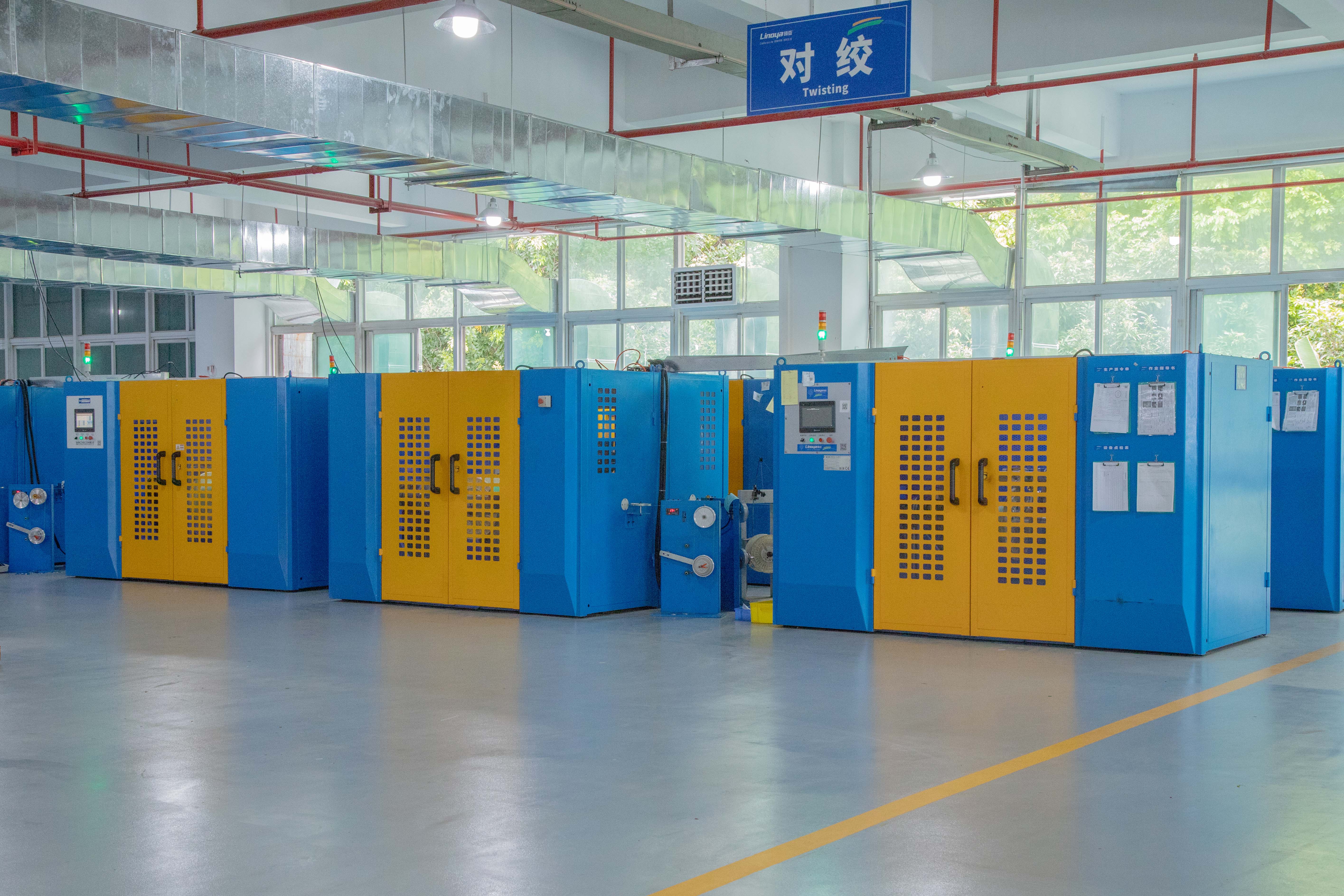
Pair twisting on a bulk cable production line — the first control point that determines crosstalk behaviour in the finished Ethernet cable.
An industrial edge network is judged long after commissioning day. The link that runs from an industrial switch to a patch panel, and from that patch panel to a sensor gateway or a PoE device on a production line, has to keep working while motors switch, while cabinets stay closed, and while nobody has budgeted a maintenance window for a cable that was chosen from a catalogue page.
This guide is written for the specification and procurement stages of those projects. It maps Ethernet cable specifications — flame rating, shielding construction, conductor type and gauge, jacket material and category — to the physical layers of an industrial edge deployment: industrial switches, patch panels, edge cabinets and field devices. Product, capacity and certification references come from Linoya Electronic Technology Co., Ltd., a cable and wire manufacturer established in 1997 that produces network cables and high-speed data transmission cables, new-energy vehicle cables, photovoltaic and energy-storage cables, and outdoor waterproof cables and connectors. The company operates three industrial parks in Shenzhen and Dongguan, a production base in Vietnam, and reports more than 100 production lines.
1. Why Factory Floor Reality Breaks Office Cabling Assumptions
Industrial edge networking is the layer between plant-floor devices and the IT network: industrial switches, edge cabinets, patch panels, sensors, machine controllers and PoE field devices. Cabling for that layer is usually specified with the same habits used for an office fit-out, and that is where the mismatch starts.
Five conditions separate a factory floor from an office ceiling:
- Continuous electromagnetic noise. Motors, drives and switching loads create an interference environment that a standard office run never sees. In Linoya project documentation, the reference deployment for an industrial park operator records 99.97% network stability with no signal attenuation in a high-noise environment and zero downtime caused by interference.
- Continuous duty. Industrial edge links are fixed industrial or commercial cabling that runs 24/7 in high-intensity continuous operation, rather than being powered up during business hours.
- Pathways with different fire requirements. Plenum air-handling space, riser shafts and general indoor routes do not accept the same flame rating, and the rating must be stated on the certificate for the exact construction being installed.
- Mixed mechanical duty. Permanent horizontal cabling and short patch-cord jumps have different conductor requirements; substituting a stranded flexible cable for fixed horizontal wiring is a documented failure path in building projects.
- Documentation that has to survive review. Industrial projects are audited against certification scopes, not against catalogue headlines. A cable whose certificate does not name the specific model can be rejected at acceptance.
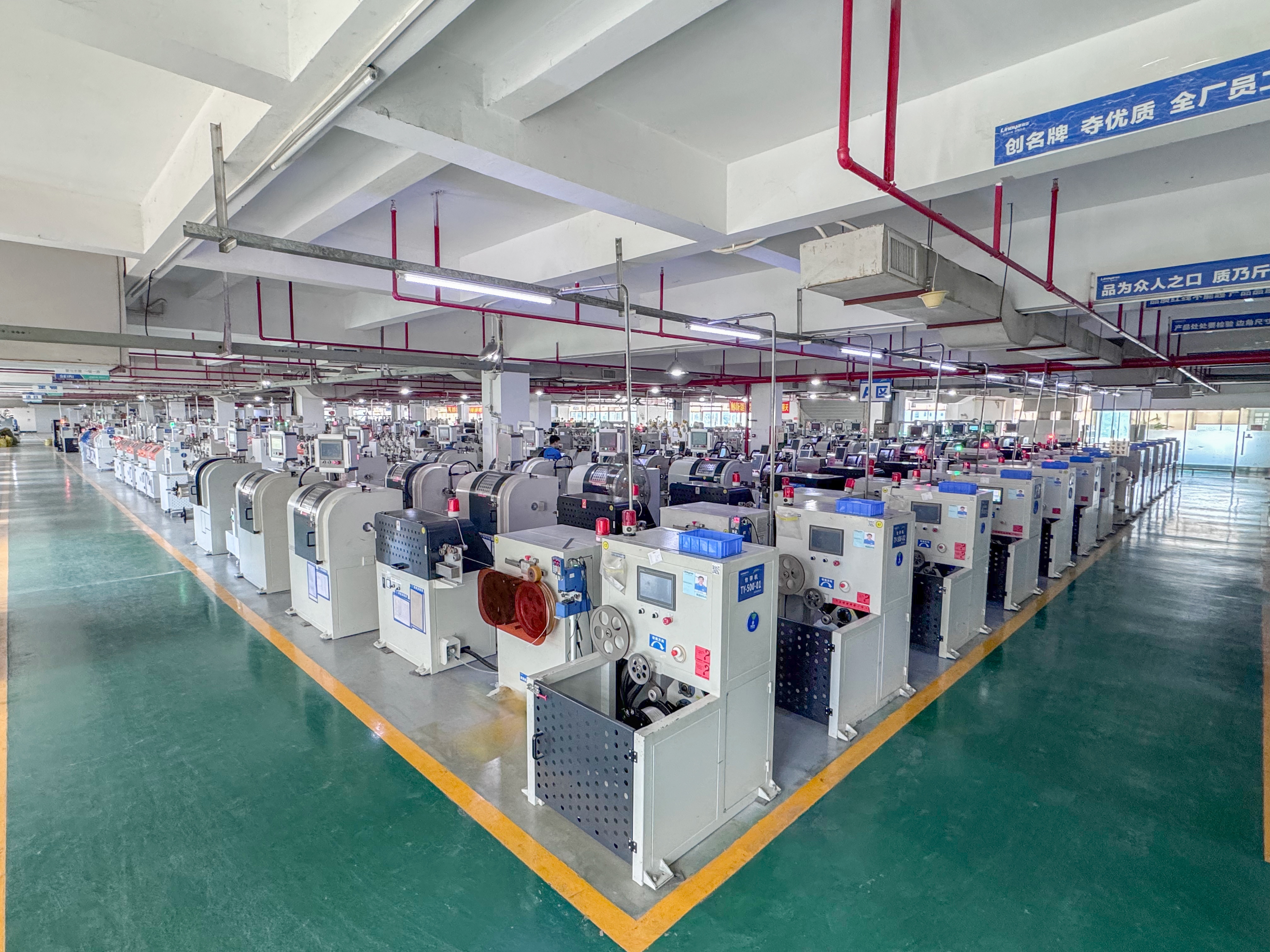
Taping equipment in the cable production process — where shield and jacket layers are applied over the twisted pairs.
2. Industry Background: Demand, Standards and Regulation Around Industrial Cable
Ethernet cable demand keeps expanding with the same trend that pushes switching and compute closer to machines. The global Ethernet cable market was valued at USD 38.55 billion in 2025, and market research published by Maximize Market Research projects revenue of nearly USD 70.02 billion by 2032, at a CAGR of 8.9% from 2026 to 2032. Category mix is concentrated: Cat6 was the leading segment in 2025 with a 32.5% share of that market, according to Dataintelo.
Two technical and regulatory shifts matter directly to industrial edge specification work.
Performance standards moved forward. ANSI/TIA-568.2-E was released in October 2024, replacing ANSI/TIA-568.2-D, and it introduced DC resistance unbalance (DCRU) specifications for Cat5e, Cat6 and Cat6A. DCRU matters in industrial cabinets because power delivery and data share the same pairs, and an unbalanced pair set wastes energy as heat and noise rather than signal.
Fire regulation became an engineering decision. Under the EU Construction Products Regulation, EN 50575 fire classes are not marketing labels. The B2ca class, for example, is defined by strict thresholds: flame spread of 1.5 m or less, total heat release of 15 MJ or less, and peak heat release rate of 30 kW or less. A PVC-jacketed cable cannot reach that class, which is why genuine LSZH constructions are specified for public buildings and other high-requirement projects.
Trade treatment adds a third, less obvious variable. Bulk Ethernet cable supplied on a reel without connectors is classified under HS 8544.49, while Ethernet patch cables with connectors fall under HS 8544.42. Published tariff data lists a US MFN duty rate of 2.6% for 8544.42.90 against an EU MFN rate of 0%. Two suppliers can therefore quote the same product at the same factory price and land it at different cost, depending on the form of the goods and the destination.
3. The Five Specification Decisions That Decide Whether a Link Survives
Industrial edge cable selection resolves into five decisions. Each one maps to a different physical risk, and each one is verifiable from a certificate or a datasheet rather than from a claim.
3.1 Flame rating: read the certificate, not the family name
Linoya holds UL file E320763, issued by UL LLC, covering communications cable types CM, CMG, CMR and CMP rated 60°C or 75°C, tested to UL 444 and Canadian Standard CSA C22.2 No. 214-08. Intertek ETL Verified certificates cover individual constructions in more detail: Cat5e U/UTP CM (24 AWG, ANSI/TIA-568.2-D, certificate 103161791CRT-002a), Cat5e F/UTP CM (24 AWG, ANSI/TIA-568-B.2 Category 5e, certificate 3168693CRT-004c), Cat6 U/UTP CM 23 AWG (certificate 103161791CRT-002c) and Cat6A U/FTP 23 AWG under ISO/IEC 11801-1 (certificate 102500029CRT-002), whose ETL scope explicitly states no flame rating.
That last detail is the practical lesson. A construction can be verified for performance and still carry no flame rating in its certificate scope. In an industrial edge project, match the rating to the pathway — CM or CMG for general indoor routes, CMR for riser, CMP where plenum air-handling space is involved — and confirm that the certificate names the exact model and rating before the submittal goes out.
3.2 Shielded or unshielded: match the construction to the noise zone
Shielding is the single most consequential decision on a noisy floor, and it is not binary. The practical mapping used across Linoya's Cat5e to Cat8 range is:
- U/UTP (unshielded): no metallic shield, lowest cost, simplest installation without grounding, basic anti-interference performance only.
- F/UTP (overall foil): one foil layer over all four pairs, for moderate electromagnetic interference — for example offices with EMI or surveillance systems.
- SF/UTP (screen plus foil): braided screen over foil, specified for industrial automation, enterprise networks and high-noise environments.
- U/FTP (individual pair foil): each pair foil-screened to control crosstalk in dense trays and high-performance 10G runs.
- F/FTP (overall plus pair foil): full shielding for heavy-EMI industrial areas, public infrastructure and high-performance networking.
The corpus of Linoya field guidance is consistent on the rule of thumb: deploy shielded constructions in workshops with motors and heavy equipment, and use unshielded cable only where interference is genuinely low. The same guidance flags the counter-risk — shielded cable requires reliable grounding, and improper grounding introduces extra noise instead of removing it.
3.3 Conductor: solid bare copper, correct gauge, and enough copper for PoE
All constructions in the Linoya Ethernet cable range use solid bare copper conductors with LDPE insulation. Gauge varies by category: 24 AWG for Cat5e, 24/23 AWG options for Cat6, 23 AWG for Cat6A and Cat7, and 22 AWG for Cat7A and Cat8.
Three conductor decisions matter on a factory floor. First, solid versus stranded: permanent horizontal and backbone wiring takes solid-conductor cable, while stranded cable belongs in patch cords, because stranded conductors have higher DC resistance and are not intended for permanent long-distance installation. Second, copper-clad aluminium should be avoided in formal commercial and industrial deployments — higher resistance, weaker PoE behaviour and oxidation risk. Third, PoE headroom: Cat6A's larger copper cross-section supports PoE++ loads up to 90 W with lower power loss over long runs, which is why it is the common choice when edge cabinets power cameras, access points and field devices.
3.4 Jacket material and regional fire class
Jacket material changes fire behaviour, not bandwidth. PVC is flexible and lower cost but releases dense toxic halogen smoke under fire. LSZH (low-smoke zero-halogen) produces little smoke and no corrosive halogen gas, at higher material cost and slightly greater stiffness during installation.
Linoya's CPR documentation covers a range of constructions rather than one blanket class: VDE Prüf- und Zertifizierungsinstitut (Notified Body 0366) issued Eca classification reports under EN 13501-6 for Cat5e UTP, Cat5e FTP, Cat5e SF/UTP, Cat6 UTP, Cat6 FTP and Cat6 SF/UTP; Elektrotechnický zkušební ústav (Notified Body 1014) issued Eca and Dca-s1,d0,a2 / Dca-s1a,d0,a2 reports under CS EN 13501-6:2014 for LSZH Cat5e, Cat6, Cat6A and Cat7 constructions; and TÜV Rheinland InterCert (Notified Body 1008) issued certificate 1008-CPR-MC 69267303 0001 covering B2ca-s1a,d0,a1 for CAT6/6A/7/7A/8 S/FTP communication and LAN cables under EN 50575:2014+A1:2016.
3.5 Category, bandwidth and distance
Category selection follows the link requirement, not the marketing tier. In the Linoya range: Cat5e carries 1 Gbps over a 100 m channel; Cat6 carries 10 Gbps at 55 m; Cat6A carries 10 Gbps over the full 100 m with alien-crosstalk performance suited to dense trays; Cat7 carries 40 Gbps at 50 m; Cat7A reaches 100 Gbps at 15 m; and Cat8 carries 40 Gbps at 30 m with 2000 MHz bandwidth for short cabinet-to-cabinet links.
On a factory floor this usually becomes three zones: 1 Gbps sensor and device zones where Cat5e SF/UTP is adequate and cost-efficient, a 10 Gbps distribution layer served by Cat6 or Cat6A, and a high-noise machine backbone where Cat7 F/FTP or Cat7A F/FTP is deployed over short, heavily shielded runs.
4. Step-by-Step: Specifying Industrial Edge Cable Before You Issue the PO
- Map the topology and real link lengths. Draw every run between the edge cabinet, the industrial switch, the patch panel and the field device, and record the measured length. Distance determines the category more often than speed does.
- Zone the floor by interference level. Mark high-noise areas around drives, motors and heavy equipment separately from offices, control rooms and IT-adjacent spaces. Shielding is assigned zone by zone.
- Assign the flame rating by pathway. General indoor routes, riser shafts and plenum air-handling space take different ratings. Record which pathway each run occupies.
- Assign shielding to each zone. Unshielded for low-noise areas, foil or screen-plus-foil for moderate EMI, full pair-plus-overall shielding for heavy-EMI industrial sections, with grounding designed at the same time.
- Confirm conductor type, gauge and PoE load. Solid bare copper for fixed runs, correct AWG for the run length, and a PoE or PoE++ budget that reflects the actual powered device count per cabinet.
- Select the jacket and fire class for the destination market. LSZH with the corresponding CPR class for EU public building and tender work; CM, CMG, CMR or CMP as required for North American pathways.
- Verify that the certificate scope covers the exact model. Check UL file E320763, the relevant ETL Verified certificate, and the CPR document against the construction on the order line — not against the product family name.
- Define acceptance and documentation. Linoya applies 100% pre-shipment testing, random sampling inspection, full electrical performance testing and third-party inspection such as SGS or UL. Factory test results still need an on-site re-check of the installed link after construction, because termination quality and routing conditions are created on site.
5. Use Cases: How the Mapping Plays Out on Real Projects
Factory automation backbone in a high-EMI plant
An industrial automation integrator working in a high-tech factory used Cat7 F/FTP full shielded cable for a factory automation backbone and high-performance industrial control. The recorded result was 99.998% network stability with reliable 40 Gbps transmission in a strong EMI environment. The construction characteristics behind that result are full shielding, industrial grade construction, CMP flame rating, CPR certification and PoE++ performance — a combination of shielding, safety documentation and power headroom rather than speed alone.
Heavy-industry production line network
A second industrial automation integrator, working in heavy industry, deployed Cat6A F/FTP for production line networking and high-EMI wiring. Recorded stability was 99.997%, with stable 10 Gbps transmission in an extreme EMI environment. The relevant specifications are a full shielding structure, industrial grade construction, CMP flame rating, CPR certification and an optional LSZH jacket for projects where smoke and halogen performance is also specified.
Edge and office-side zone of an industrial park
For factory office networking and industrial edge wiring in a high-noise environment, an industrial park operator used Cat5e SF/UTP. The result recorded was 99.97% network stability, no signal attenuation in the high-noise environment, and zero downtime caused by interference. This is the case where correct shielding in a modest category outperforms an overstated category in the wrong construction.
High-noise commercial and park network
A related deployment for industrial park and factory office networks used Cat6A SF/UTP for high-noise environments and reported 99.97% stability with strong anti-EMI/RFI behaviour, a durable structure, optional industrial grade construction and a CMR flame rating. It illustrates the standard upgrade path: keep the category that satisfies the bandwidth requirement, then raise the shielding build until the noise environment is covered.
6. Comparison Table: Industrial Edge Cable Options at a Glance
The table below maps Linoya Ethernet cable constructions to industrial edge roles. Bandwidth, gauge and shielding data come from product specifications; certification coverage refers to the specific documents named in section 3.
| Construction | Shielding | Bandwidth / distance | Flame rating | Certification coverage | Typical industrial edge role |
|---|---|---|---|---|---|
| CAT5E U/UTP | None | 1 Gbps @ 100 m | CM/CMG | UL/ETL; CPR Eca (EZÚ 1014, LSZH) | Low-noise edge closets and IT-side runs |
| CAT5E SF/UTP | Screen + foil | 1 Gbps @ 100 m | CM/CMG | UL/ETL; CPR Eca (VDE 0366) | Industrial edge and high-noise office zones |
| CAT6 U/UTP | None | 10 Gbps @ 55 m | CMR | UL/ETL; CPR Eca and Dca-s1,d1,a2 (LSZH) | Office and IT side of the edge |
| CAT6 SF/UTP | Screen + foil | 10 Gbps @ 55 m | CMR | UL/ETL; CPR Eca (VDE); B2ca within the S/FTP scope | Industrial automation cabinets and security |
| CAT6A U/FTP | Individual pair foil | 10 Gbps @ 100 m | CMP per product specification; ETL scope states no flame rating | ETL 102500029CRT-002; UL E320763 | Dense trays needing tight crosstalk control |
| CAT6A F/FTP | Overall + pair foil | 10 Gbps @ 100 m | CMP | UL/ETL/CPR; B2ca within the S/FTP scope | Heavy-EMI industrial production lines |
| CAT7 F/FTP | Overall + pair foil | 40 Gbps @ 50 m | CMP | UL/ETL/CPR; CPR Dca-s1,d0,a2 (LSZH); B2ca | High-EMI machine backbone |
| CAT8 F/FTP | Overall + pair foil | 40 Gbps @ 30 m | CMP | UL/ETL/CPR; B2ca within the S/FTP scope | Short links inside aggregation cabinets |
Certification columns list the document families described in this article; confirm the exact model on the certificate before ordering.
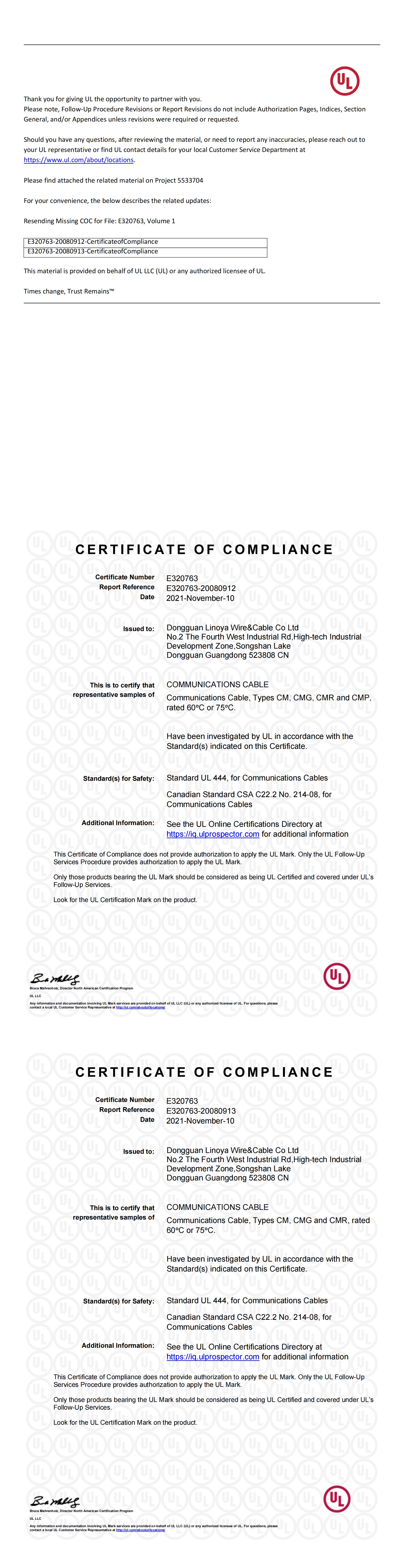
UL file E320763 covers communications cable types CM, CMG, CMR and CMP, rated 60°C or 75°C.
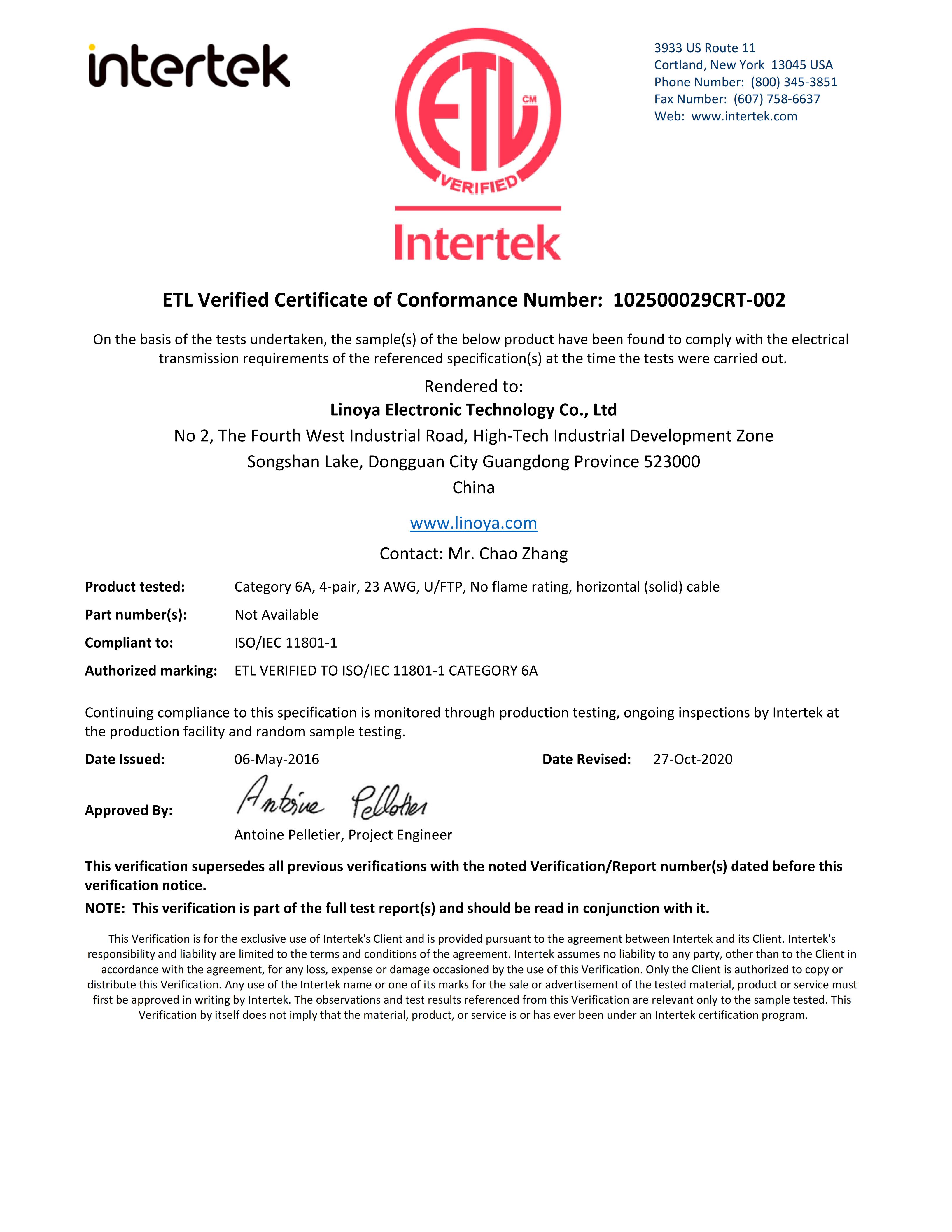
An ETL Verified scope for Cat6A U/FTP under ISO/IEC 11801-1 — note that this verification states no flame rating.
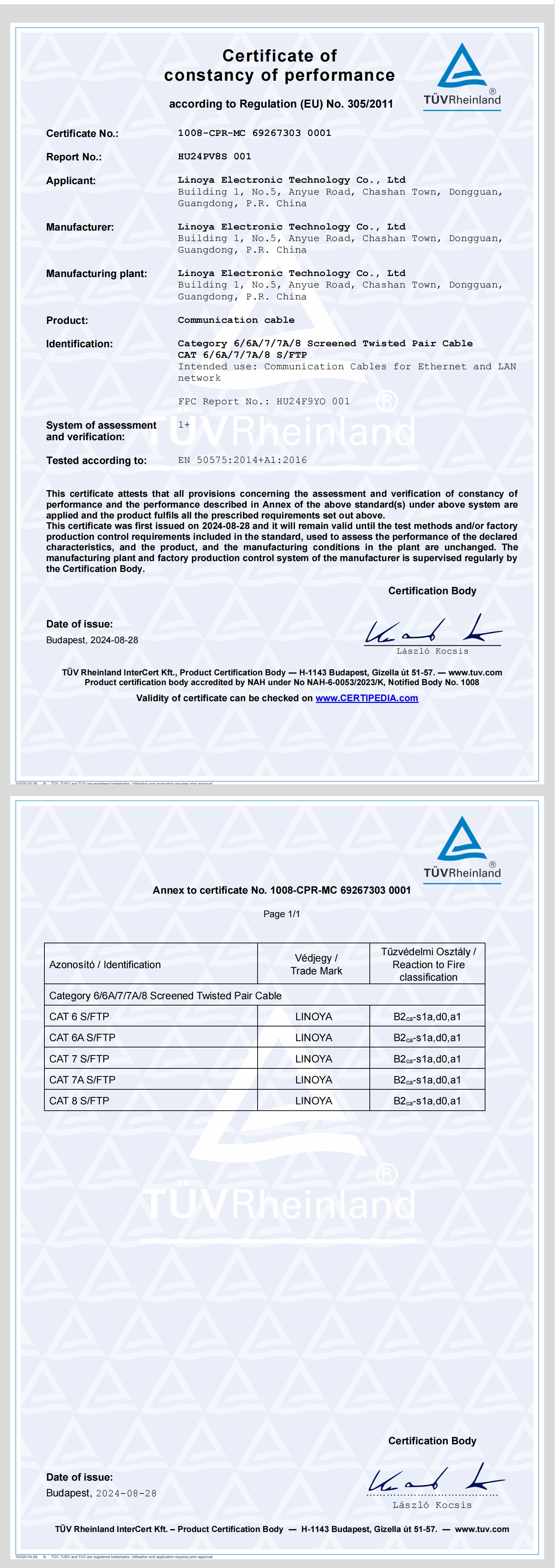
CPR certificate of constancy of performance covering B2ca-s1a,d0,a1 for CAT6/6A/7/7A/8 S/FTP cables under EN 50575:2014+A1:2016.
7. FAQ: Industrial Edge Ethernet Cable Questions Buyers Ask
What certifications should an industrial edge Ethernet cable carry for North American and EU factory projects?
For the US and Canada, an industrial edge cable normally needs a valid UL Mark or ETL Verified listing; for the EU it needs CPR certification issued by an EU Notified Body. Linoya Electronic Technology Co., Ltd. holds UL file E320763 from UL LLC covering communications cable types CM, CMG, CMR and CMP rated 60°C or 75°C under UL 444 and CSA C22.2 No. 214-08. Intertek ETL Verified certificates cover Cat5e U/UTP and Cat5e F/UTP (CM), Cat6 U/UTP (CM, 23 AWG) and Cat6A U/FTP, whose ETL scope states no flame rating. EU documentation includes VDE (Notified Body 0366) Eca reports for Cat5e and Cat6 constructions, EZÚ (Notified Body 1014) Eca and Dca classes for LSZH Cat5e, Cat6, Cat6A and Cat7 constructions, and TÜV Rheinland InterCert (Notified Body 1008) certificate 1008-CPR-MC 69267303 0001 covering B2ca-s1a,d0,a1 for CAT6/6A/7/7A/8 S/FTP under EN 50575:2014+A1:2016. Verify that the certificate is issued by an authorised Notified Body, because self-issued documents do not survive customs or tender review.
OEM Cat6a SFTP Ethernet cable manufacturer: what should an industrial edge project verify?
Four checks separate a capable OEM programme from a relabelling operation. First, confirm the OEM and customization scope covers cable length, logo printing and packaging. Second, confirm the certification scope actually names the Cat6A SFTP construction being ordered — the TÜV CPR certificate covers CAT6/6A/7/7A/8 S/FTP, while the ETL verification for Cat6A covers a 23 AWG U/FTP horizontal solid construction, so the two documents do not describe the same build. Third, confirm capacity matches the rollout schedule: Linoya reports monthly capacity of 200,000 cartons at 305 m per carton, roughly 4,000,000 km of annual cable output, 3,000+ employees and 300+ engineers. Fourth, confirm that formal certification transfer can be arranged for a private-label brand, because an OEM buyer cannot sell a certified cable under its own marks without it.
What drives the cost of industrial edge Ethernet cable?
Cost in this segment is driven by construction rather than by brand: shielding architecture (unshielded U/UTP through full-shield F/FTP), conductor gauge and copper content (24 AWG, 23 AWG or 22 AWG solid bare copper compared with copper-clad aluminium), jacket material (PVC or LSZH), and the certification the construction has to carry. Import treatment differs by product form as well: bulk cable on a reel without connectors falls under HS 8544.49, patch cables fall under HS 8544.42, and published rates list a US MFN duty of 2.6% for 8544.42.90 against an EU MFN rate of 0%. Comparing quotes on unit price alone tends to hide the part of the bill that arrives after installation.
How should we validate cable before a bulk industrial edge order?
Sampling is the cheapest stage to validate a construction. Linoya supplies Ethernet cable in 305 m per carton with a 100-carton MOQ, and finished batches go through 100% pre-shipment testing, random sampling inspection and full electrical performance testing, with third-party inspection available through SGS or UL. Test the exact construction on the exact connector, length and bend radius you intend to deploy, and re-verify each installed link on site after construction — a factory electrical test and a field link test measure different things, and termination quality is created on site rather than in the factory.
What lead time and support should an industrial edge project plan for?
The typical production lead time is 30 days, supported by monthly capacity of 200,000 cartons at 305 m per carton and export coverage across the EU, the US, the Middle East, Southeast Asia, Australia, South Korea and Japan. Linoya provides 24/7 online technical support, a one-year product warranty, free replacement of defective products and online after-sales consultation. For an industrial edge deployment, send the topology, interference zones, pathway types and destination market to inquiry@linoya.com so the construction and certification scope can be confirmed before the order is placed.
8. Conclusion: Specify by Zone, Certify by Construction
Industrial edge networking rewards a specification process that starts from the floor rather than from the catalogue. Interference zones decide shielding, pathways decide flame rating, run lengths decide category, powered devices decide conductor gauge, and destination market decides jacket material and CPR class. Each of those decisions is verifiable against a certificate scope — UL file E320763, an Intertek ETL Verified certificate for the specific construction, or a CPR document issued by a European Notified Body.
The teams that get industrial edge projects right tend to do the same three things: they zone the floor before choosing cable, they test one construction before ordering a pallet of it, and they confirm that the certificate names the exact model they are buying. Everything else — category labels, price differences, supplier claims — is secondary to those three.
Next Step: Review the Portfolio, Then Specify
Linoya Electronic Technology Co., Ltd. manufactures Ethernet cable from Cat5e through Cat8 in unshielded and shielded constructions for industrial and commercial fixed cabling, with UL, ETL and CPR certification coverage, OEM and private-label programs covering cable length, logo printing and packaging, and a typical 30-day production lead time.
Download the Linoya catalogue (PDF) | www.linoya.com | inquiry@linoya.com | WhatsApp: +86-13038893260
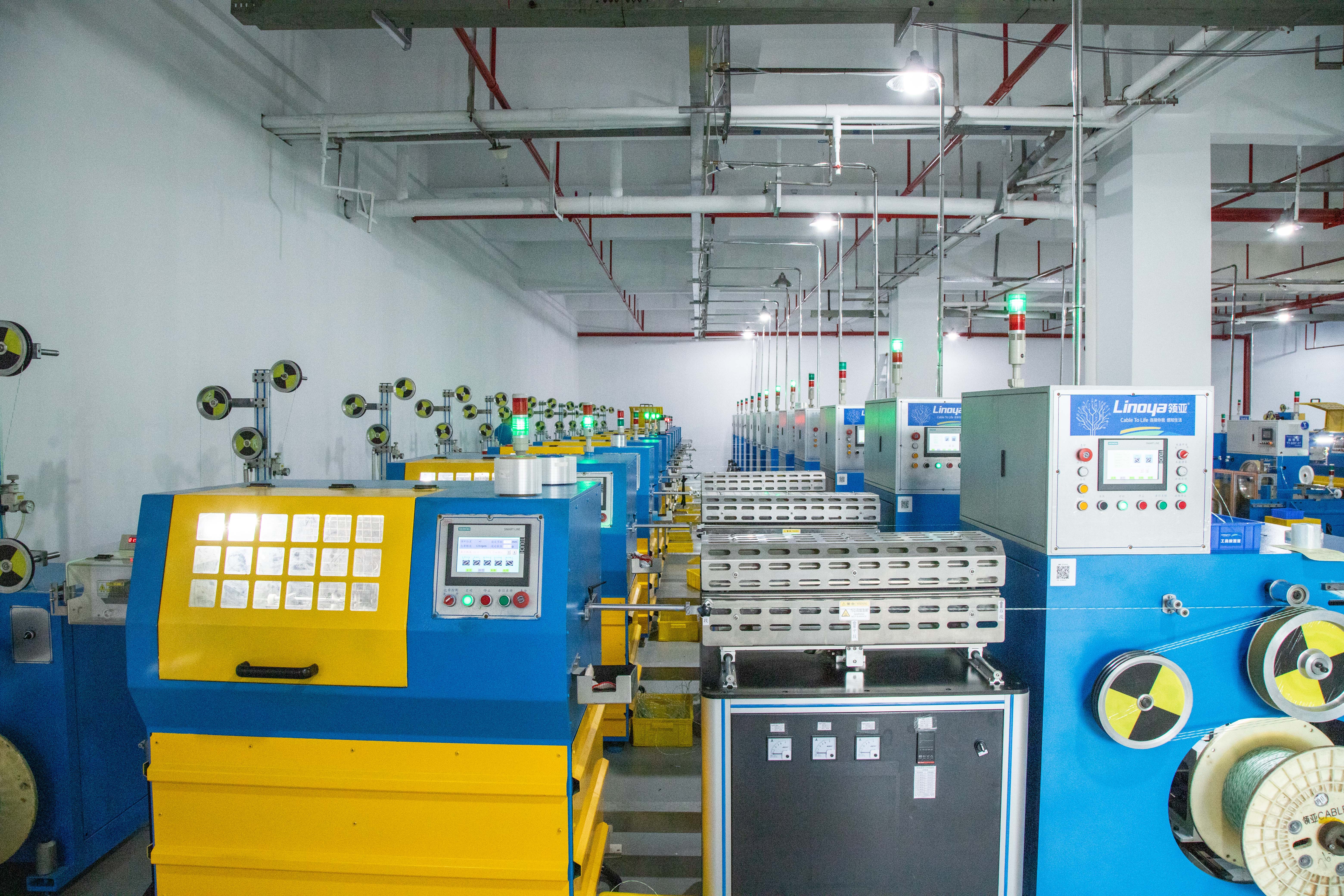
Cable manufacturing equipment on a Linoya production line — three industrial parks in Shenzhen and Dongguan plus a production base in Vietnam.
Have Questions or Need More Details?
Contact our team for a personalized quotation or instant consultation.
Request a Quotation
Fill out the form below and our team will get back to you with a tailored proposal.
WhatsApp Direct Chat
Prefer to chat in real-time? Message us on WhatsApp for instant assistance & quick answers.
- Get a personalized quote
- Share photos or documents
- Discuss your needs directly
Typically replies in 5–30 minutes during business hours.