
Ethernet Cable Application Guide: Data Center, Industrial Edge and High-EMI Projects
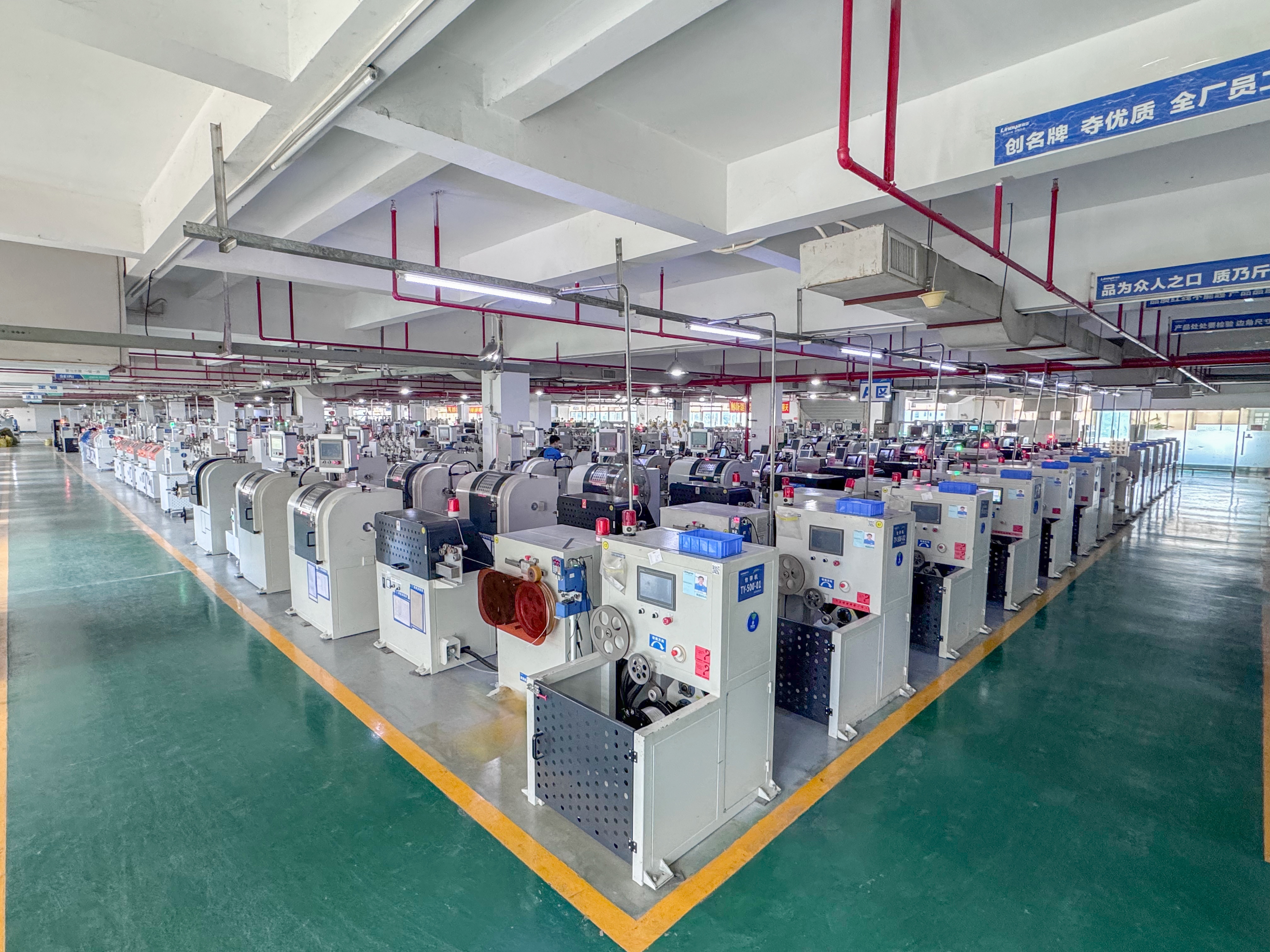
Shielding tape application on the Linoya Ethernet cable line — the construction step that separates high-EMI cable grades from general-purpose horizontal cable.
Ethernet cable selection for an enterprise project is decided by three variables, not by the category number printed on the jacket: the electromagnetic noise of the environment, the flame rating required by the installation route, and the combination of speed, distance and power the link has to carry. A construction that is correct for a plenum data hall can be the wrong choice on a factory floor, and a construction that survives a factory floor is usually over-specified for an office workstation.
This application guide maps three deployment environments to concrete cable profiles: enterprise data center and core network builds, industrial edge and high-EMI commercial buildings, and office 10G construction. Each profile is defined by shielding construction, flame rating, conductor gauge, and the certified documentation that should arrive with the delivery.
The specifications referenced below come from the Linoya Electronic Technology Co., Ltd. Ethernet cable range. Linoya Electronic Technology Co., Ltd. is a cable and wire manufacturer established in 1997 that integrates R&D, manufacturing and sales across intelligent transmission, smart power and new materials, operating three self-owned industrial parks in Shenzhen and Dongguan together with a production base in Vietnam. Where external market, standard or regulatory figures are used in this guide, the source is named.
Quick answer
- Data center and core network: CMP-rated, fully shielded Cat6a–Cat8 constructions — Cat6A U/FTP, Cat6A F/FTP, Cat7 F/FTP, Cat7A F/FTP and Cat8 F/FTP — in 23–22AWG solid bare copper with UL/ETL/CPR certification, for 24/7 passive operation and 10G/40G/100G short-reach links.
- Industrial edge and high-EMI commercial buildings: CM/CMG-rated enhanced-shielding constructions — Cat5e SF/UTP as the baseline, Cat6 SF/UTP and Cat6A SF/UTP or Cat6A F/FTP where 10G is required — deployed with an industrial switch and a shielded patch panel.
- Office 10G construction: CMR-rated Cat6 U/UTP with dual 24AWG/23AWG options, TIA/EIA-568-C.2 compliant and PoE++ capable, moving to Cat6a U/UTP where the full 100 m channel must hold 10 Gbps.
Problem Definition: Why One Cable Specification Fails Three Environments
The most expensive cabling mistake in a project is not choosing the wrong brand — it is buying one construction for three different physical problems. Data halls, plant floors and office floors fail in different ways, and each failure mode points to a different cable property.
Noise-driven failures
Interference does not need a fault to degrade a link. Crosstalk is the leakage of signal between adjacent twisted pairs inside the same cable; excessive crosstalk produces packet loss, reduced throughput and unstable connections. External electromagnetic interference adds a second path into the same pairs. The symptoms that point to a cable-level interference problem are consistent across projects: no link light, frequent disconnection, slow speeds, random packet loss, unstable PoE power delivery, and a link that negotiates 10/100 Mbps instead of the expected Gigabit rate.
The root causes usually resolve into five categories: physical damage to conductors or jacket, termination defects such as wrong wiring sequence or over-untwisted pairs, conductor quality issues such as copper-clad aluminium instead of solid bare copper, environmental interference in high-EMI areas, and connector mismatch where low-grade RJ45 hardware cannot support the high-frequency performance of Cat6 or Cat6a. Four of those five are decided at the specification stage, not on site.
Route-driven failures
Flame rating is a compliance question, not a performance question, and it is governed by where the cable is installed. In North American practice, CM is the general-purpose rating used for horizontal and in-wall runs, CMR is specified for riser shafts, and CMP is required in plenum air-handling spaces. In the European Union the same requirement is expressed as a reaction-to-fire class under the Construction Products Regulation (EN 50575). Specifying only the category — "Cat6a" — without fixing the flame rating is the most common compliance gap found in cable tender documents.
Distance and power-driven failures
Electrical performance degrades with distance and with current. A Cat6 channel holds 10 Gbps to 55 m; a Cat6a channel holds 10 Gbps to 100 m. Power over Ethernet changes the thermal load inside the bundle as well: PoE++ raises the power carried over the four pairs, which is why conductor gauge, pair balance and jacket material (PVC or LSZH) all matter in dense bundles rather than only in single-cable tests.
Two constructions sit outside the scope of this guide and follow a different logic: outdoor waterproof and direct burial cable for runs that leave the building envelope, and pre-terminated patch cords, which are also classified differently at import from bulk cable on a reel.
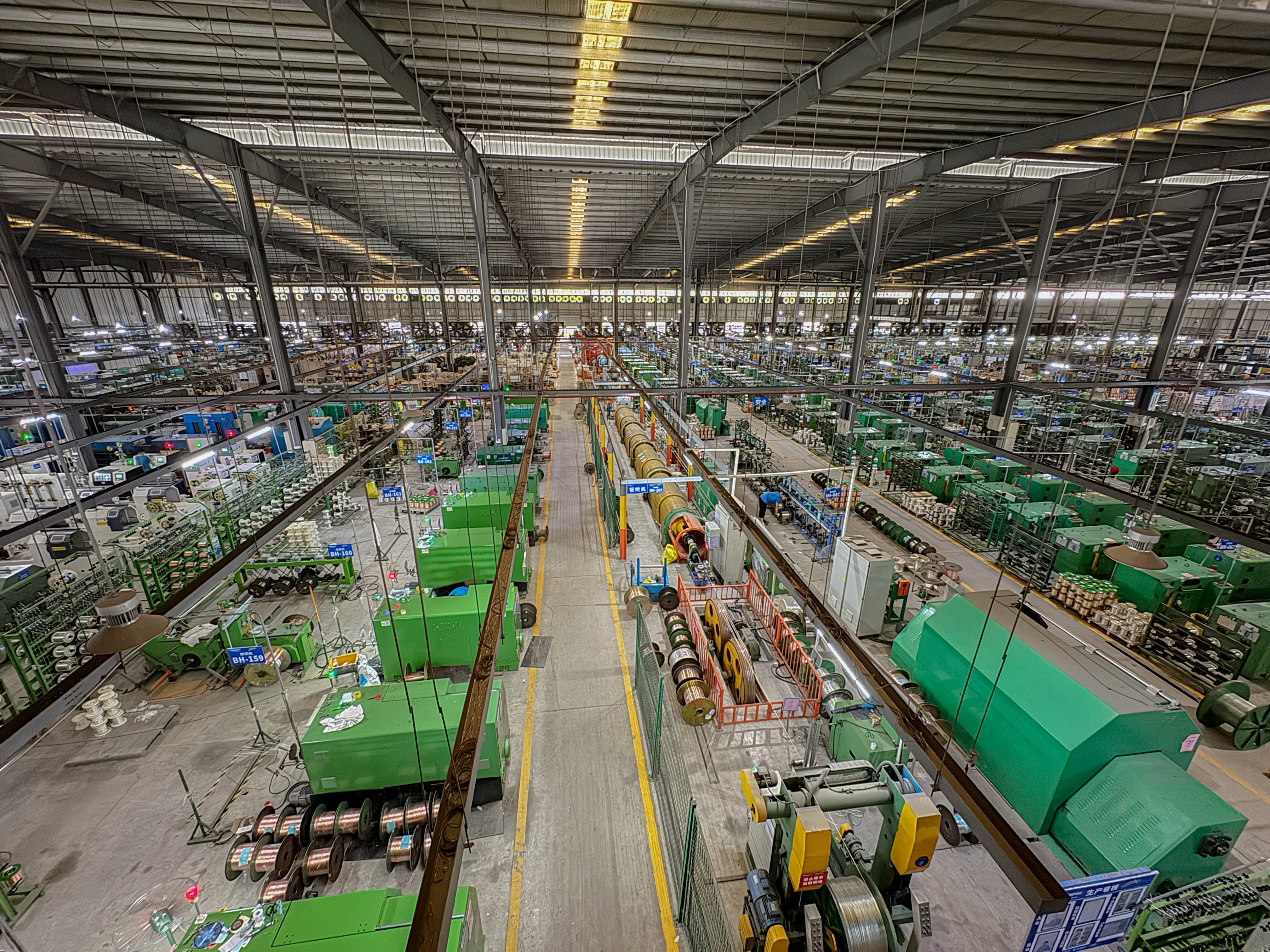
Conductor stranding: consistent solid bare copper geometry is what allows a pair to hold the DC resistance balance now required by ANSI/TIA-568.2-E.
Industry Background: What Changed Between 2024 and 2026
Demand for higher cable categories is being driven by infrastructure build-out rather than by simple replacement. According to Maximize Market Research, the global Ethernet cable market was valued at USD 38.55 billion in 2025 and is expected to reach nearly USD 70.02 billion by 2032, a compound annual growth rate of 8.9% between 2026 and 2032. The same research landscape shows Cat6 as the volume leader: Dataintelo reports that the Cat6 segment held a 32.5% share of the Ethernet cable market in 2025.
For buyers, the most consequential technical change in this cycle is the release of ANSI/TIA-568.2-E in October 2024, which replaces ANSI/TIA-568.2-D and introduces DC resistance unbalance (DCRU) specifications for Cat5e, Cat6 and Cat6A. DCRU measures how evenly the two conductors of a pair behave under load. Cable built with inconsistent conductor diameter, contaminated copper or copper-clad aluminium struggles to hold that balance. In practical procurement terms, the standard strengthens the case for solid bare copper conductors and controlled pair geometry, and it gives engineering teams a technical basis to reject off-spec material instead of arguing about price alone.
On the European side, the Construction Products Regulation has converted flame performance from a marketing claim into a declared class. EN 50575 defines the B2ca class with strict thresholds: flame spread (FS) of 1.5 m or less, total heat release (THR) of 15 MJ or less, and peak heat release rate of 30 kW or less. Linoya holds a CPR Certificate of Constancy of Performance (System 1+) issued by TÜV Rheinland InterCert Kft. (Notified Body 1008), certificate 1008-CPR-MC 69267303 0001, covering B2ca-s1a,d0,a1 Cat6, Cat6A, Cat7, Cat7A and Cat8 S/FTP communication/LAN cables under EN 50575:2014+A1:2016. Additional Eca and Dca classification reports from VDE Prüf- und Zertifizierungsinstitut GmbH (Notified Body 0366) and Elektrotechnický zkušební ústav, s.p. (Notified Body 1014) cover other constructions in the range under EN 13501-6.
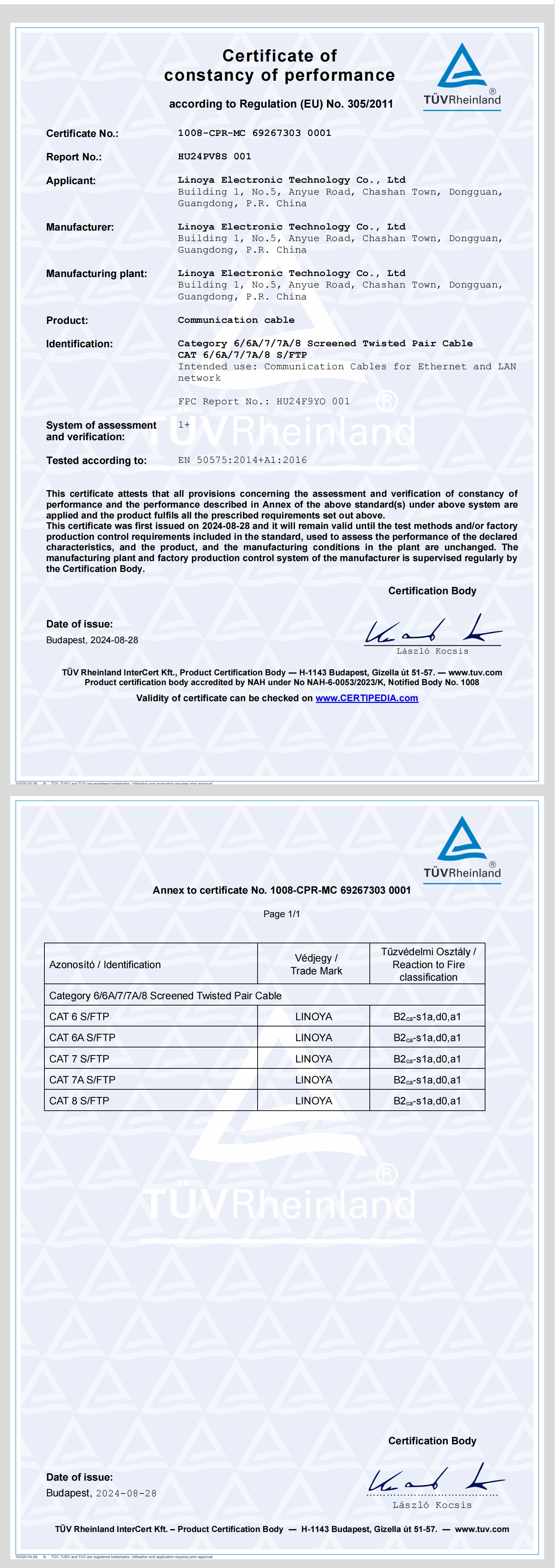
CPR Certificate of Constancy of Performance (System 1+) 1008-CPR-MC 69267303 0001 — B2ca-s1a,d0,a1 for Cat6, Cat6A, Cat7, Cat7A and Cat8 S/FTP cables.
Import classification changes the cost comparison between delivery formats. Ethernet patch cables fitted with connectors fall under HS code 8544.42 (voltage not exceeding 80 V), while bulk Ethernet cable on a reel without connectors falls under HS 8544.49. Published most-favoured-nation duty rates differ between the two markets: 2.6% in the United States for HS 8544.42.90, and 0% in the EU. For a 305 m bulk programme running to hundreds of cartons, that distinction belongs in the evaluation stage rather than in the post-shipment review.
Linoya's own capacity position is relevant to evaluation-stage buyers. The company operates 60,000 m² of factory space with 3,000+ employees, 300+ engineers in R&D, an annual cable output of 4,000,000 kilometres, and an export ratio of approximately 30% concentrated on the EU and the Middle East. Bulk Ethernet cable capacity is stated at 305 m per carton with 200,000 cartons per month.
Detailed Solution: Three Cable Profiles for Three Environments
Three profiles cover the majority of enterprise cable specifications. Each profile is defined by three decisions — flame rating, shield construction and conductor gauge — and each has a matched equipment set that determines whether the cable's rated performance is actually usable end to end.
Profile 1 — Enterprise Data Center and Core Network: CMP, Fully Shielded, 24/7
Data center and core network links are specified around three conditions: continuous 24/7 passive operation, high cable density in trays and cabinets, and installation in a space where CMP flame rating is the entry requirement rather than an upgrade. The families that meet this profile are Cat6A U/FTP with individual pair foil shielding, Cat6A F/FTP with overall plus pair full foil shielding, Cat7 F/FTP, Cat7A F/FTP and Cat8 F/FTP — all in solid bare copper, all TIA/EIA-568-C.2 compliant, and all carrying a CMP flame rating with UL/ETL/CPR certification.
The performance ladder is distance-limited by design. Cat6A constructions carry 10 Gbps over the full 100 m channel in a 23AWG conductor. Cat7 F/FTP carries 40 Gbps to 50 m. Cat8 F/FTP carries 40 Gbps to 30 m in short-reach cabinet-to-cabinet links, and Cat7A F/FTP reaches 100 Gbps to 15 m with a 22AWG heavy-gauge conductor.
The matched equipment set is as decisive as the cable: core switches, routers, server farms, data center equipment and enterprise gateway hardware, plus 40G switches, high-performance servers and storage arrays in the higher-speed segments. A cable rated for 40 Gbps on a 30 m link delivers nothing if the patch panel or the gateway port in front of it is the bottleneck.
Project evidence supports the profile. A high-performance data center operator took 5,000 cartons of Cat8 F/FTP — 305 m per carton — for high-density server cabinet links and reported 99.998% network stability with reliable 40G transmission, using full shielding, 22AWG solid copper, CMP flame rating, UL/ETL/CPR certification and an optional LSZH jacket.
The limits are cost, handling and grounding. Heavier 22AWG constructions are stiffer, occupy more pathway space, and 100 Gbps is available only within a short reach. Full-shielded cable also depends on correct bonding at both ends; a shield that is not properly grounded can perform worse than an unshielded construction.
Profile 2 — Industrial Edge and High-EMI Commercial Buildings: CM/CMG with Enhanced Shielding
Where drives, motors, welding equipment, lifts or dense power distribution share a pathway with data, the cable has to reject noise before it transmits. The baseline construction for this profile is Cat5e SF/UTP: 24AWG solid bare copper with a screen plus overall foil shield, CM/CMG flame rating, UL/ETL certification, and a CPR Eca classification report issued by VDE under EN 13501-6. Linoya lists its intended environments as security camera, structured cabling, commercial building, industrial edge and high-noise office environments.
Where 10 Gbps is required on the same high-noise site, the profile moves to Cat6 SF/UTP — screen plus overall foil, 10 Gbps to 55 m, CMR flame rating, UL/ETL certification and a CPR Eca classification report — or up to Cat6A SF/UTP and Cat6A F/FTP, both 23AWG solid bare copper with 10 Gbps to 100 m, CMP flame rating and UL/ETL/CPR certification. The matched equipment set is an industrial switch, a core switch, a shielded patch panel, industrial control equipment and workstations.
LSZH jacket options are listed across the shielded families — Cat6A SF/UTP, Cat6A F/FTP, Cat7 F/FTP, Cat8 F/FTP and others — for sites where smoke emission and halogen content are restricted. Classification documentation exists for the LSZH variants as well: the LSZH Cat6 U/UTP construction holds a Dca-s1,d1,a2 classification (EZÚ report 801180-01/03), the LSZH Cat6A U/FTP construction holds Dca-s1a,d0,a2 (EZÚ report 801180-01/02), and the LSZH Cat7 construction holds Dca-s1,d0,a2 (EZÚ report 801180-01/01).
Field evidence from this profile is interference-specific. A heavy industry integrator deployed Cat6A F/FTP across 5,000 cartons of 305 m for a heavy industrial automation network and recorded 99.997% network stability with stable 10G transmission in an extreme-EMI environment. An industrial park operator used Cat5e SF/UTP across 4,000 cartons for factory office and industrial edge wiring with a reported 99.97% stability rate and zero downtime caused by interference. Cable from this family has been in continuous deployment in industrial applications for over 25 years.
The boundary of the profile is equally clear: enhanced shielding solves conducted and radiated noise, but it does not extend the reach of a category. A screened Cat5e cable remains a 1 Gbps construction no matter how good the shield is.
Profile 3 — Office 10G Construction: CMR, PoE++, Long-Distance Gigabit
Office and commercial horizontal cabling does not need the shielding of a factory floor, but it does need a declared flame rating, a stable channel over the distances actually installed, and headroom for powered devices. The recommended construction is Cat6 U/UTP in dual 24AWG or 23AWG solid bare copper options, CMR flame rated, UL/ETL certified and TIA/EIA-568-C.2 compliant, with 10 Gbps to 55 m, Gigabit to 100 m, and PoE++ support. Where a floor carries moderate EMI — a shared riser with power distribution, or an office adjacent to a workshop — the Cat6 F/UTP version adds an overall foil shield at the same 10 Gbps to 55 m performance. Where the 10G channel must hold across a full 100 m, the specification moves to Cat6A U/UTP in 23AWG with a CMP flame rating and UL/ETL/CPR certification.
Structured cabling in this profile follows a wired star topology: each workstation, camera or access point runs a single horizontal cable back to a floor distributor and patch panel, which is cross-connected to the switch. That topology is what makes the installation testable — a channel test covers cable, connectors and patch panel together, and a fault can be isolated to one link instead of one subnet.
The matched equipment set is a Gigabit or 10G switch, router, servers, NAS/SAN storage, patch panels, SFP modules, IP cameras, workstations, VoIP phones and conference systems.
Commercial deployment data follows the same pattern. A commercial building contractor and SMB IT department installed 4,000 cartons of Cat6 U/UTP in dual 24AWG/23AWG configuration for an office 10G build, reporting 99.99% network stability, stable 10G transmission, PoE++ support and a passed 10G network performance test. On the access layer, a residential and small-office project used 2,000 cartons of Cat5e U/UTP to supply stable PoE power to more than 200 IP cameras with 99.99% stability and no major failures. Where only Gigabit is required in a building with minor EMI, Cat5e F/UTP with CM/CMG flame rating and UL/ETL certification remains the accepted horizontal choice.
The trade-off in this profile is predictability versus cost. Cat6 gives 10 Gbps only to 55 m, and beyond that the channel falls back to Gigabit. Cat6a removes the distance limit but increases cable diameter and project cost, and larger diameter reduces how many cables fit a given conduit.
Step-by-Step Breakdown: Seven Selection Steps
Seven decisions, taken in order, cover a normal Ethernet cable specification review. Skipping step two or step five is what creates rework after installation.
- Define the noise environment first. Classify each run as low-noise (office, residential, SMB), moderate-noise (commercial building with power distribution, industrial edge office) or high-noise (factory floor, heavy industry, drive cabinets). The noise class sets the shield requirement before any category is discussed.
- Fix the flame rating from the installation route. CM for general horizontal and in-wall runs, CMR for riser shafts, CMP for plenum air-handling spaces; for EU projects, translate this into the required CPR reaction-to-fire class under EN 50575 and confirm the classification report or certificate covers the exact construction being ordered.
- Set the speed and distance target. 1 Gbps to 100 m points to Cat5e; 10 Gbps to 55 m points to Cat6; 10 Gbps to 100 m points to Cat6a; 40 Gbps to 50 m points to Cat7; 40 Gbps to 30 m points to Cat8; 100 Gbps to 15 m points to Cat7A. Measure the actual channel length, not the straight-line distance.
- Choose the shield construction. UTP for clean office environments, F/UTP (overall foil) for moderate EMI, SF/UTP (screen plus foil) for high-EMI commercial and industrial edge sites, U/FTP (individual pair foil) where pair-to-pair crosstalk is the dominant risk, and F/FTP (overall plus pair foil) for heavy-EMI industrial and data center deployments. Bonded and grounded shielding is part of the specification, not an installation afterthought.
- Confirm conductor material and gauge. Specify solid bare copper and a defined gauge — 24AWG for Cat5e, 23AWG for Cat6a and Cat7, 22AWG for Cat7A and Cat8 heavy-gauge runs. Under ANSI/TIA-568.2-E, DC resistance unbalance now forms part of the Cat5e, Cat6 and Cat6A requirement, which is why conductor consistency is worth writing into the purchase specification.
- Calculate the power load. PoE devices, PoE+ cameras and PoE++ equipment (Linoya's selection guidance places PoE++ at up to 90 W) all raise current in the same conductors. Check bundle fill, ambient temperature and jacket choice (PVC or LSZH) before finalising the carton quantity.
- Match the supporting hardware and verify the documents. Confirm the switch, patch panel, gateway and connectors are rated for the same channel, then collect the certificate set for the construction ordered: UL Certificate of Compliance E320763 for CM, CMG, CMR and CMP cable types; ETL Verified certificates 3168693CRT-004c (Cat5e F/UTP CM), 103161791CRT-002a (Cat5e U/UTP CM), 103161791CRT-002c (Cat6 U/UTP CM) and 102500029CRT-002 (Cat6A U/FTP); and the CPR classification reports or B2ca Certificate of Constancy of Performance where EU projects are involved.
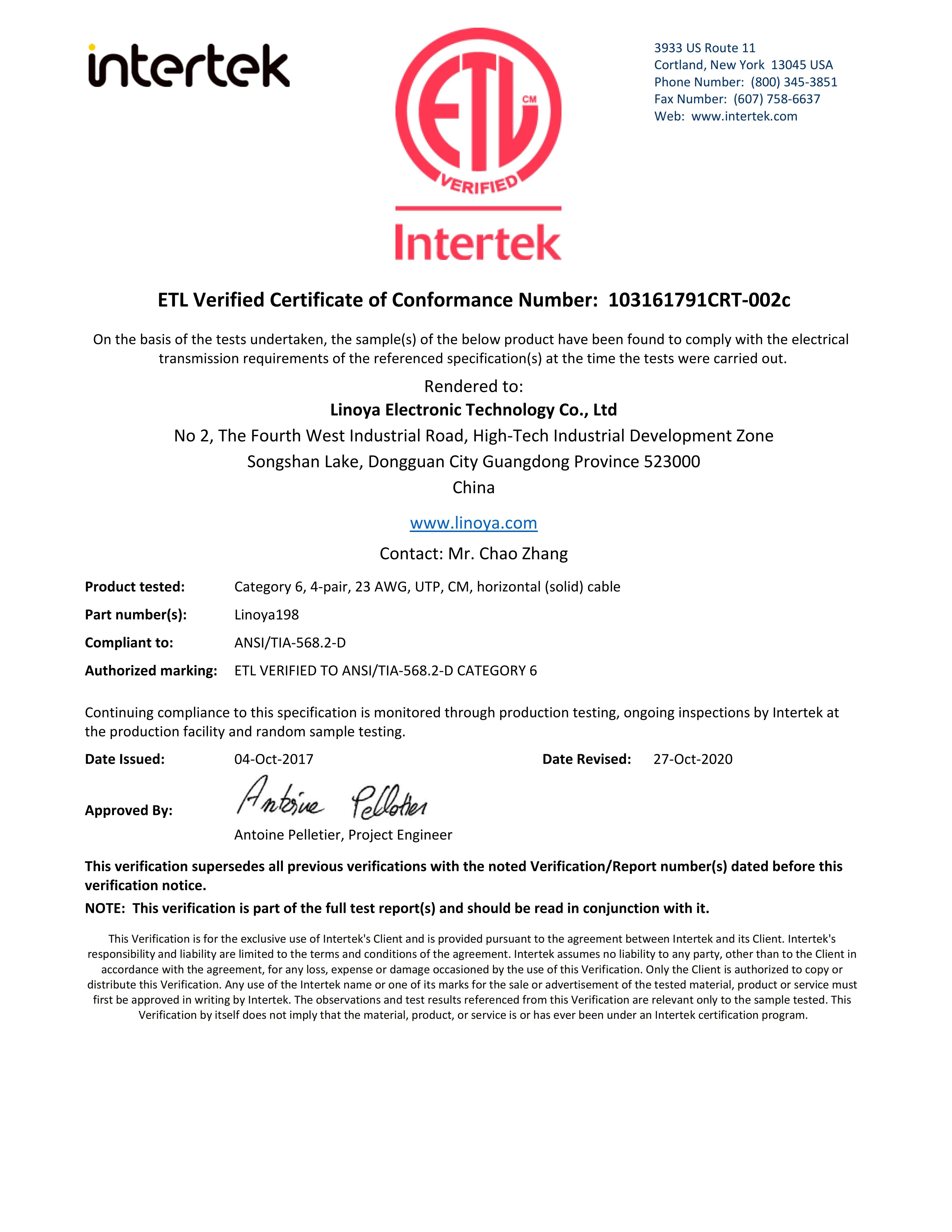
ETL Verified Certificate of Conformance covering Category 6, 4-pair, 23AWG UTP CM horizontal solid cable (Linoya198) to ANSI/TIA-568.2-D.
Verification does not stop at the factory gate. A representative installed channel should be tested with a cable tester for continuity and wiring sequence, checked against the RJ45 link status indicator on the connected device, and confirmed with a throughput test. Linoya runs 100% pre-shipment testing, random sampling inspection and full electrical performance testing on finished cable, with third-party inspection such as SGS or UL available — but termination quality is decided on site, so a post-installation channel test remains necessary.
Use Cases: What the Deployments Showed
Project records from the three profiles show how the selection logic performs outside the specification document.
- Data center short-reach interconnection (Cat8 F/FTP). A data center operator and server room integrator took 5,000 cartons of 305 m Cat8 F/FTP for cabinet-to-cabinet short-reach links and server rack internal wiring, reporting 99.999% network stability on stable 40G short-range transmission at a 30 m transmission distance, using 22AWG heavy-gauge conductors, CMP flame rating and UL/ETL/CPR certification.
- Enterprise 10G backbone (Cat6A U/FTP). An enterprise IT department and data center integrator deployed 2,000 cartons of Cat6A U/FTP for server room wiring and a 10G backbone, reporting 99.999% stability with crosstalk eliminated — the outcome the individual pair foil shield is specified for — together with low crosstalk performance and suitability for 10G enterprise deployment.
- High-density data center and high-EMI commercial (Cat6A SF/UTP). A data center operator and system integrator used Cat6A SF/UTP over 2,000 cartons for high-density wiring, an enterprise core network and a high-EMI commercial building network, reporting 99.998% stability with stable 10G transmission in a high-density environment, no crosstalk, an optional LSZH jacket option and CMP flame rating.
- Factory automation backbone (Cat7 F/FTP). An industrial automation integrator and high-tech factory deployed 6,000 cartons of Cat7 F/FTP for a high-EMI industrial network and factory automation backbone, reporting 99.998% stability with extreme anti-interference and reliable 40G transmission in a strong-EMI environment, with excellent PoE++ performance, full shielding, CMP flame rating and CPR certification.
- High-noise office and industrial park wiring (Cat6A SF/UTP). An industrial park operator and factory IT manager used 3,000 cartons for industrial park office networks and high-noise commercial environment wiring, reporting 99.97% stability with excellent anti-EMI/RFI performance and no signal loss in harsh conditions.
- Commercial vertical cabling with moderate EMI (Cat6 F/UTP). An engineering contractor and commercial property manager installed 3,000 cartons of Cat6 F/UTP for vertical cabling, office networks with moderate EMI and hotel room wiring, reporting 99.98% stability with reduced crosstalk, CMR flame rating and UL/ETL certification.
Ethernet Cable Selection Comparison Table
The table compares the models in the Linoya Ethernet cable range on the parameters that drive the three profiles. All entries use solid bare copper conductors, LDPE insulation and PVC or LSZH jacket material, and are TIA/EIA-568-C.2 compliant.
| Model | Shield construction | Conductor | Bandwidth / distance | Flame rating & certification | Recommended environment |
|---|---|---|---|---|---|
| CAT5E U/UTP | Unshielded | 24AWG solid bare copper | 1 Gbps | CM/CMG; UL/ETL certified; CPR Eca report | Residential, SMB networking, IP surveillance, structured cabling |
| CAT5E F/UTP | Overall foil shield (F/UTP) | 24AWG solid bare copper | 1 Gbps | CM/CMG; UL/ETL certified; CPR Eca report | Office, small commercial building, surveillance with minor EMI |
| CAT5E SF/UTP | Screen + overall foil (SF/UTP) | 24AWG solid bare copper | 1 Gbps | CM/CMG; UL/ETL certified; CPR Eca report | Commercial building, industrial edge, high-noise office environment |
| CAT6 U/UTP | Unshielded | 24AWG/23AWG solid bare copper | 10 Gbps to 55 m | CMR; UL/ETL certified; CPR Eca and Dca reports (LSZH variant) | Commercial office 10G, home networking, IP surveillance, SMB |
| CAT6 F/UTP | Overall foil shield (F/UTP) | 24AWG/23AWG solid bare copper | 10 Gbps to 55 m | CMR; UL/ETL certified; CPR Eca report | Commercial building, office with EMI, surveillance system |
| CAT6 SF/UTP | Screen + overall foil (SF/UTP) | 24AWG/23AWG solid bare copper | 10 Gbps to 55 m | CMR; UL/ETL certified; CPR reports | Commercial building, industrial automation, enterprise network, security and surveillance |
| CAT6A U/UTP | Unshielded | 23AWG solid bare copper | 10 Gbps to 100 m | CMP; UL/ETL/CPR certified | Data center, commercial office, 10G enterprise networking |
| CAT6A SF/UTP | Screen + overall foil (SF/UTP) | 23AWG solid bare copper | 10 Gbps to 100 m | CMP; UL/ETL/CPR certified; B2ca CoC covers Cat6–Cat8 S/FTP | Data center, enterprise network, high-EMI commercial environment |
| CAT6A U/FTP | Individual pair foil shield (U/FTP) | 23AWG solid bare copper | 10 Gbps to 100 m | CMP; UL/ETL/CPR certified; ETL verified 102500029CRT-002 | Enterprise data center, high-performance 10G networking, server room |
| CAT6A F/FTP | Overall + pair full foil (F/FTP) | 23AWG solid bare copper | 10 Gbps to 100 m | CMP; UL/ETL/CPR certified; B2ca CoC covers Cat6–Cat8 S/FTP | Heavy-EMI industrial, data center, public infrastructure |
| CAT7 F/FTP | Overall + pair full foil (F/FTP) | 23AWG solid bare copper | 40 Gbps to 50 m | CMP; UL/ETL/CPR certified; B2ca CoC covers Cat6–Cat8 S/FTP | High-EMI industrial, data center, high-performance networking |
| CAT7A F/FTP | Overall + pair full foil (F/FTP) | 22AWG solid bare copper | 100 Gbps to 15 m | CMP; UL/ETL/CPR certified; B2ca CoC covers Cat6–Cat8 S/FTP | High-EMI industrial, premium data center, ultra-high-speed links |
| CAT8 F/FTP | Overall + pair full foil (F/FTP) | 22AWG solid bare copper | 40 Gbps to 30 m | CMP; UL/ETL/CPR certified; B2ca CoC covers Cat6–Cat8 S/FTP | Data center cabinet-to-cabinet short-reach interconnection |
Frequently Asked Questions
Which flame rating should I specify for Ethernet cable — CM, CMG, CMR or CMP?
The flame rating follows the installation route, not the cable category. In North American practice, CM is the general-purpose rating used for horizontal and in-wall runs, CMR is specified for riser shafts, and CMP is required in plenum air-handling spaces. Linoya Electronic Technology Co., Ltd. holds UL Certificate of Compliance E320763 under standard UL 444 and Canadian Standard CSA C22.2 No. 214-08, covering communications cable types CM, CMG, CMR and CMP rated 60 °C or 75 °C. Within the range, Cat5e constructions are CM/CMG rated, the Cat6 U/UTP, F/UTP and SF/UTP constructions are CMR rated, and the Cat6a, Cat7, Cat7A and Cat8 shielded constructions carry a CMP flame rating. EU projects express the same requirement as a CPR reaction-to-fire class under EN 50575; Linoya holds CPR Certificate of Constancy of Performance 1008-CPR-MC 69267303 0001 from TÜV Rheinland for B2ca-s1a,d0,a1 Cat6, Cat6A, Cat7, Cat7A and Cat8 S/FTP cables.
Can a Cat6a cable really deliver 10 Gbps over a full 100 m, and how much shielding is enough in a high-EMI plant?
A Cat6a channel holds 10 Gbps over the full 100 m: Cat6A U/UTP, Cat6A SF/UTP, Cat6A U/FTP and Cat6A F/FTP are all specified with 23AWG solid bare copper, 10 Gbps at 100 m, CMP flame rating and UL/ETL/CPR certification. Cat6 models reach 10 Gbps only to 55 m, so anything longer needs Cat6a or above. Shield selection is dictated by the noise: SF/UTP (screen plus overall foil) is the working baseline for high-EMI commercial buildings and industrial edge sites, while F/FTP (overall plus pair foil) is used in heavy-EMI industrial environments. Project evidence includes 99.997% network stability with stable 10G transmission in an extreme-EMI environment using Cat6A F/FTP, and 99.998% stability with reliable 40G transmission in a strong-EMI plant using Cat7 F/FTP with a full shielding structure. Two limits apply: shielded cable must be bonded and grounded correctly at both ends, and speeds above 10 Gbps are short-reach only — Cat7 is rated 40 Gbps at 50 m, Cat8 at 40 Gbps at 30 m, and Cat7A at 100 Gbps at 15 m.
How do I choose between Cat5e, Cat6 and Cat6a without overspending?
Linoya's published selection guidance maps the three categories to the speed, distance and budget of the project. Cat5e is appropriate where the requirement is stable 1 Gbps — general office LANs and 30 W PoE+ surveillance cameras — with low procurement cost and forgiving installation requirements, but it cannot support 10 Gbps or high-power PoE++. Cat6 fits cost-controlled projects that need short-range 10 Gbps within 55 m, with 250 MHz bandwidth and improved crosstalk performance; 10G performance cannot be guaranteed beyond 55 m. Cat6a is the choice for full-channel 10 Gbps at 100 m, dense cable bundling, PoE++ up to 90 W and permanent building cabling that must remain serviceable across a 5–10 year upgrade horizon, and it passes strict alien-crosstalk tests; the trade-offs are a larger cable diameter and a higher overall project cost.
How can I validate cable quality before committing to a bulk order?
Validation starts with documentation and ends with on-site testing. For documentation, request the certificate set that applies to the construction being bought: UL Certificate of Compliance E320763 for CM, CMG, CMR and CMP cable types; ETL Verified certificates — 3168693CRT-004c for Cat5e F/UTP CM, 103161791CRT-002a for Cat5e U/UTP CM, 103161791CRT-002c for Cat6 U/UTP CM and 102500029CRT-002 for Cat6A U/FTP — and the CPR classification reports or the B2ca Certificate of Constancy of Performance where EU projects are involved. Production controls at Linoya include 100% pre-shipment testing, random sampling inspection and full electrical performance testing, with third-party inspection such as SGS or UL available on request. After delivery, test a representative channel with a cable tester for continuity and wiring sequence, check the RJ45 link status indicator on the connected device, and run a throughput test; factory-tested cable still requires a post-installation re-check because termination quality is decided on site.
What are the MOQ, lead time and production capacity for bulk Ethernet cable orders?
Bulk Ethernet cable from Linoya Electronic Technology Co., Ltd. is supplied at a minimum order quantity of 100 cartons, each carton containing 305 m, with a lead time of 30 days. Monthly production capacity is 200,000 cartons of 305 m, and the factory supports OEM and customization of cable length, logo printing and packaging. Export markets cover the EU, the US, the Middle East, Southeast Asia, Australia, South Korea and Japan, and delivered orders carry a 1-year product warranty with free replacement of defective products plus 24/7 online technical support. To move to the next step, request a quotation or the current product catalogue from inquiry@linoya.com, or download the Linoya company and product brochure at https://cdn.socialarks.com/sbsp/20645/common/2026/0902/LINOYA%20ELECTRONIC%20TECHNOLOGY%20CO.%2C%20LTD.pdf.
Conclusion: Match the Cable to the Environment, Not to Habit
Three environments, three cable logic sets. Data center and core network builds are specified on CMP flame rating, full shielding, 23–22AWG solid copper and 10G/40G/100G short-reach performance, matched to core switches, servers, storage arrays and enterprise gateway hardware. Industrial edge and high-EMI commercial buildings are specified on CM/CMG ratings, enhanced shielding such as SF/UTP and F/FTP, and an equipment set built around industrial switches, shielded patch panels and industrial control equipment. Office 10G construction is specified on CMR ratings, dual 24AWG/23AWG options, TIA/EIA-568-C.2 compliance and PoE++ support, with Cat6a reserved for channels that must hold 10 Gbps across a full 100 m.
The differentiator between a cable that passes commissioning and one that produces tickets is not the category printed on the jacket. It is whether the flame rating matches the route, whether the shield construction matches the noise, whether the conductor gauge matches the load and distance, and whether the certification documents match the construction actually shipped. Those four alignments are cheaper to verify before the order than after the installation.
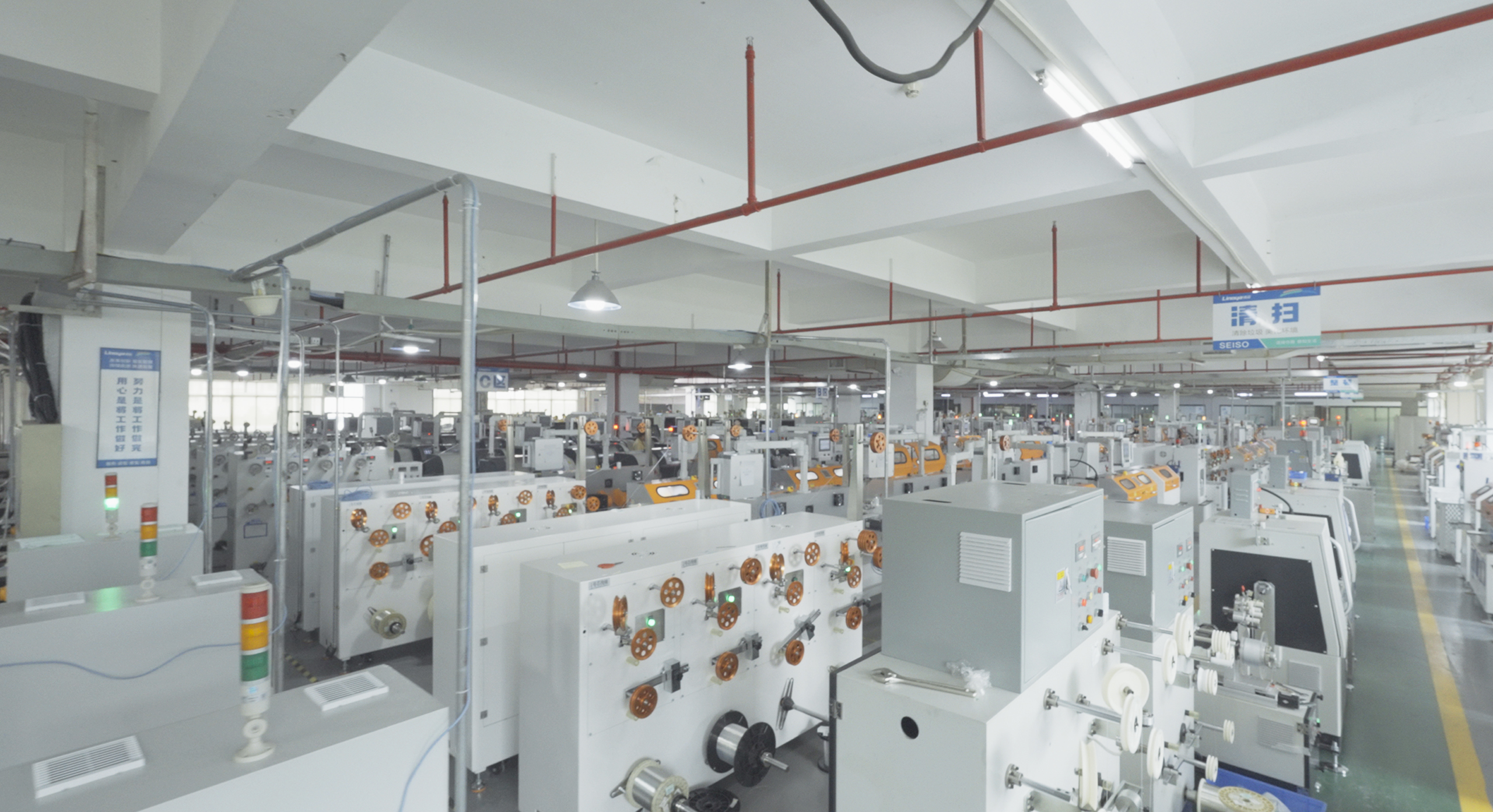
Bulk Ethernet cable production capacity of 200,000 cartons per month, each carton containing 305 m, supports container-scale data center and industrial orders.
Next step: quote, catalogue and sample discussion
Linoya Electronic Technology Co., Ltd. supplies Cat5e to Cat8 Ethernet cable — including CPR certified and LSZH constructions — from three industrial parks in Shenzhen and Dongguan, with a production base in Vietnam and 200,000 cartons of monthly capacity at 305 m per carton.
Contact: Raylene Lu — inquiry@linoya.com | Tel: +86-15602610696 | WhatsApp: +86-13038893260
Website: www.linoya.com
Brochure: Download the Linoya Electronic Technology catalogue
Send your project environment, channel length, speed requirement and flame rating, and the technical team will confirm the matching construction, certification documents and delivery schedule.
Have Questions or Need More Details?
Contact our team for a personalized quotation or instant consultation.
Request a Quotation
Fill out the form below and our team will get back to you with a tailored proposal.
WhatsApp Direct Chat
Prefer to chat in real-time? Message us on WhatsApp for instant assistance & quick answers.
- Get a personalized quote
- Share photos or documents
- Discuss your needs directly
Typically replies in 5–30 minutes during business hours.