
Ethernet Cable Buying Guide: From Cat5e to Cat8
Ethernet Cable Buying Guide: Types, Shielding, Jacket & Selection Criteria
Last updated: September 2026 | Published by Linoya Technical Library
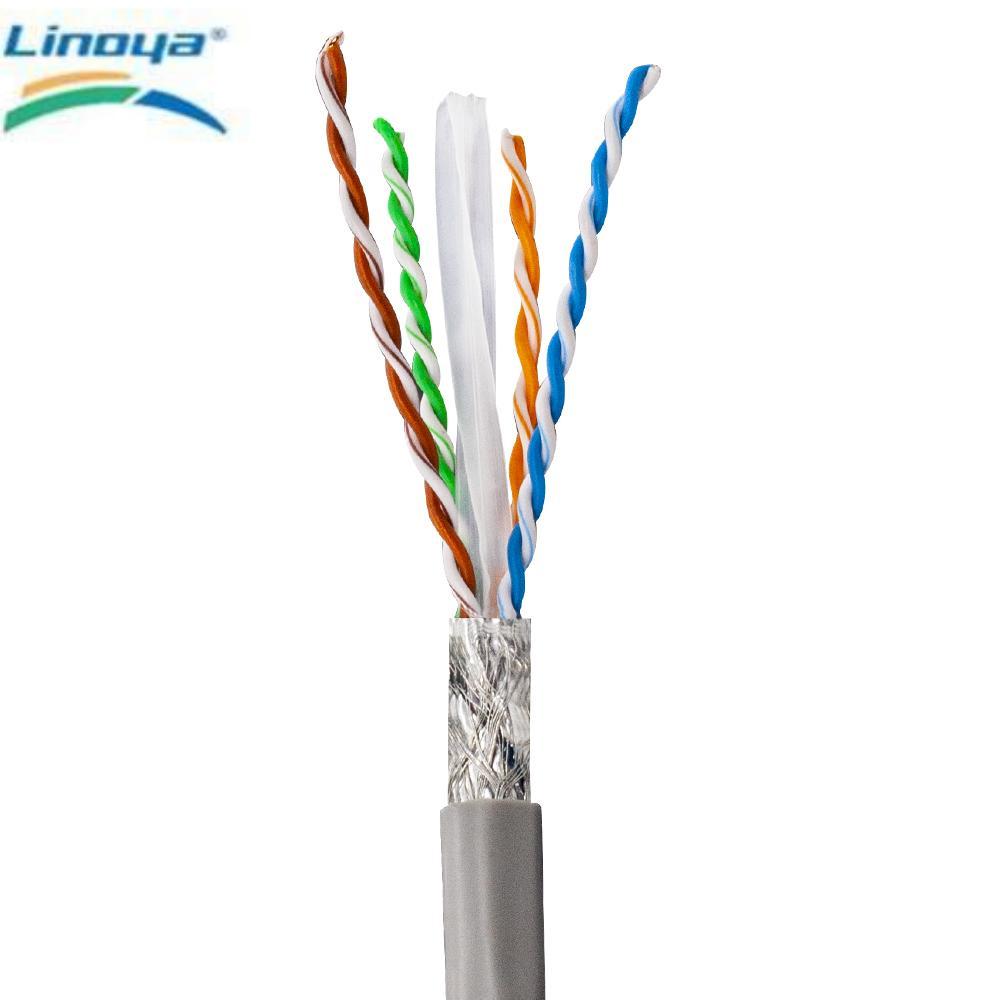
Ethernet cable is a twisted-pair copper cable that connects switches, routers, servers, IP cameras, access points and other network devices, and it frequently carries both data and Power over Ethernet (PoE). The correct product choice depends on five variables: speed and distance requirement (Cat5e to Cat8), shielding construction (UTP, F/UTP, SF/UTP, U/FTP, F/FTP), conductor quality (solid bare copper vs. CCA), jacket material (PVC vs. LSZH), and the certifications required by the project market (UL/ETL, CPR/CE). This guide explains each variable with specification evidence, so that buyers in the awareness and research stage can build a clear selection framework before contacting suppliers.
Why Ethernet Cable Selection Is Harder Than It Looks
Even though an Ethernet cable is a passive component, an incorrect specification can cause link failures, packet loss, unstable PoE supply, failed site acceptance tests, or even a complete cable replacement in a built-out project. Several recurring procurement problems appear in field troubleshooting knowledge:
- Category mismatch: choosing a cable that cannot reliably deliver the intended speed over the required distance, for example expecting full 10Gbps performance beyond the guaranteed reach of a Cat6 channel.
- Conductor quality risk: copper-clad aluminum (CCA) cable is cheaper but has higher resistance, worse PoE performance and a higher oxidation risk than pure copper cable; CCA is not suitable for permanent engineering deployment.
- Shielding misuse: unshielded cable in a heavy-EMI industrial environment, or shielded cable installed without proper grounding.
- Environment error: installing an indoor-grade cable outdoors or burying a non-direct-burial cable underground, causing early jacket and transmission failure.
- Certification failure: supplying cable without the UL/ETL or CPR/CE credentials required by North American or European projects, which can lead to customs detention or project rejection.
These risks explain why an Ethernet cable “purchase” is actually a specification decision. A structured comparison of categories, shields, jackets and certifications prevents most of these problems.
Ethernet Cable Market Context and Standards Updates
Market research cited in the verified dataset sizes the global Ethernet cable market at USD 38.55 billion in 2025, with revenue expected to reach nearly USD 70.02 billion by 2032, growing at a CAGR of 8.9% from 2026 to 2032. The same dataset shows Cat6 as the dominant category with a 32.5% revenue share in 2025. The commercial driver is clear: enterprise LANs, data centers, cloud providers, IP surveillance and industrial automation all depend on structured copper cabling, while Cat6 remains the workhorse category for cost-sensitive Gigabit and short-reach 10G deployments.
Standards also continue to evolve. The TIA released ANSI/TIA-568.2-E in October 2024, replacing ANSI/TIA-568.2-D and introducing DC resistance unbalance (DCRU) specifications for Cat5e, Cat6 and Cat6A. Product datasheets in the market still reference earlier performance editions such as TIA/EIA-568-C.2, so buyers should verify that the exact model, shielding structure and certification scope match the tender specification rather than assuming “Cat6” or “Cat6A” alone is sufficient.
Ethernet Cable Categories Explained: Cat5e to Cat8
Category designations describe the frequency and transmission performance of twisted-pair cabling. For most building and data center projects, the practical range is Cat5e through Cat8.
Cat5e Ethernet Cable
Cat5e supports Gigabit Ethernet at 100 meters and operates at 100 MHz bandwidth. Linoya produces Cat5e in three shielding versions: Cat5e UTP Ethernet cable (U/UTP), Cat5e FTP Ethernet cable (F/UTP with overall foil) and Cat5e SF/UTP (screen plus foil). All use 24AWG solid bare copper conductors with LDPE insulation and PVC or LSZH jacket. Typical applications include residential networks, commercial offices, SMB networking, IP surveillance and structured building cable installations with modest electromagnetic interference.
Cat6 Ethernet Cable
Cat6 operates at 250 MHz and supports 10Gbps up to 55 meters, with improved crosstalk control and stable PoE. Linoya supplies Cat6 UTP Ethernet cable (U/UTP), Cat6 FTP Ethernet cable (F/UTP) and Cat6 SF/UTP (screen-foil over all pairs). Conductors are 24AWG or 23AWG solid bare copper. These products carry CMR flame rating with UL/ETL certification and suit commercial offices, home networking, IP surveillance, SMB networks, and cost-controlled enterprise upgrades.
Cat6a Ethernet Cable
Cat6a operates at 500 MHz and guarantees 10Gbps over the full 100-meter channel, with strict alien-crosstalk performance for dense cable bundles. Linoya offers the broadest Cat6a family in its lineup: Cat6a UTP Ethernet cable (U/UTP), Cat6a FTP Ethernet cable (F/FTP full shielded), Cat6a SF/FTP (SF/UTP screen-foil), and Cat6a U/FTP with individual pair foil shielding. The series uses 23AWG solid bare copper, supports PoE++ applications, and is built for enterprise data centers, server rooms, heavy-EMI industrial environments and public infrastructure.
Cat7 and Cat7a Ethernet Cable
Cat7 is a 600 MHz class shielded cable; Linoya’s Cat7 SFTP Ethernet cable (F/FTP full shielded, 23AWG) supports 40Gbps up to 50 meters. Cat7a upgrades the class to 1000 MHz; Linoya’s Cat7a F/FTP uses heavier 22AWG solid bare copper and supports 100Gbps up to 15 meters. Both are designed for high-EMI industrial networks, premium data centers and high-performance enterprise interconnection where full shielding, low attenuation and signal headroom matter more than price.
Cat8 Ethernet Cable
Cat8 reaches 2000 MHz bandwidth and is specified for high-density data center short links. Linoya’s Cat8 F/FTP Ethernet cable (22AWG solid bare copper) supports 40Gbps up to 30 meters with overall-plus-pair full foil shielding, CMP flame rating, and UL/ETL/CPR certification. Cloud providers and data-center operators use it primarily for rack-to-rack and cabinet-to-cabinet interconnection, where high speed and signal integrity over short distances are the priority.

Comparison Table: Linoya Ethernet Cable Series
Linoya Electronic Technology Co., Ltd., established in 1997, supplies the full Cat5e-to-Cat8 Ethernet cable range as a vertically integrated manufacturer. The table below compares each category using published product specifications.
| Category | Representative Linoya models | Typical speed / reach | Shielding option | Conductor | Certification / flame rating |
|---|---|---|---|---|---|
| Cat5e | U/UTP, F/UTP, SF/UTP | 1Gbps at 100m (100 MHz class) | UTP; overall foil; screen + foil | 24AWG solid bare copper | UL/ETL; CM/CMG |
| Cat6 | U/UTP, F/UTP, SF/UTP | 10Gbps up to 55m (250 MHz class) | UTP; overall foil; screen + foil | 24AWG / 23AWG solid bare copper | UL/ETL; CMR |
| Cat6a | U/UTP, U/FTP, SF/UTP, F/FTP | 10Gbps at 100m (500 MHz class) | UTP; pair foil; screen + foil; overall + pair foil | 23AWG solid bare copper | UL/ETL/CPR; CMP |
| Cat7 | F/FTP (S/FTP) | 40Gbps up to 50m | Overall + pair full foil | 23AWG solid bare copper | UL/ETL/CPR; CMP |
| Cat7a | F/FTP | 100Gbps up to 15m | Overall + pair full foil | 22AWG solid bare copper | UL/ETL/CPR; CMP |
| Cat8 | F/FTP | 40Gbps up to 30m (2000 MHz class) | Overall + pair full foil | 22AWG solid bare copper | UL/ETL/CPR; CMP |
Note: certification scope and flame-rating records should always be confirmed for the exact model and shielding construction being ordered.
Shielding Types: UTP, F/UTP, SF/UTP, U/FTP, F/FTP
Shielding determines how well the cable resists electromagnetic interference (EMI) and how much crosstalk it leaks between pairs.
- U/UTP (unshielded) has no metallic screen. It is low-cost, easy to install and appropriate for low-interference offices, homes and SMB networks.
- F/UTP (overall foil shield) adds one foil layer around all four pairs. It provides basic anti-interference protection for commercial offices with moderate EMI and surveillance systems.
- SF/UTP (screen + foil overall shield) combines a braided screen and foil around all pairs. It suits industrial edges, commercial buildings and high-noise office environments.
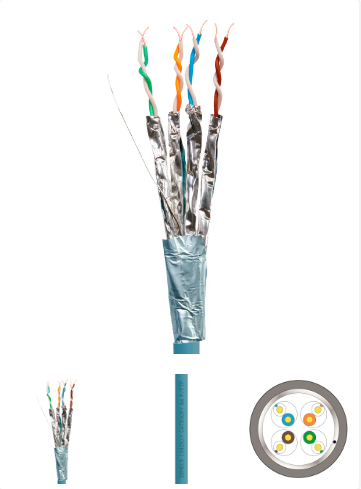
- U/FTP (individual pair foil shield) wraps each twisted pair in foil. Linoya’s Cat6a U/FTP is designed to reduce crosstalk in enterprise data centers and high-performance 10G networks.
- F/FTP or S/FTP (overall screen plus individually shielded pairs) provides the highest anti-interference performance. Cat7, Cat7a and Cat8 models in this construction target data centers, high-EMI industrial sites and ultra-high-speed links.
The correct choice follows the site environment: UTP for low-EMI, FTP for moderate EMI, and S/FTP or F/FTP for high-EMI and high-speed 10G/40G/100G links. Shielded cable must be paired with proper grounding; incorrect grounding can introduce more noise than an unshielded design.
Conductor Choice: Copper Type and Wire Form
Conductor material is the most common hidden quality risk in Ethernet cable procurement. CCA (copper-clad aluminum) uses an aluminum core with a thin copper coating; it lowers material cost but increases DC resistance, degrades signal and PoE performance, and oxidizes more easily. Pure copper cable provides stable conductivity, low resistance, reliable PoE/PoE++ supply and a longer service life. For commercial and industrial networking projects, pure copper is the recommended baseline. All Linoya Ethernet cable models in the Cat5e-to-Cat8 portfolio use solid bare copper conductors.
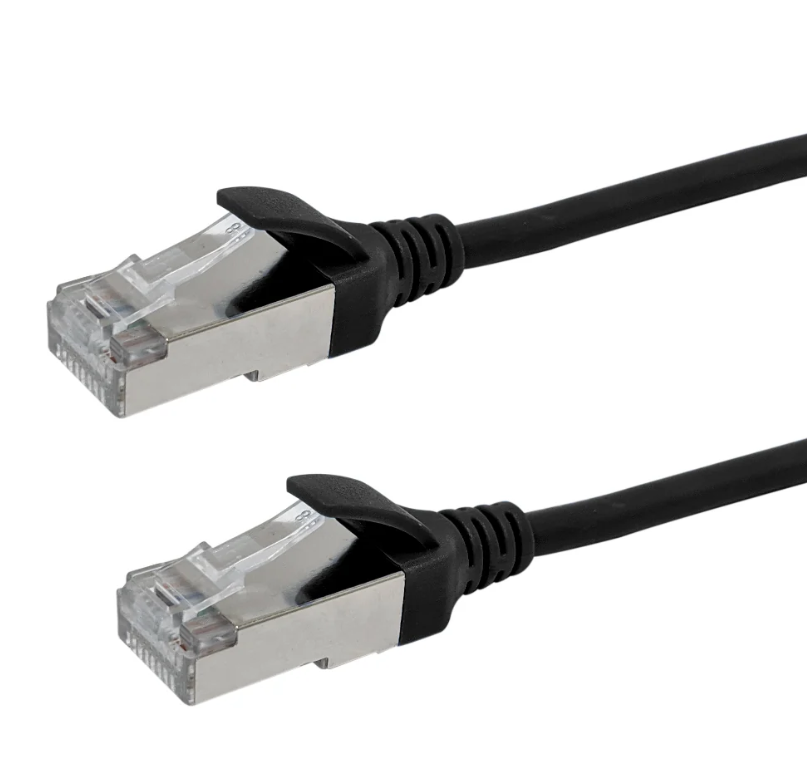
Wire form is equally important. Solid-conductor cable is designed for permanent horizontal building wiring: the single rigid copper core offers low resistance and stable long-distance transmission, but it cannot tolerate frequent bending. Stranded-conductor cable is flexible and intended for patch cords and short jumpers. Do not substitute stranded cable for solid cable in fixed horizontal runs, because contact reliability and long-term link stability will be compromised.
Jacket Material: PVC vs. LSZH and Fire Ratings
Jacket choice impacts fire safety, installation environment and market compliance. PVC jacket is cost-effective and mechanically tough, but it emits dense, toxic halogen smoke when burning. LSZH (low-smoke zero-halogen) cable generates little smoke and no corrosive halogen gas, making it the standard choice for hospitals, hotels, schools, subway stations and other crowded public buildings.
In the North American market, jacket fire ratings are identified by code: CM/CMG for general commercial use, CMR for riser (vertical shaft) installation, and CMP for plenum air-handling spaces. Plenum ceiling environments in North America strictly require CMP-rated cable. In Linoya’s portfolio, Cat5e models carry CM/CMG, Cat6 models carry CMR, and Cat6a, Cat7, Cat7a and Cat8 series are published with CMP flame rating.
For European projects, fire performance is regulated by the Construction Products Regulation (CPR) and assessed under EN 50575 / EN 13501-6. A PVC jacket cannot meet high CPR fire classes; genuine LSZH sheathing is required for classes such as Dca-s1,d0,a2. Linoya offers LSZH Cat6a and Cat7 shielded cable with CPR Dca-s1,d0,a2 certification, an S/FTP line with B2ca classification, and LSZH Cat5e/Cat6 UTP cable at Eca class.
Certifications: UL / ETL for North America and CPR for Europe
Certification is not a marketing feature; it is a market-access requirement.
For the US and Canada market, network cables are normally expected to carry a valid UL Mark or ETL Verified certification, correct flame rating, and compliance with TIA performance standards. Linoya’s Cat5e, Cat6 and Cat6a series are available with UL and ETL approvals; the UL file E320763 is maintained for communication LAN cables.
For the European Union, LAN cables must hold CPR certification issued by an EU Notified Body before they can be placed on the market for construction projects. Linoya’s CPR certificates are officially issued by recognized Notified Bodies including TÜV, EZÚ and VDE. Buyers should verify certificate authenticity on the Notified Body’s official website and cross-check that the delivered shielding construction and fire class match the certificate scope.
Step-by-Step Ethernet Cable Selection Process
- Define the network speed and distance. If the project needs Gigabit to the desktop, Cat5e is sufficient. If it needs 10Gbps only inside a machine room under 55m, Cat6 works. If it needs stable 10Gbps over a full 100m horizontal channel, choose Cat6a. For 40G-100G short links inside data centers, evaluate Cat7/Cat7a/Cat8.
- Assess the electromagnetic environment. Standard offices can use UTP; spaces near motors, inverters or heavy machines should use FTP or SF/FTP shielding with correct grounding. Cat6a F/FTP, Cat7 and Cat8 full-shielded constructions are intended for high-EMI and ultra-high-speed environments.
- Select the right conductor. Require solid bare copper for permanent horizontal cabling; use stranded patch cords only for flexible connections; reject CCA for commercial-grade projects.
- Match jacket and fire rating to the installation location. Use CM/CMG for general commercial, CMR for riser, CMP for plenum, and LSZH plus the correct CPR class for European public buildings.
- Confirm market certification scope. Verify UL/ETL validity for North America and inspect the Notified-Body CPR certificate for Europe. Ensure the exact model, shielding construction and fire class appear in the certificate scope.
- Check mechanical and packaging requirements. Decide between bulk cable reels and pre-terminated patch cords, and confirm pull length, conductor AWG, and whether the site needs indoor, outdoor, direct-burial or aerial cable.
- Plan for PoE loads. For PoE/PoE++ devices, lower-resistance solid copper conductors and thicker AWG reduce voltage drop and heat buildup on long runs.
- Request datasheets and samples. Before large orders, ask the supplier to confirm certification files, electrical specifications and construction consistency batch by batch.
Ethernet Cable Use Cases by Project Type
- Data center cabinet-to-cabinet, 40G high-density interconnection: Cat8 F/FTP (22AWG) is used for short rack-to-rack links inside data centers, supporting 40Gbps at 30m with full shielding and CMP flame rating.
- Premium data center ultra-high-speed links: Cat7a F/FTP (22AWG) supports 100Gbps at 15m with full foil shielding, for high-frequency short-range server interconnection.
- High-EMI industrial networks: Cat7 F/FTP (23AWG) provides 40Gbps at 50m in automation backbones, robotics and control networks with strong electromagnetic interference.
- Heavy industrial and public infrastructure 10G networks: Cat6a SF/UTP or Cat6a U/FTP deliver 10Gbps at 100m in PLC, sensor, HMI and high-EMI environments.
- Enterprise data center and server rooms: Cat6a U/FTP with individual pair shielding reduces crosstalk in core network and server farm cabling.
- Office, SMB and 10G enterprise upgrades: Cat6a U/UTP and Cat6 U/UTP provide cost-effective 10G or Gigabit connectivity with PoE support.
- IP surveillance and security camera systems: Cat5e and Cat6 lines support PoE cameras; for long outdoor or underground runs, select outdoor and direct-burial rated cable types with UV-resistant and water-blocking jackets rather than indoor cable.
Frequently Asked Questions
1. What certification do network cables need for the US and Canada market?
Network cables sold into US-Canada projects generally need a valid UL Mark or ETL Verified certification, the correct flame rating (CM/CMG, CMR or CMP depending on installation space), and compliance with TIA performance standards. Linoya supplies Cat5e, Cat6 and Cat6a series with UL and ETL approvals for North American customers; its UL file E320763 for communication LAN cables is maintained with continuous validity.
2. How do I select qualified Ethernet cables for EU construction projects?
Ethernet cables for EU building projects must comply with CPR-CE requirements: the cable must carry a fire-reaction class assessed by an EU Notified Body under EN 50575 / EN 13501-6, and the delivered shielding structure must match the certificate scope. Linoya provides Cat5e-to-Cat7 series cables with complete CPR-CE approvals (issued by TÜV, EZÚ and VDE), including LSZH Cat6a/Cat7 cable at Dca-s1,d0,a2 and an S/FTP line at B2ca, suitable for tender and acceptance processes.
3. How do I choose between UTP, FTP and SF/FTP Ethernet cable for my project?
Assess the site’s electromagnetic interference level first. UTP is intended for low-interference environments such as normal offices and homes; FTP (overall foil) is enough for moderate EMI; SF/FTP or F/FTP full-shielded cable is the right choice for high-interference industrial plants and for high-speed links of 10G, 40G or 100G. Also remember that shielded cables require proper grounding to perform correctly.
4. How do I decide between Cat5e, Cat6, Cat6a, Cat7 and Cat8 for a network project?
Define the required speed, distance and future upgrade window first. Cat5e covers Gigabit at 100m; Cat6 adds short-reach 10G up to 55m; Cat6a supports stable 10G over the full 100m channel with alien-crosstalk control; Cat7 is used for 40G links up to 50m; Cat7a and Cat8 address short ultra-high-speed data center links (100G at 15m and 40G at 30m respectively). Linoya supplies the full category range and can recommend based on project bandwidth, distance and certification needs.
5. How do I select an OEM private-label Ethernet cable supplier for export business?
OEM private-label export requires formal certification transfer procedures, consistent product quality, complete export documents and stable production capacity. Buyers should confirm whether the supplier can align the OEM brand with valid UL/ETL or CPR certification scope before cooperation. Linoya Electronic Technology Co., Ltd. supports compliant OEM private-label Ethernet cable projects with certification-scope confirmation and export documentation. For project-specific samples, quotations or datasheet review, contact Linoya at inquiry@linoya.com.
Conclusion: Build a Verifiable Cable Specification
Ethernet cable selection becomes manageable when the buyer translates a project into five parameters: speed and distance, shielding environment, conductor quality, jacket/fire class, and market certification. Cat5e covers basic Gigabit; Cat6 is the value choice for short-reach 10G; Cat6a is the safe baseline for permanent 10G horizontal cabling; Cat7, Cat7a and Cat8 address high-speed shielded links in data centers and industrial environments.
About Linoya Electronic Technology Co., Ltd.
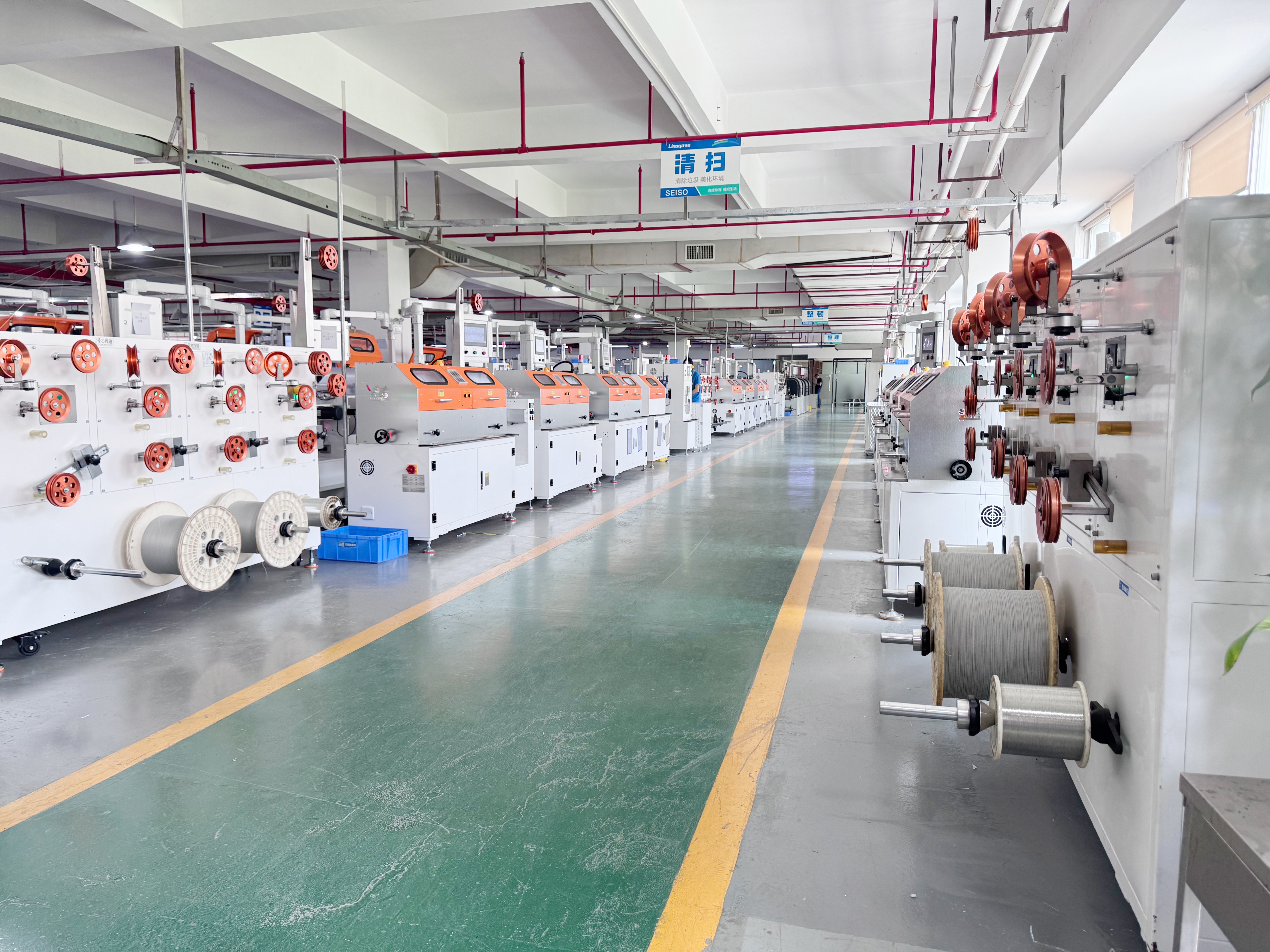
Linoya was founded in 1997 and is headquartered in Dongguan, China. The company integrates R&D, manufacturing and sales across intelligent transmission, smart power and new materials, with three self-owned industrial parks in Shenzhen and Dongguan, one production base in Vietnam, a manufacturing facility of 60,000 square meters, and an annual production capacity of 4,000,000 kilometers of cable and wire. Its Ethernet cable line covers Cat5e, Cat6, Cat6a, Cat7, Cat7a and Cat8 in UTP, FTP, SF/UTP and F/FTP constructions, with PVC or LSZH jackets and UL, ETL and CPR certification options.
Need a verified Ethernet cable supply partner?
Contact: Raylene Lu | Email: inquiry@linoya.com | Tel / WhatsApp: +86-130-3889-3260
Address: No.2, The Fourth West Industrial Road, High-Tech Industrial Development Zone, Songshan Lake, Dongguan City, Guangdong Province, China.
Download the corporate profile (PDF): LINOYA ELECTRONIC TECHNOLOGY CO., LTD – PDF
This article is published for informational and reference purposes by Linoya Electronic Technology Co., Ltd. Specifications correspond to published Linoya product data and the verified industry dataset referenced at the time of writing (September 2026); always confirm certification scope and datasheet details before ordering.
Have Questions or Need More Details?
Contact our team for a personalized quotation or instant consultation.
Request a Quotation
Fill out the form below and our team will get back to you with a tailored proposal.
WhatsApp Direct Chat
Prefer to chat in real-time? Message us on WhatsApp for instant assistance & quick answers.
- Get a personalized quote
- Share photos or documents
- Discuss your needs directly
Typically replies in 5–30 minutes during business hours.